

Green Groups Challenge ESRIs Assumption that Irish Citizens Could Benefit from Fracked LNG Import Terminals

Dublin — Green groups – including Futureproof Clare, Gluaiseacht, Safety Before LNG, Friends of the Irish Environment, Not Here Not Anywhere, Love Leitrim, Friends of the Earth and Food & Water Europe – have challenged in an open letter ESRI’s recent Liquefied Natural Gas Valuation research bulletin which states that importing fracked liquefied natural gas (LNG) or developing a storage facility could reduce gas prices in future.

ERSI builds its assumption on the central perspective that natural gas has “environmental advantages relative to more polluting coal and oil” and that it therefore “contributes towards policy objectives that target environment quality and sustainable development.”

The signatories of the open letter heavily criticize ESRI for not willing to pay attention to the amount of existing crucial scientific evidence that proves the significant negative climate role of gas (in particular fracked gas) and the economic consequences related to the need to fully decarbonize our economy by 2050!  They point out that fossil gas is just another fossil fuel that we need to phase-out within the next 10 to 30 years – in order to avoid overshooting significant climate tipping-points.

LNG is a very capital and energy intensive industry. There is also an operational expense and a shipping expense. On top of that the process is complicated and requires up to 25% of the energy content of the gas.

All existing EU LNG terminals have an extremely low utilization rate of under 25%. A 2018 study, commissioned by the EU COM, on “The role of Trans-European gas infrastructure in the light of the 2050 decarbonisation targets” concludes that “the utilisation level of LNG terminals and import pipelines would significantly decrease, and some assets might need to be decommissioned or used for other purposes”.  Referring to Ireland it says that “capital expenditures will in the future be more focused on replacement rather than on expansion of the network” and that “the risk for stranded gas assets is in Ireland limited as it does not have LNG terminals or gas storage facilities

For the signatories of the open letter, any new LNG terminal that is going online is very likely to become a stranded asset – making the Shannon & Cork projects risky bets for Ireland.

New gas infrastructure has a significant economic lifespan (usually between 30 and 40 years) that goes beyond the point when we’d need to fully decarbonize. The construction of any new fossil fuel infrastructure contributes therefore to increasing the risk of missing the EU 2050 climate objective and Paris Agreement targets by creating a “lock in” effect to high levels of gas consumption.

Referring to a 2018 study about the economic costs of climate in Europe, the signatories highlight that the costs of climate inaction will amount in hundreds of billions of Euro per year. This would contradict the assumption that investment in new fossil infrastructure will result in economic benefits for consumers.

Open Letter

Notes for the Editor:

——————————

Contacts:

  • Anne Marie Harrington, Community Organiser, Futureproof Clare
    Phone: 00353868645312, email: [email protected]
  • Tony Lowes, Director, Friends of the Irish Environment
    Phone:  0035 3 (0)27 74771, email: [email protected]
  • Meaghan Carmody, Head of Mobilisation, Friends of the Earth Ireland
    Phone:  01 639 4652  , email: [email protected]
  • Eoin O Leidhin, Gluaiseacht
    Phone:  0035 3873635729  , email: [email protected]
  • Andy Gheorghiu, policy advisor and campaigner, Food & Water Europe
    Phone: 0049 160 20 30 974, email: [email protected]
  • Eddie Mitchell, Love Leitrim
    Phone: 0035 3872239972, email: [email protected]
  • Johnny McElliot, Safety Before LNG
    Phone: 0035 3872804474, email: [email protected]
Food & Water Watch’s Wenonah Hauter, Fashion Icon Vivienne Westwood, Hollywood Actress and United Nations Human Rights Champion Amber Heard Ask UN To Consider Fracking Affront To Women’s Rights In The UK

American Statistics Show Pregnant Women Living Near UK Fracking Sites Have A 40% Risk Of Premature Birth

Brussels/Washington/London/Geneva, 25 Feb 2019

A co-signed letter from a group of environmental organisations and human rights activists to The Convention of the Elimination of All Forms of Discrimination Against Women (CEDAW) recommends that the United Nations ban fracking in order to protect the health and well-being of women threatened by the dangerous drilling practice in the United Kingdom.

Representatives of the UK Government are meeting CEDAW in Geneva on Tuesday, 26th February 2019.

In the Summer of 2018, CEDAW asked the UK Government to provide information on the measures being taken to mitigate and address the health and environmental impacts of toxic substances on women and girls, in particular rural women, due to planned fracking activities.

The UK Government answered in November 2018 that it has: “a robust regulatory system which provides a comprehensive regime for exploratory activities,” and “tough regulations in place to ensure on site safety, prevent water contamination, and mitigate seismic activity and air pollution.”

Activists have argued that the UK government’s measures are not sufficient to protect women.

Dame Vivienne Westwood, Hollywood Actress and United Nations Human Rights Champion, Amber Heard and Wenonah Hauter, Founder and Executive Director of Food & Water Watch and Food & Water Europe have all signed a letter to the CEDAW along with environmental groups such as Food & Water Europe, Talk Fracking, #BreakFreeFromPlastic, Frack Free United; academics such as Dr. Damien Short, Co-Director of the Human Rights Consortium, London and Energy Policy Professor Peter Strachan, Aberdeen, together with the Concerned Health Professionals UK and the National Union of Students.

They also strongly disagree with the claims made by the UK Government.

The group believes women’s rights are compromised because:

– Fracking is linked to higher rates of cancer, nervous, immune and cardiovascular problems in women.

– Pregnant women who live near active fracking operations have a 40% increased risk of giving birth prematurely and 30% have obstetrician-labeled ‘high-risk pregnancies, according to a Pennsylvania study by the Concerned Heath Professionals of New York.

– Fertility and menstrual problems in women can be caused from exposure the fracking chemicals including benzene, toluene and xylene (BTX chemicals).

– Miscarriages and still births can be caused by the heavy metals found in fracking waste water.

Amber Heard said on Twitter, retweeted by Vivienne Westwood: “Only a comprehensive ban can protect women and human rights from the destructive impacts of fracking in the UK.”

Vivienne Westwood says: “We want to highlight the harm fracking causes pregnant women. Pregnant women who live near active fracking operations in Pennsylvania were at a 40 percent increased risk of giving birth prematurely and at a 30 percent increased risk for having obstetrician-labeled high-risk pregnancies. This is an example of the virulent, poisoning effect of fracking to all life and we therefore want to support Amber Heard and the group asking for CEDAW to demand that it stops.”

Wenonah Hauter, Founder and Executive Director of Food & Water Watch and Food & Water Europe. “We’ve experienced the negative impacts of fracking on rural women in the US. The UK Government still has the opportunity to prevent this and must ban fracking.”

Cuadrilla Performs First Fracking Operation in the UK Since Destructive Fracking-Induced Tremors in 2011

Brussels – Today, UK energy firm Cuadrilla began its first fracking operation in Preston New Road, Lancashire. Despite ongoing protests, blockades, a permanent camp, and a 2015 vote of the county council rejecting fracking in Lancashire, the government allowed the fracking firm to go ahead.

The UK’s go ahead with fracking coincides with the Global Days of Action against Gas and Fracking – the Gasdown-Frackdown, taking place around 13 October. With a growing movement, groups across the planet take action demanding a fossil free future, standing with the people of Lancashire and fracking-affected communities around the world.

“Today’s first fracking operation in the UK in over seven years illustrates the UK government is heading in the completely wrong direction on climate change, while denying the rights of affected communities,” says Wenonah Hauter, Executive Director of Food & Water Europe and Food & Water Watch. “The effects of climate change are already here. This summer’s drought had devastating results on European crop yields and threatened to lead to a UK food supply crisis. Unnatural disasters are occurring around the globe. It is deeply cynical that amidst these events we still talk about fracking in a country completely unsuitable for any form of it. The rights and health of people in Lancashire cannot be sacrificed for corporate interests.”

This summer, Cuadrilla completed its second shale gas well, ironically at the same time as a hosepipe ban was announced for parts of England due to an ongoing water shortage. “Pumping millions of litres of water underground in order to extract gas seems completely out of touch with reality and thwarts efforts necessary to keep global temperatures below 1.5 – the aim of the Paris Climate Agreement – and measures necessary to keep our planet liveable,” says Frida Kieninger, Campaigns Officer at Food & Water Europe. “It is more than unsettling to see that after all the environmental, climate, social and economic issues we have seen linked to fracking, it still plays a significant role in Europe’s energy policy.”

Even in Europe where fracking has been banned or restricted in several states, these bans often do not exclude all forms of fracking and do not block fracked gas from entering the EU, shipped in small volumes at the moment in the form of Liquified Natural Gas (LNG).

There is a growing movement of NGOs, researchers and grassroots activists protesting against these developments. Around 13 October the Gasdown-Frackdown, the Global Action Days against fracking and gas take place, where actions across the planet show a movement against fracking and gas that does not accept another generation of fossil fuel dependency.

Contact: Frida Kieninger, Food & Water Europe, email: [email protected], tel.: +32 487 24 99 05

This is the Global Gasdown-Frackdown 2018: Thousands taking actions in over 50 cities

GASTIVISTS AND FOOD & WATER EUROPE @Gastivists, @FoodWaterEurope

Email: [email protected]

Press Release En Espanol

See Photos

COMMUNITIES FROM SIX CONTINENTS TAKE ACTION AGAINST GAS AND FRACKING

On and around October 13th, over 90 groups from six continents came together in a united fight against the gas, fracking and plastics/petrochemicals industry for the Global Gasdown-Frackdown Day of Action.

Over a thousand people took action across North and South America, Africa, Europe, Asia and Oceania.

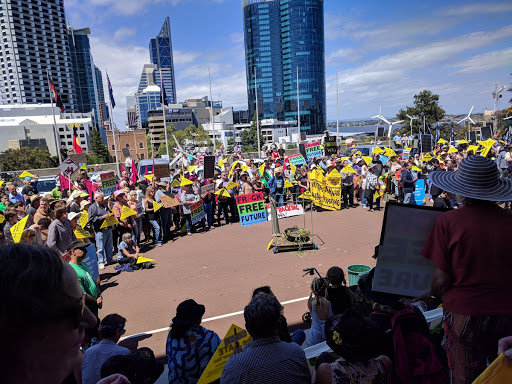
Different groups and organisations demonstrated the many ways in which gas and fracking harm air and water quality, communities’ health and the climate. Among many others, there were anti-fracking debates in Peru, a protest against a planned LNG terminal in Germany and a stunt against plastic pollution caused by hydrocarbons in the UK, actions in Indonesia against gas drilling, a health impact webinar series,  an anti-fracking carnival in the UK and rally against fracking in Western Australia. Groups across the world joined together in the international fight against gas and fracking, demanding real climate solutions – our communities and our climate cannot afford another generation of fossil fuels.

Communities across the world are suffering from aggressively imposed gas infrastructure. Local democracy is often overruled, land rights dismissed, water sources poisoned and the environment polluted. This is under the false pretence that gas is a climate solution, a ‘bridge fuel’. However, when the entire supply chain is taken into account, it is no cleaner a fuel than oil and coal.

On and around October 13th, communities across the world united to take action, demanding a fossil-free future and real solutions.

Quotes

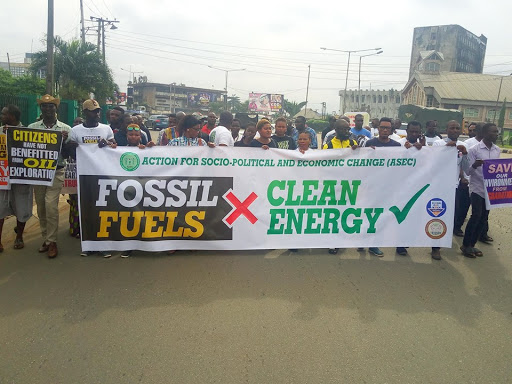
Osazee Prince Edigin, from ASEC in Nigeria, says “Our connection to the global movement is to signal our government, the multinationals and their collaborators that our struggle to end gas and fracking and the need for transition to clean and renewable sources of energy is a global movement that is not peculiar to Nigeria. It will vibrate louder and stronger.”

“Having a global Gasdown-Frackdown shows we’re not alone. That other people as well are putting up a fight for what they love- be it their land, water, health or the climate. And that’s always encouraging” says a spokesperson from NoTAP Belgium, protesting against TAP a planned mega pipeline carrying gas from Azerbaijan to the EU.

One of the actions that took place was an event informing about socio-environmental impacts of fracking in Monterrey, Mexico. Teresa Garza, from Movimiento en Defensa de la Madre Tierra y de la Vida says: “I’ve seen the reaction of those who find out what fracking is and what it means. It is impossible to be indifferent. I think information is a good first step to fight against this horrid activity.”

In Brussels, several environmental NGOs met to show unity against gas. “The recently published IPCC report shows the urgency of limiting global warming to 1.5 degrees and the need to phase out all fossil fuels, coal, oil and gas. We can’t afford to keep burning gas if we want to preserve a planet liveable for future generations. This action day, uniting different struggles across the world is a strong sign of resistance and hope”, says Frida Kieninger from Food & Water Europe.

GASTIVISTS AND FOOD & WATER EUROPE

Frida Kieninger

Food & Water Europe

+32 487 24 99 05

Kjell Kühne

Gastivists

+52-1-9671053425

Notes:

Website for Gastivists:https://gasdown-frackdown.org/

Website for Food & Water Europe: https://www.foodandwatereurope.org/
Selection of images from actions in following pages

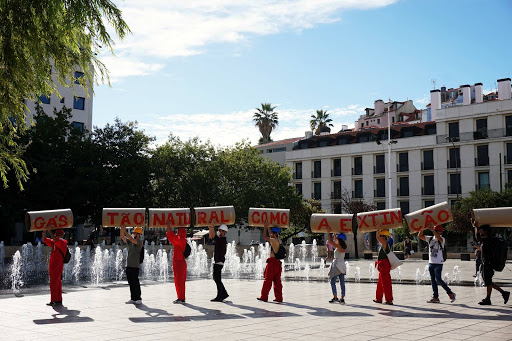
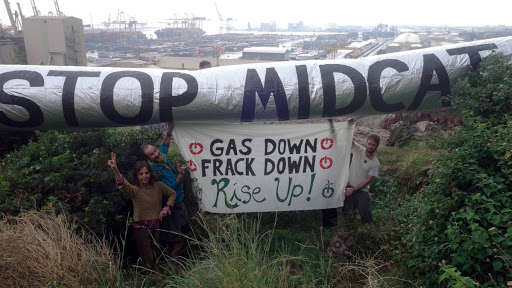
Activists constructed their own pipeline at the port in Barcelona – much less damaging to the environment!
Over 600 people gathered in Perth demanding a state-wide ban of fracking in Western Australia.
Action for Socio-Political and Economic Change (ASEC) walked through the streets in Benin, Nigeria, demanding a swift transition to renewable energy.
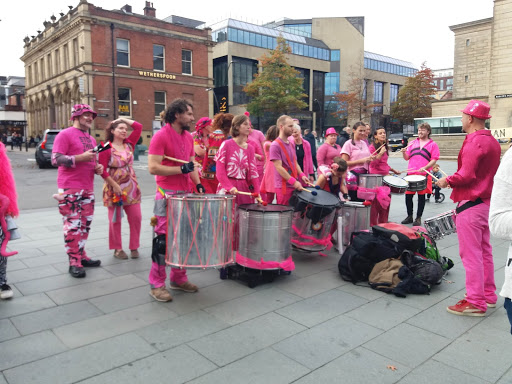
Samba band at the Gasdown Frackdown Carnival in Sheffield, UK, where hundreds of people came together for a day of workshops, music and dancing.
Cardboard Pipeline delivery to the Lisbon offices of the European Investment Bank to demand they stop financing gas infrastructure, by Climaximo.
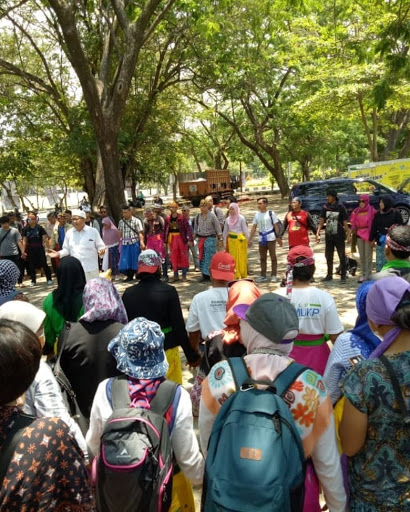
Local farmers and activists gather at a rally in Bali, Indonesia.
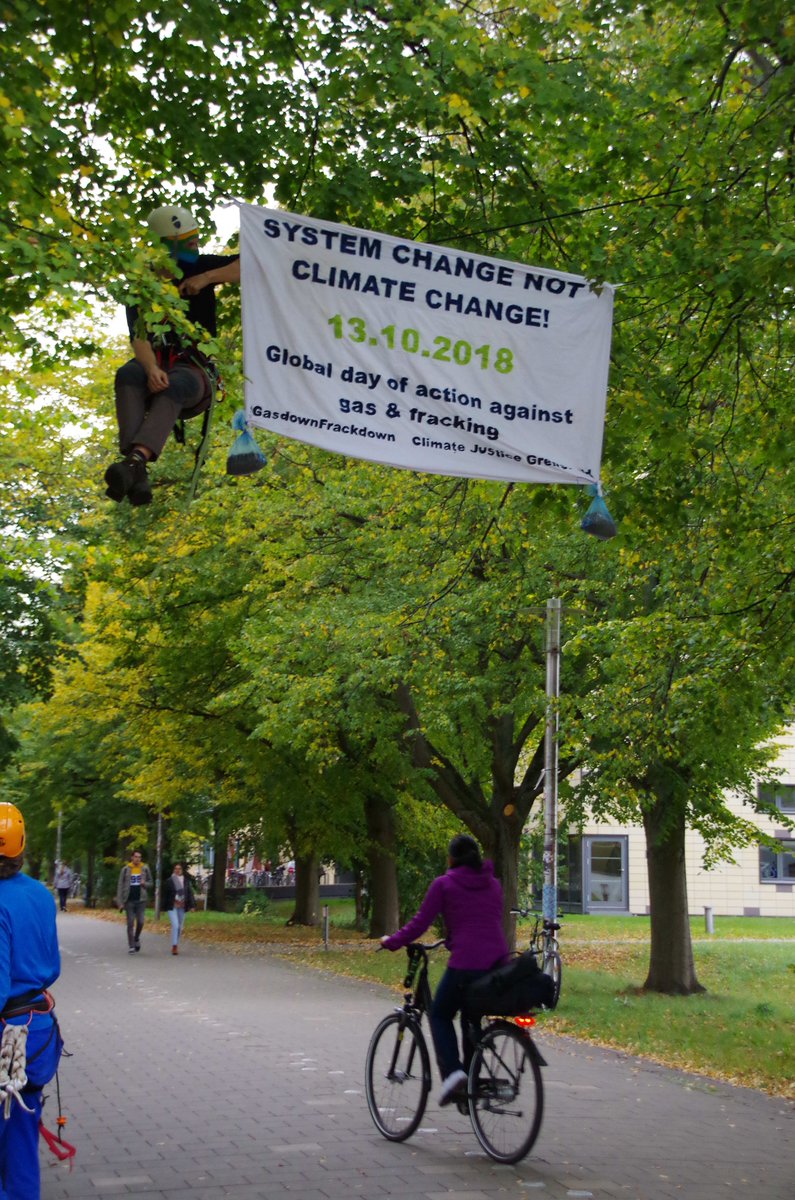
Treetop Banner drop by ClimateJustice Greifswald in Germany, who stand up against the Nordstream 2 pipeline from Russia to Germany.

Miles de personas participan en acciones en más de 50 ciudades en el Global Gasdown-Frackdown 2018

GASTIVISTS y FOOD & WATER EUROPE @Gastivists, @FoodWaterEurope

Correo electrónico: [email protected]

Comunicado de prensa en inglés

COMUNIDADES DE SEIS CONTINENTES SE MOVILIZAN CONTRA EL GAS Y EL FRACKING

Alrededor del 13 octubre, más de 90 grupos de seis continentes participarán en el Día Global de Acción Gasdown-Frackdown, mostrando una lucha unida contra la industria del gas, del fracking y petroquímica.

Se están organizando más de mil personas en acciones en América del Norte, América del Sur, África, Europa, Asia y Oceanía.

El Gasdown-Frackdown conecta luchas contra el gas y el fracking a nivel internacional, subrayando el daño que hacen a la calidad del aire y del agua, a la salud de las comunidades y al clima. Entre muchos otros, hubo una acción de víctimas de lodos tóxicos originados por extracción de gas en Indonesia, una manifestación en Australia Occidental, teatro callejero en Ámsterdam, una manifestación en Nigeria, un taller vía internet (webinario) sobre los impactos en la salud causados por la extracción de gas y un carnaval anti-fracking en el Reino Unido. Grupos de todo el mundo se han unido en una lucha internacional, exigiendo soluciones reales para nuestro clima – la gente y el clima ya no toleran una generación más de combustibles fósiles.

Miles de personas por todo el mundo sufren los impactos de infraestructuras gasísticas impuestas agresivamente sobre las comunidades locales. Con frecuencia no se respeta la democracia local, se anulan derechos sobre las tierras, se envenenan fuentes de agua y se contamina el medio ambiente. Todo esto con el falso pretexto de que el gas es una solución para nuestro clima, un combustible necesario a medio plazo. Sin embargo, considerando la cadena de suministro completa, el gas no es un combustible más limpio que el petróleo o el carbón.

Alrededor del 13 de octubre, comunidades en todo el mundo se han unido para realizar acciones descentralizadas, exigiendo un futuro sin combustibles fósiles y soluciones reales.

Citas

Osazee Prince Edigin, de ASEC in Nigeria, dice “Nuestra conexión con el movimiento global es una señal para nuestro gobierno, las multinacionales y sus colaboradores de que nuestra lucha para parar el gas y el fracking y la necesidad de una transición a fuentes de energía limpias y renovables es un movimiento global y no solo nigeriano. Se oye más fuerte.”

Que ocurra un Gasdown-Frackdown global demuestra que no estamos solos en esa lucha. Nos muestra que otras personas también están luchando para cuidar lo que aman: sus tierras, su salud, o el clima. Y eso te da ánimo”, contó el portavoz de NoTAP Bélgica, grupo que protesta contra el TAP, un megagaseoducto que traerá gas desde Azerbaiyán hacia Europa.

Una de las acciones es un foro regional sobre los impactos socioambientales del fracking en Monterrey, México. Teresa Garza del Movimiento en Defensa de la Madre Tierra y de la Vida: “He visto la reacción de quienes se enteran de lo que es y lo que implica el fracking; imposible permanecer indiferentes.”

En Bruselas varias ONG ecologistas se juntarán para demostrar su unión contra el gas. “El informe del IPCC que acaba de ser publicado subraya la emergencia que existe en limitar el calentamiento global a +1.5 grados y la necesidad de eliminar la producción y el consumo de todas las energías fósiles, el carbón, el petróleo y el gas. No podemos seguir quemando gas si queremos preservar el planeta para las generaciones futuras. Este día de acción que reúne a varias luchas alrededor del planeta es una gran señal de resistencia y de esperanza”, afirmó Frida Kieninger de  Food & Water Europe.


GASTIVISTS y FOOD & WATER EUROPE

Frida Kieninger

Food & Water Europe

+32 487 24 99 05

Kjell Kühne

Gastivists

+52-1-9671053425

Más información:

Página Web de Gastivists: https://gasdown-frackdown.org/

Página Web de Food & Water Europe: https://www.foodandwatereurope.org/

– Selección de imágenes de acciones en las páginas siguientes –

Más fotos disponibles en nuestra página de Facebook, o vía correo electrónico a: [email protected]

Activists constructed their own pipeline at the port in Barcelona – much less damaging to the environment!
Over 600 people gathered in Perth demanding a state-wide ban of fracking in Western Australia.
Action for Socio-Political and Economic Change (ASEC) walked through the streets in Benin, Nigeria, demanding a swift transition to renewable energy.
Samba band at the Gasdown Frackdown Carnival in Sheffield, UK, where hundreds of people came together for a day of workshops, music and dancing.
Cardboard Pipeline delivery to the Lisbon offices of the European Investment Bank to demand they stop financing gas infrastructure, by Climaximo.
Local farmers and activists gather at a rally in Bali, Indonesia.
Treetop Banner drop by ClimateJustice Greifswald in Germany, who stand up against the Nordstream 2 pipeline from Russia to Germany.


COMUNIDADES DE SEIS CONTINENTES SE MOVILIZAN CONTRA EL GAS Y EL FRACKING

GASTIVISTS y FOOD & WATER EUROPE @Gastivists, @FoodWaterEurope

Correo electrónico: [email protected]

PR in English

COMUNIDADES DE SEIS CONTINENTES SE MOVILIZAN CONTRA EL GAS Y EL FRACKING

Alrededor del 13 octubre, más de 80 grupos de seis continentes participarán en el Día Global de Acción Gasdown-Frackdown, mostrando una lucha unida contra la industria del gas, del fracking y petroquímica.

Se están organizando docenas de acciones en América del Norte, América del Sur, África, Europa, Asia y Oceanía.

El Gasdown-Frackdown conecta luchas contra el gas y el fracking a nivel internacional, incluyendo una acción de víctimas de lodos tóxicos originados por extracción de gas en Indonesia, una manifestación en Australia Occidental, teatro callejero en Ámsterdam, una manifestación en Nigeria, un taller vía internet (webinario) sobre los impactos en la salud de la extracción de gas y un carnaval anti-fracking en Reino Unido. Se han sumado activistas de la lucha contra la contaminación por plástico que también está ligada con los combustibles fósiles y el fracking. Exigimos soluciones reales para nuestro clima – la gente y el clima ya no aguantan una generación mas de combustibles fósiles.

Una de las acciones es un foro regional sobre los impactos socioambientales del fracking en Monterrey, Mexico. Teresa Garza del Movimiento en Defensa de la Madre Tierra y de la Vida: “He visto la reacción de quienes se enteran de lo que es y lo que implica el fracking; imposible permanecer indiferentes. Creo que la información es un primer paso para una lucha efectiva contra esa calamidad. Me alegra estar cerca de una organización seria y responsable, que trabaja en conexión con otros países propiciando la participación ciudadana en foros como este.

Que ocurra un Gasdown-Frackdown global demuestra que no estamos solos en esa lucha. Nos muestra que otras personas también están luchando para cuidar lo que aman: sus tierras, su salud, o el clima. Y eso te da ánimo“ contó el portavoz de NoTAP Bélgica, grupo que protesta contra el TAP, un mega gaseoducto que traerá gas desde Azerbaiyán hacia Europa.

En Bruselas varias ONG ecologistas se juntarán para demostrar unidad contra el Gas. “El informe del IPCC que acaba de ser publicado subraya la emergencia que existe en limitar el calentamiento global a +1.5 grados y la necesidad de eliminar la producción y el consumo de todas las energías fósiles, el carbón, el petróleo y el gas. No podemos seguir quemando gas si queremos preservar el planeta para las generaciones futuras. Este día de acción que reúne a varias luchas alrededor del planeta es una gran señal de resistencia y de esperanza” afirmó Frida Kieninger de  Food & Water Europe.

Miles de personas por todo el mundo sufren los impactos de infraestructuras gasísticas impuestas agresivamente sobre las comunidades locales. Con frecuencia no se respeta la democracia local, se anulan derechos sobre las tierras, se envenenan fuentes de agua y se contamina el medio ambiente. Todo esto con el falso pretexto que el gas es una solución para nuestro clima, un combustible necesario a medio plazo. Sin embargo, considerando la cadena de suministro completa, el gas no es un combustible más limpio que el petróleo o el carbón.

Alrededor del 13 octubre, comunidades en todo el mundo organizarán acciones descentralizadas, exigiendo un futuro sin combustibles fósiles y soluciones reales.


GASTIVISTS Y FOOD & WATER EUROPE

Frida Kieninger

Food & Water Europe

+32 487 24 99 05

Kjell Kühne

Gastivists

+52-1-9671053425

Notas:

Página Web de Gastivists:https://gasdown-frackdown.org/

Página Web de Food & Water Europe: https://www.foodandwatereurope.org/