Open Letter: Europe needs more farmers

Categories

Food

Brussels, 16 April 2021

Today, a joint letter to the European Commission, launched by European Coordination Via Campesina and signed by Food & Water Action Europe, together with farmers’ organisations, environmental organisations, NGOs, unions, and researchers, underlines the key role of small and medium-sized farmers in the resolution of current social, environmental, and food-related crises. It demands that EU policy in this pivotal moment must support and increase the number of small-scale farmers.

This letter marks the week of 17 April, International Day of Peasant Struggles. On this day, we commemorate the massacre of 21 landless peasants in 1996 in Eldorado dos Carajás, Brazil, while demonstrating in support of comprehensive agrarian reform.

You can see the full letter and list of signatories here. 

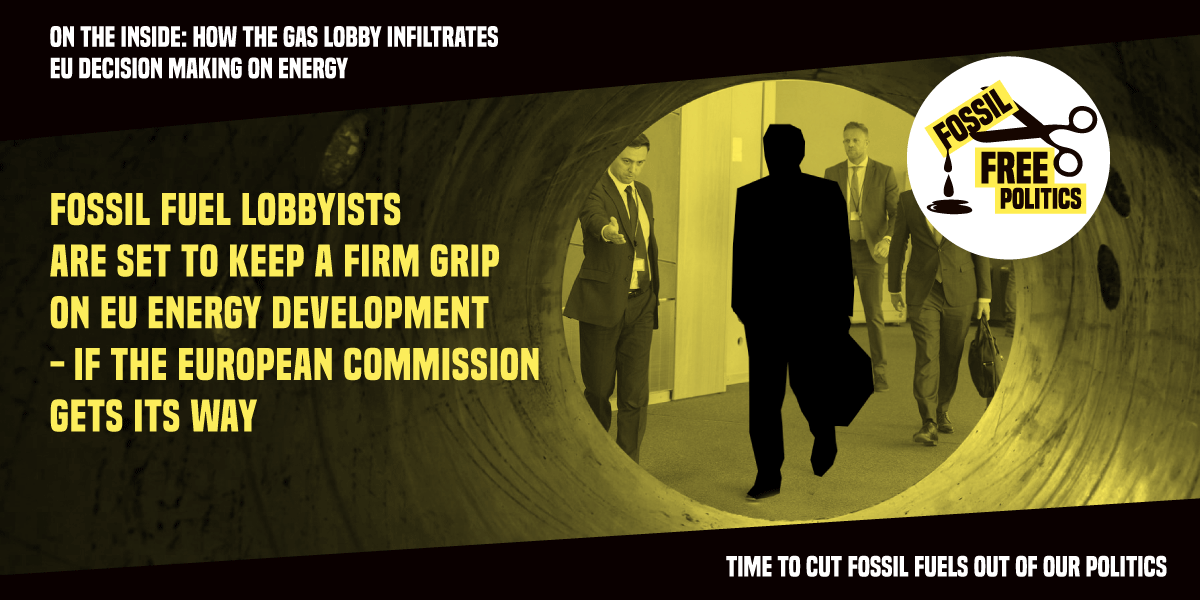
Fossil Fuel Lobbyists Set to Keep Firm Grip on EU Energy Development

Categories

Fossil Fuels

Gas industry lobbyists are expected to retain a stranglehold on Europe’s energy future, with a formal role in EU decisions on energy infrastructure development and funding, a new analysis of European Commission policy proposals reveals today.

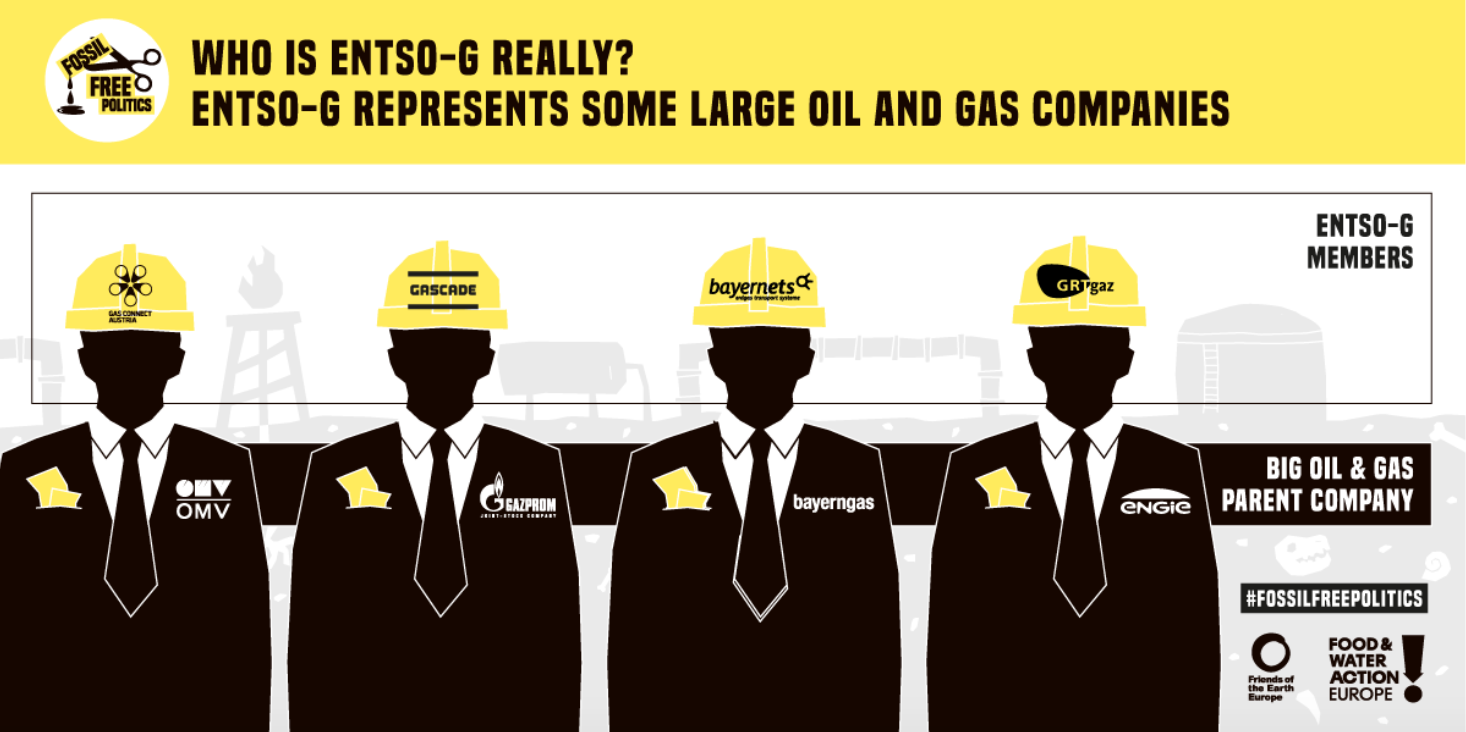
The European Commission has proposed to keep an obscure body advocating for vested gas industry interests – the European Network of Transmission System Operators for Gas (ENTSO-G) – at the heart of EU decisions on funding and prioritisation of energy projects. The proposed reforms to laws governing EU energy infrastructure – the so-called Trans-European Energy Infrastructure (TEN-E) regulation – are set to be debated in the European Parliament this month as part of the European Green Deal.

Too much control to gas lobbyists

Friends of the Earth Europe and Food & Water Action Europe warn the reforms give too much control to fossil gas companies, while the Commission has ignored civil society and scientists’ concerns.

Myriam Douo, corporates campaigner for Friends of the Earth Europe said:

“The last people to take advice from in a climate crisis should be fossil fuel lobbyists. It’s unacceptable for the EU to outsource decisions on Europe’s energy future to gas lobbyists. Gas is a dangerous fossil fuel which must be phased out. The fossil fuel industry’s proximity to our politicians has allowed it to pocket over a billion euros in public subsidies while weakening climate action – this must stop.”

Conflict of interest

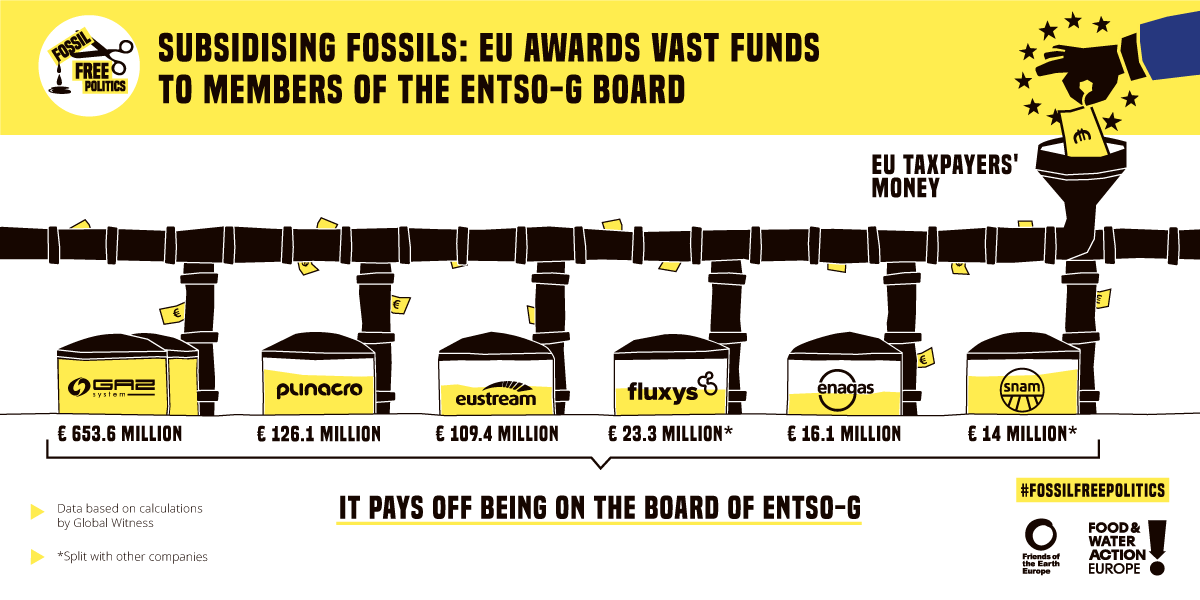
The analysis suggests some of Europe’s most powerful gas companies will be able to unduly influence the awarding of billions in EU taxpayer subsidies:

  • The previous TEN-E oversaw severe delays, abandoned projects, and the waste of €440 million of EU taxpayers’ money on gas projects which have been or are likely to be cancelled – thanks to questionable advice from ENTSO-G.
  • The gas transport industry was able to help direct €1 billion in EU taxpayer funds to gas projects by ENTSO-G members, such as the controversial EastMed pipeline, designed to link Israel and Cyprus to Greece, or the abandoned MidCat pipeline between France and Spain.
  • The European Commission has ignored the overwhelming views of the public (99.6%) opposing fossil gas in its public consultation.
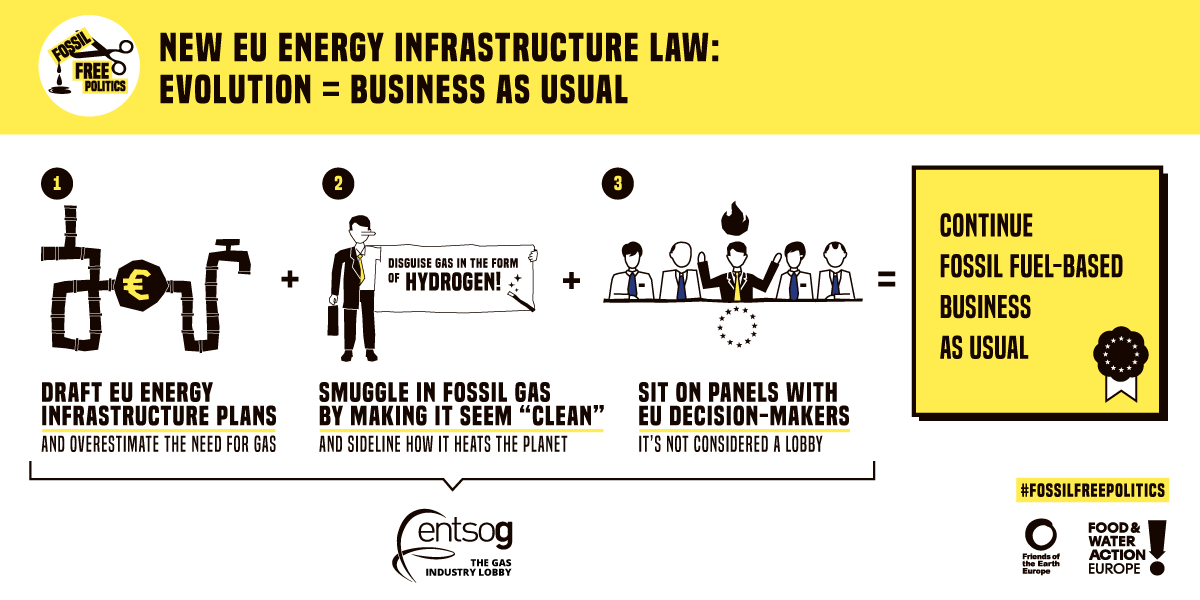
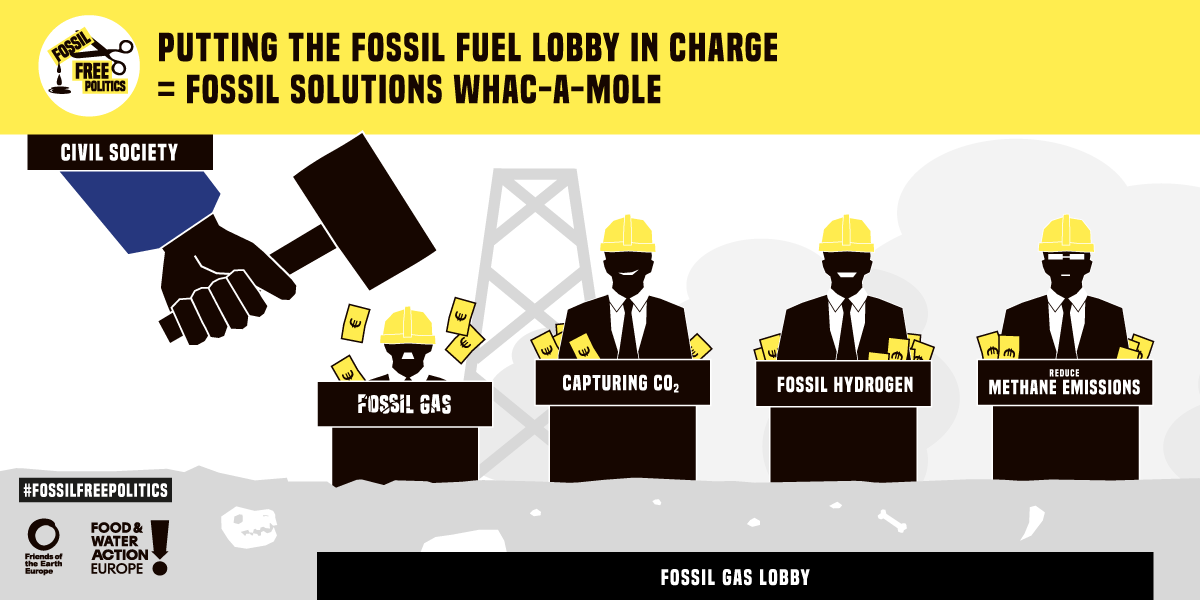
  • The European Commission promises to stop subsidising fossil gas projects in the new TEN-E regulation, but nevertheless keeps a central role for the fossil gas industry in designing the system. The new regulation risks opening the door to gas through fossil-based hydrogen.

We need fossil free politics

The NGOs call on the EU to remove the priority seat that ENTSO-G currently enjoys, and replace it with an independent in-house body to advise on all decision-making processes on energy infrastructure; and to end the influence of fossil fuels on our politics.

Frida Kieninger, Senior Campaigner, Food & Water Action Europe said:

“Tasking gas infrastructure corporations to help the EU define our future energy system is an endeavour doomed to fail Europeans and the climate. We urgently need an independent expert body free from fossil fuel influence to advise the EU on priority energy infrastructure developments. It is now up to the European Parliament and the Council to correct the proposal and cut fossil fuel interests out of politics.”

How the gas lobby infiltrates EU decision making

La Coordinadora Stop Ganadería Industrial demanda al Gobierno de España una moratoria a la ganadería industrial

Categories

Fossil Fuels

¡Firma la petición!

  • La Coordinadora Estatal Stop Ganadería Industrial lanza hoy 22 de diciembre una recogida de firmas en apoyo de su petición de una moratoria a la ganadería industrial en España.
  • Se pide al Ministro de Agricultura, Pesca y Alimentación y a la Ministra para la Transición Ecológica y el Reto Demográfico que, en base a sus competencias, se suspenda la concesión de licencias de nueva creación y ampliación para explotaciones de ganadería intensiva ante su proliferación desmesurada y descontrolada en España.
  • Las explotaciones ganaderas intensivas generan graves riesgos para la salud pública, el medioambiente, el mundo rural y el bienestar animal, por lo que es urgente actuar.


Para la Coordinadora Estatal Stop Ganadería Industrial, que agrupa decenas de movimientos vecinales rurales de diversos lugares de España junto con organizaciones nacionales e internacionales, la desmesurada y descontrolada expansión de la ganadería intensiva en España en los últimos años, que ha encontrado una fuerte contestación social, requiere que la Administración del Estado tome medidas para regular este sector con una visión de conjunto.

“No se está evaluando la capacidad de cada territorio para acoger este tipo de actividades, que son más industriales que ganaderas, lo que está llevando a que muchos pueblos se queden sin agua potable”, asegura Inma Lozano, portavoz de la Coordinadora Estatal. “En el medio rural necesitamos empleo de calidad con actividades sostenibles que cuiden de un recurso imprescindible, y un derecho humano, como es el agua”, añade la portavoz.

La Coordinadora Estatal Stop Ganadería Industrial aboga por frenar este crecimiento descontrolado del sector y orientarlo hacia un modelo que responda a las necesidades de las personas consumidoras, los y las ganaderas, la población del medio rural, el medioambiente y la urgente lucha contra la crisis climática. Para ello recoge desde hoy firmas en https://actionnetwork.org/petitions/moratoria-ganaderia-industrial con el apoyo de Food & Water Action Europe, Amigos de la Tierra, Justicia Alimentaria, València Animal Save, Ecologistas en Acción y Compassion in World Farming.


EU Green Deal Undermined by Infrastructure Legislation that Opens Backdoor for Fossil Gas

Categories

Fossil Fuels

BRUSSELS – The EU Commission’s new proposal for a revised Trans European Networks for Energy (TEN-E) regulation creates, despite improvements, still loopholes for fossil gas, which risk the overall credibility of the European Green Deal.

The legislative proposal determines rules for top-priority cross-border energy infrastructure (Projects of Common Interest or PCIs). It is one of the first energy draft laws since the EU Green Deal was announced one year ago, and aims to  align EU support for infrastructure with climate targets.

“Proudly presenting a TEN-E regulation that fails to exclude climate-wrecking fossil gas projects is beyond cynical, says Frida Kieninger, Campaign Officer at Food & Water Action Europe. “We are in the middle of a climate crisis, and we cannot afford to continue with fossil fuel business as usual, let alone expand fossil fuel infrastructure with tax money. It is now up to the EU Parliament and Council to fix what the EU Commission failed to present: A truly fossil-free TEN-E regulation.”

While Europe needs to swiftly move away from fossil fuels, the TEN-E regulation draft proposes new gas categories which could benefit from streamlined environmental impact assessments, accelerated permitting procedures and EU taxpayers’ money. Both the categories for smart gas grids as well as mega hydrogen pipelines (a ‘hydrogen backbone’) risk being back doors for fossil gas infrastructure which will further lock Europe into a costly and polluting trajectory. 

The EU Commission’s inclusion of hydrogen infrastructure among priority infrastructure in the TEN-E does not specify the kind of hydrogen that should be transported. While less than 0.1% of hydrogen generated in the EU today is renewables-based, fossil fuels-based “blue” hydrogen combined with carbon capture and storage (CCS) to abate CO2 emissions is often hailed as a climate solution. The TEN-E draft proposes both hydrogen and CO2 transport infrastructure as top EU priorities. This risks supporting ‘blue hydrogen’ and CCS, a dangerous, unproven technology which the fossil gas industry promotes as a silver bullet. As long as the TEN-E does not explicitly exclude fossil-based hydrogen, our chances to limit global warming are dire. 

The links between hydrogen and the fossil gas lobby are documented in the recent report ‘The hydrogen hype: Gas industry fairy tale or climate horror story?’

A number of NGOs’ have criticised the crucial role that the current TEN-E grants to the gas transport industry (ENTSO-G) in the PCI selection process. The draft proposal, unfortunately, only suggests minor changes. The blatant conflict of interest the proposal keeps largely unaddressed risks harming its credibility as a legislation in line with EU climate targets.

“It was already unacceptable that the fossil gas-heavy TEN-E allows the fossil gas transport industry to hand out EU tax money to its own members. It is even more unacceptable that a revised TEN-E that wants to be aligned with the Paris Agreement and EU climate targets tasks again the very same fossil gas transport industry to select allegedly ‘green’ infrastructure projects like hydrogen pipes or biogas grids. The companies that have a clear vested interest in expanding the gas network should not be tasked with  building the energy networks of the future,” says Frida Kieninger.

***

Notes to the editor:

Food & Water Action Europe and Friends of the Earth Europe report on the role of ENTSO-G in securing subsidies for its members’ projects, titled “On The Inside: How the gas lobby infiltrates EU decision making on energy” and Global Witness report “Pipe Down How gas companies influence EU policy and have pocketed €4 billion of taxpayers’ money“.

The Commission proposal places ENTSO-G, among other things, at the heart of determining the methodology for the Cost Benefit Analysis of the projects and at the heart of determining which projects can be included in the network plan (TYNDP), a prerequisite to become a PCI. 

Disclosed: gas industry lobby uses hydrogen to secure billions in tax payers’ money

07.12.2020, Brussels – The European Hydrogen Strategy (1), as announced by the European Commission in July, is in fact a ‘Trojan horse’ for the gas industry which managed to secure massive tax payers’ support for investments. That is one of the conclusions of a new investigative report The hydrogen hype: Gas industry fairy tale or climate horror story?’, published today. The report by Brussels based lobby-watchdog Corporate Europe Observatory (CEO), Food & Water Action Europe and Re:Common, is based on an analysis of over 200 documents obtained through freedom of information.

The next few days are packed with significant dates including the first anniversary of the European Green Deal (11 December) and the European Council summit of national leaders (10-11 December) with the EU’s proposed Climate Law on the agenda. Also imminently expected will be the presentation of the Commission’s plans for the new TEN-E regulation, which will be decisive in determining the level of support for gas infrastructure across Europe. Today’s report shows that the EU and national governments’ embrace of ‘hydrogen hype’ risks derailing the Green Deal and Europe’s climate ambitions.

The European Commission’s hydrogen plans are almost identical to the demands of the influential lobby group ‘Hydrogen Europe’, including goals and investments needed for hydrogen both inside and outside the EU, estimated at €430 billion by 2030. The reality is that the EU risks being caught in a fossil gas trap (2).

Belén Balanyá, researcher and campaigner at Corporate Europe Observatory, said: “Today less than 0.1 per cent of hydrogen produced in Europe is from renewable electricity and can thus be called green. More than 90 per cent is produced with climate-destroying fossil fuels. But thanks to a coordinated, massive lobbying campaign the gas industry has secured massive amounts of tax payers’ subsidies. Every policy-maker should acknowledge that the gas industry’s hydrogen hype has nothing to do with tackling the climate emergency, and everything to do with ensuring the core business model of energy giants is seen as relevant – and profitable.”

Our new research finds that in just one year the hydrogen lobby spent almost €60 million influencing European policy-makers, and met with key hydrogen-related EU commissioners and their cabinets more than 13 times a month between December 2019 and September 2020.

The mastermind behind two of the most influential groups pushing the hydrogen hype, Hydrogen Europe and the Hydrogen Council, is PR firm FTI Consulting, recently exposed in the USA (2) for creating fake pro-fossil fuel grassroots organisations on behalf of Big Oil and Gas. Also revolving doors are in full swing: two deputy directors general for energy at the European Commission have ended 30 year careers to go straight into jobs with law firm Baker MacKenzie, which is building up its hydrogen profile.

Frida Kieninger, campaigner at Food & Water Action Europe said: “Our report reveals how big gas pipeline operators like Snam, Gasunie, Enagás and Fluxys are using hydrogen to get support and funds for Europe’s oversized fossil gas infrastructure network. This so called ‘Hydrogen Backbone’, a plan for a network that could include 23,000 km of pipelines by 2040, is a rebranding exercise of the gas industry. Even if Energy Commissioner Simson is not yet clear whether gas projects will be excluded from priority infrastructure-projects under TEN-E, there is a high risk the EU will lock us in further to a fossil fuel future.”

Elena Gerebizza, energy campaigner at Re:Common said: “Conflict of interests are big. The European Commission has put the gas industry in the driving seat of new hydrogen-focused bodies, such as the ‘Clean Hydrogen Alliance’, tasked with drawing up a list of hydrogen projects eligible for public funds. The gas lobby intends to use  hydrogen hype to preserve the current centralised, fossil fuel-based energy model that is owned and controlled by a small handful of Big Energy corporations, including the Italian transmission system operator Snam. Instead the EU should be focussed on real climate solutions which lie in decentralised, electrified, sustainable energy production which would benefit both the climate and citizens.“

ENDS

Please find the report here: https://fweuro.pe/HydrogenHype

For interviews or more information please contact:

Frida Kieninger (French/English/German) [email protected] +32(0)487249905

Belén Balanyá (English/Spanish), [email protected] +31(0)633090386

Elena Gerebizza (English/Italian), [email protected] +39(0)340 6705319

Notes to editors:

  1. European Commission, ‘A hydrogen strategy for a climate-neutral Europe’, 7 July 2020, https://ec.europa.eu/energy/sites/ener/files/hydrogen_strategy.pdf
  2. Europe in the Gas Trap – Investigate Europe (investigate-europe.eu)
  3. https://www.nytimes.com/2020/11/11/climate/fti-consulting.html


Industry-Friendly Methane Tracking Schemes Are Insufficient

Brussels, 23 November, 2020 – The Oil and Gas Methane Partnership (OGMP) which is a Climate and Clean Air Coalition initiative led by the UN Environment Programme with the European Commission and Environmental Defense Fund, today committed to a new framework for monitoring, reporting and reducing methane emissions.

The partnership includes polluters like Shell, BP or Total among its 62 corporate members. On board are also European’s most important fossil gas transmission system operators (TSOs) who have benefited greatly from the EU mega gas infrastructure build-out so far, including from EU tax money thanks to the Project of Common Interest (PCI) label.

Frida Kieninger, Campaigns Officer at Food & Water Action Europe released the following statement:

“The oil and gas industry has routinely and massively underestimated methane emissions associated with drilling in order to sell the bogus narrative that fracking is a cleaner form of fossil fuel extraction, and that fossil gas can be somehow stripped of these climate-wrecking emissions. We cannot waste time on industry-friendly tracking schemes; what we need to do is ban the import of fracked gas and the important emissions that come with it. We need to transition off fossil fuels. We know that limiting global warming to 1.5 degrees or even 2 degrees is not possible if Europe continues its dependence on fossil gas. Purely cosmetic changes, like finding new ways to quantify the harms inflicted on our planet by fossil fuel corporations, are a distraction from the most urgent task: We need to ban fracked gas imports and stop the expansion of dirty fossil gas infrastructure before it’s too late.” 

***

A presentation of the framework on the EU Commission website can be found here.

Contact: Frida Kieninger – [email protected], +32 487 24 99 05