

Laugh? Cry? UK Plans to Let Big Biz Police Itself

Categories

Food

By Eve Mitchell

FoodandWaterEuropeHorseburgerThe UK Department of Food and Rural Affairs (Defra) has a plan: Businesses should have a bigger say in how regulations are enforced.

Admitting a “significant shift” in its press release, Defra “hailed a change that puts business in charge of driving reform.” The goal is “lightening needless burdens without weakening essential controls.” This made me squirt tea out my nose.

To share a few recent examples of the way “needless burdens” are holding back food business:

1) Horsemeat is still present in European beef supplies, and the UK government is reportedly stalling the release of a now 16-month-old investigation report. Publication is said to be “blocked amid government concerns that the public would be frightened by the idea that criminals were still able to interfere with their food.” Too right. All the promises about the “integrity” of our food system from supermarkets, and all the reassurance from the government that meat is safe because it is traceable, yet we still don’t know where the horse came from, who did it, or what will be done about it. Hard to see the needless burdens there.

2) The fallout from the Guardian expose on the scandalous things going on in the UK poultry industry grows ever murkier. Having been told by the Food Standards Agency (FSA) that it inspected the factories concerned and gave them ratings of “good” and “generally satisfactory” (makes your mouth water, no?), we have since learned that in fact the FSA now admits that “dirty birds from the floor being thrown back into food production [was] a serious breach.” The “needless burden” of regulation means that no penalties will be issued as the company says it’s fixed the problem. As of today the FSA website still says it “will publish the completed audits in due course.”

3) Then there’s the salmon labelled “wild Scottish” in supermarkets that turns out to be intensively farmed Norwegian fish. “Foreign-owned corporations are exploiting the world-renowned and prized image of Scottish salmon – an iconic image of Scotland – to obtain a price premium.” International industrial fish giant Marine Harvest insists the industry is “heavily” or “highly regulated” (in Scotland in 2012 here, and in Ireland in 2013 here). Yet oddly, despite the huge furore over horsemeat labelled as beef, this burden apparently does not mean we can always tell what’s being sold on supermarket shelves.

4) Meanwhile, the ongoing European salmonella outbreak shows us how dangerous failure is in a complex international food supply chain. It reminded me, naturally enough, that on July 28 jury selection started in the U.S. federal trial of three former Peanut Corporation of America bosses over the vast salmonella food recall in 2008-9. The three face a 76-count indictment that they “created fake certificates showing their products were uncontaminated when laboratory results showed otherwise.” One defendant admitted to faking documents. No mere infringement, we learn the plant was “not fit to produce products for human consumption.” For readers unfamiliar with the case, 714 people in 46 states were infected and nine people died in the outbreak. For Americans this is also contamination on an iconic level – contaminated peanut butter gets right to the heart of things, like school lunchboxes, and deliberate adulteration of food is exactly the kind of thing that regulation is supposed to prevent. This failure of proper enforcement, and how far the impacts can travel, is also exactly the kind of thing we need to worry about as the US EU trade negotiations continue.

There are other signs of strain in our food supply, too. At the end of July an antibiotic banned since 1995 as an increased cancer risk turned up in animal feed supplied by a Dutch company to farms in several other EU countries. Since in all likelihood this feed has already been used, it may be necessary to cull as many as 12,700 cattle and 50,000 pigs to clear the drug from the food system. Amid all of this, UK meat inspectors have gone on strike because the FSA refused to give them a 1 percent cost of living pay rise. If these are the problems we know about, I for one am worried about what we don’t yet know, and who’s looking out for us if the inspectors are this angry.

As citizens we’ve had to get used to having serious questions to our government answered by emails that sign off “Regards, Customer Contact Unit, Defra”, but inviting industry to regulate itself in such circumstances is surely taking this business-friendly thing a bit too far.

The Horseburgergate Cliffhanger: Episode III — Where’s The Report?

Categories

Food

By Eve Mitchell

Fair FoodRemember that huge scandal about illegal horsemeat in Europe’s food chain? Ever hear about who was responsible? No, me neither.
We good citizens of the UK were recently told that the latest round of testing found no horsemeat in meat products on sale in our shops. We were assured that of 50,876 sample results submitted to the Food Standards Agency (FSA) since February 2013, only 47 were positively horse, and none at all since the June 2013 report (remember the industry does the testing and then sends in the results). We’re also assured that no horse was found in the testing the UK has done as part of the EU-wide screening programme of processed beef products.

The horsemeat isn’t exactly gone, though. The Commission did find 16 new cases of beef contaminated with horsemeat across the EU, a development the Commissioner calls “encouraging”. Well over a year ago French authorities suggested some of the “horse” (that is supposed to be beef) might actually be donkey. Odd then, isn’t it, that the tests only look for, at most, beef, horse, lamb, goat, pork, chicken and turkey? Also, they only tested products that were supposed to be more than 15 percent beef, so the cheaper end of the market could still be a free-for-all. I guess we’ll have to live with all that for now – we’ve got bigger problems.

The UK Government says again, “The full participation [in testing] reflects the Government’s commitment to consumer protection and tackling food fraud.” It’s not the hardest tackle I’ve ever seen. We’re told that in 2013 the Commission “confirmed recurrent non-compliance with legislation applicable to labelling of meat products in most Member States”. That’s big. Really big. That needs a serious response.

Yet what we still haven’t been told is what comes next, or who put the horsemeat in the system or how they will be brought to book. It seems fair that whomever did this should be heavily fined, at least, to help the taxpayer cover the costs of all this testing and investigating. The fine-toothed inquiry into the mess conducted by the UK Parliament turned into a blame game extraordinaire, with supermarkets, food companies, regulatory agencies and Government Ministers all trying to slime out from under the weight of scrutiny. The inquiry Committee said way back in July 2013 it was “dismayed at the slow pace of investigations and would like assurance that prosecutions will be mounted where there is evidence of fraud or other illegal activity”.

Slow, indeed. In January 2013 the Government had promised a full report of its investigations, then finally in mid-May 2014 we gathered we’d get the report “within the next month”. That didn’t happen, as the Government demanded “more detail” from the report author. A conveniently-timed Cabinet reshuffle in July offered the chance to delay again until some unnamed point in the next Parliament (which next sits in September). Meanwhile, allegations fly that the report’s author has been told to “tone down” his findings. Maybe he gave them a bit too much detail?

Not that things at the EU level are much better. The Commission says that when horse is found marked as beef, “appropriate enforcement measures” include market withdrawal, tracing, relabeling, extra controls for food business operators and “penalties”. The old song had it wrong: the word “prosecutions” actually seems harder to say than “sorry”.

Former Food Minister Owen Paterson said way back in February 2013 the horsemeat scandal was a “fraud and a conspiracy against the public”. Of all the judgments he got wrong, that one does ring true. The real question now is: how high does the conspiracy go?

PS – If you thought you could avoid all this by getting chicken, just hold your horses (sorry, couldn’t resist). As the Guardian and EcoStorm have helpfully showed us, elements of the UK chicken industry that supply supermarkets and fast food outlets are just plain nasty – and that’s before we’re treated to a TTIP/RAFTA race-to-the-bottom on food standards. Rest assured, the good old FSA is on the case: it is “conducting audits and investigations at the plants. These are underway today [25 July] and the findings will be published in due course.” Initial findings are that standards at the two poultry plants involved are “good” and “generally satisfactory”. Bon appétit!

The Horseburgergate Cliffhanger: Episode III — Where’s The Report?

Categories

Food

By Eve Mitchell

FoodandWaterEuropeHorseburgerRemember that huge scandal about illegal horsemeat in Europe’s food chain? Ever hear about who was responsible? No, me neither.

We good citizens of the UK were recently told that the latest round of testing found no horsemeat in meat products on sale in our shops. We were assured that of 50,876 sample results submitted to the Food Standards Agency (FSA) since February 2013, only 47 were positively horse, and none at all since the June 2013 report (remember the industry does the testing and then sends in the results). We’re also assured that no horse was found in the testing the UK has done as part of the EU-wide screening programme of processed beef products.

The horsemeat isn’t exactly gone, though. The Commission did find 16 new cases of beef contaminated with horsemeat across the EU, a development the Commissioner calls “encouraging”. Well over a year ago French authorities suggested some of the “horse” (that is supposed to be beef) might actually be donkey. Odd then, isn’t it, that the tests only look for, at most, beef, horse, lamb, goat, pork, chicken and turkey? Also, they only tested products that were supposed to be more than 15 percent beef, so the cheaper end of the market could still be a free-for-all. I guess we’ll have to live with all that for now – we’ve got bigger problems.

The UK Government says again, “The full participation [in testing] reflects the Government’s commitment to consumer protection and tackling food fraud.” It’s not the hardest tackle I’ve ever seen. We’re told that in 2013 the Commission “confirmed recurrent non-compliance with legislation applicable to labelling of meat products in most Member States”. That’s big. Really big. That needs a serious response.

Yet what we still haven’t been told is what comes next, or who put the horsemeat in the system or how they will be brought to book. It seems fair that whomever did this should be heavily fined, at least, to help the taxpayer cover the costs of all this testing and investigating. The fine-toothed inquiry into the mess conducted by the UK Parliament turned into a blame game extraordinaire, with supermarkets, food companies, regulatory agencies and Government Ministers all trying to slime out from under the weight of scrutiny. The inquiry Committee said way back in July 2013 it was “dismayed at the slow pace of investigations and would like assurance that prosecutions will be mounted where there is evidence of fraud or other illegal activity”.

Slow, indeed. In January 2013 the Government had promised a full report of its investigations, then finally in mid-May 2014 we gathered we’d get the report “within the next month”. That didn’t happen, as the Government demanded “more detail” from the report author. A conveniently-timed Cabinet reshuffle in July offered the chance to delay again until some unnamed point in the next Parliament (which next sits in September). Meanwhile, allegations fly that the report’s author has been told to “tone down” his findings. Maybe he gave them a bit too much detail?

Not that things at the EU level are much better. The Commission says that when horse is found marked as beef, “appropriate enforcement measures” include market withdrawal, tracing, relabeling, extra controls for food business operators and “penalties”. The old song had it wrong: the word “prosecutions” actually seems harder to say than “sorry”.

Former Food Minister Owen Paterson said way back in February 2013 the horsemeat scandal was a “fraud and a conspiracy against the public”. Of all the judgments he got wrong, that one does ring true. The real question now is: how high does the conspiracy go?

PS – If you thought you could avoid all this by getting chicken, just hold your horses (sorry, couldn’t resist). As the Guardian and EcoStorm have helpfully showed us, elements of the UK chicken industry that supply supermarkets and fast food outlets are just plain nasty – and that’s before we’re treated to a TTIP/RAFTA race-to-the-bottom on food standards. Rest assured, the good old FSA is on the case: it is “conducting audits and investigations at the plants. These are underway today [25 July] and the findings will be published in due course.” Initial findings are that standards at the two poultry plants involved are “good” and “generally satisfactory”. Bon appétit!

Germany’s Environment Agency Calls for an End to Fracking

Categories

Food

By Geert Decock

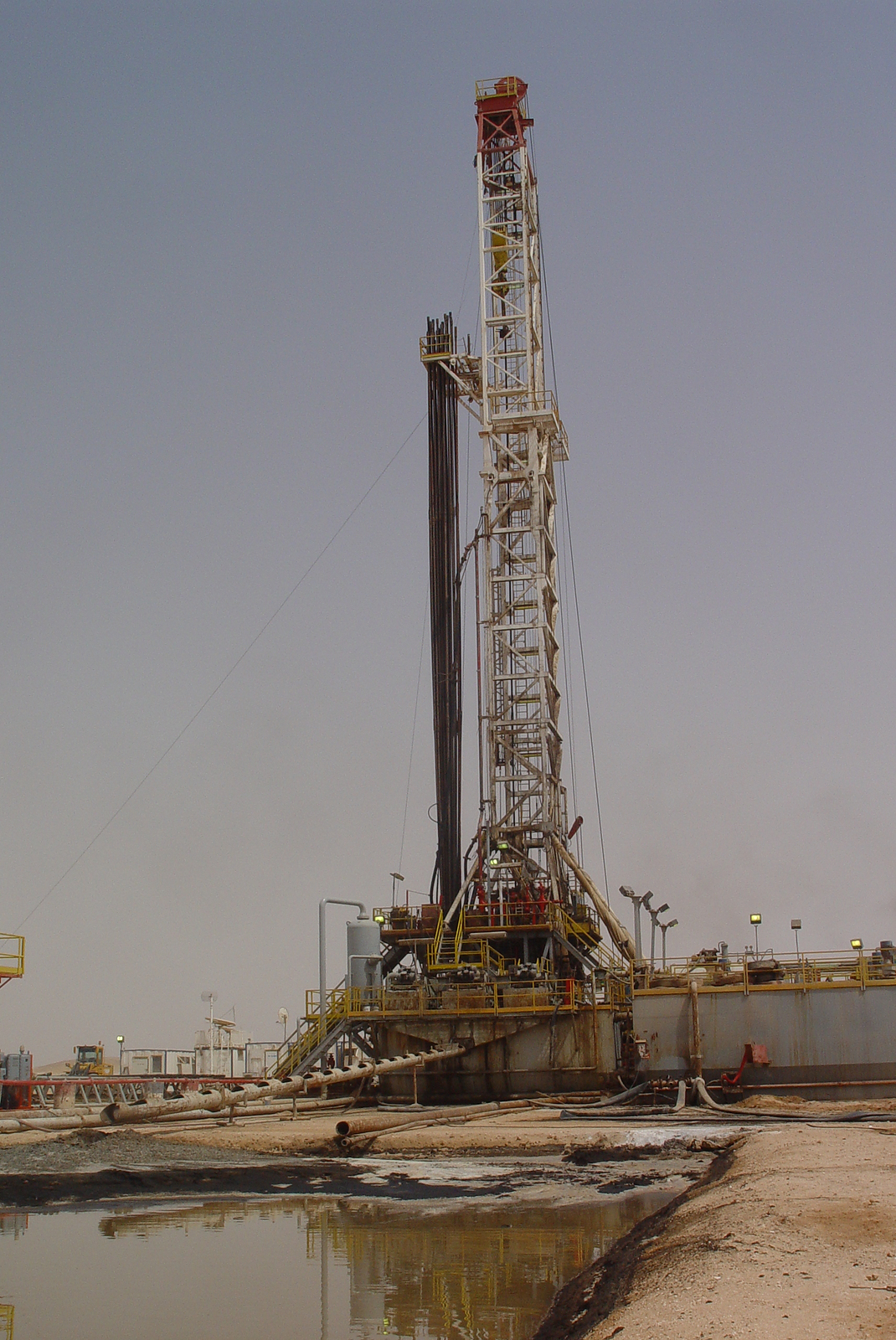
Fracking rig and wastewater pit

How far do you need to sit from the halls of power to not be influenced by constant lobbying and spin from Big Oil & Gas? The correct answer may be surprising: 1.5 hours exactly. How so? That is how long it takes to drive from the office of German Chancellor Angela Merkel in central Berlin to the Federal Environment Agency of Germany in Desslau-Rosslau, southwest of Berlin.

Just last week, the Federal Environment Agency released a 600+ page report giving a detailed outline of the many risks involved in fracking. This research led its president Maria Krautzberger to this conclusion (translated from German): “Fracking is and remains a risky technology and therefore requires considerable limits to protect the environment and health. As long as the significant risks involved in this technology cannot yet be predicted with certainty and controlled, there should be no fracking in Germany to extract shale gas and coalbed methane.”

Her warning stands in sharp contrast with the approach of other European governments, e.g. in the UK and Poland, who have put large swaths of their territory up for grabs for shale gas exploration companies. Given the serious water-related risks of fracking, the German Federal Environment Agency states clearly that a lot of areas should be exempted from fracking: drinking water protection zones, spa areas, nature reserves and the catchment areas of lakes and reservoirs.

The report of the Federal Environment Agency also clearly confirms something that anti-fracking campaigners have been saying for years, namely that the treatment of the flowback from shale gas wells remains an unresolved issue. (Flowback is the liquid that flows back to the surface when a well is fracked.) The flowback contains heavy metals and aromatic hydrocarbons like benzene. Sometimes, radioactive materials can also flow to the surface. Again, president Maria Krautzberger: “No company has been able to offer a concept for the sustainable water treatment of flowback from fracking operations”.

What about industry’s oft repeated talking point that natural gas can be a transition fuel to a zero-carbon power generation? Again, the German Federal Environment Agency begs to differ with those who link shale gas and the fight against climate change: “The fracking technology is not a miracle cure for climate protection that can make the transition to renewable energies easier. It would be better, if our country would concentrate on forms of energy that are demonstrably better for the environment, such as renewable energies”.

The Germans are well known for their ‘Gründlichkeit’, or thoroughness. If their environment agency makes such strong claims about the risks of fracking after a couple of years of research, we better take their findings seriously!

On Fracked Gas, Same Rhetoric—Different Century

Categories

Food

By Geert Decock

FoodandWaterEuropeFrackingRussiaAre you familiar with the British comedian Rowan Atkinson? Does Mr. Bean maybe ring a bell? Then maybe you know the sketch comedy piece where Atkinson plays a rather deluded Member of Parliament who makes a nonsensical speech, high on rhetoric, low on substance. I had to think back to Atkinson’s “Sir Marcus Browning MP”, when reading the NATO Secretary-General Anders Fogh Rasmussen’s remarks last week that Russia is behind the growing anti-fracking movement in Europe, fomenting opposition to shale gas and even funding anti-fracking groups. Sir Marcus Browning finishes his speech (spoiler alert!) by insisting he doesn’t want to end up like “the blind man, in the dark room, looking for a black cat… that isn’t there”. By making his comments about Russian support for the European anti-fracking movement, Rasmussen looks exactly like “the blind man, in the dark room, looking for a black cat … that isn’t there”.

These accusations of Russia’s influence in the anti-fracking movement have repeatedly been made. And until today, without a shred of evidence.

GM Crops in the EU – Game On

Categories

Food

By Eve Mitchell

Say No to GM Feed in EuropeAs widely predicted, the European Council agreed this morning to the compromise proposal on so-called national “opt outs” for GM crops. What happens next will be interesting indeed.

Luxembourg and Belgium abstained from the vote. Every other EU Member State supported the deal, but that doesn’t give a full picture of the situation by any means.

Around half of the Member States said outright they would ban GM crops or alluded that they would. Others noted the difficulties yet to be faced in agreeing coexistence rules needed to protect non-GM agriculture from GM contamination, including across international boundaries in our relatively small countries. None dismissed the delicacy of the next stage – securing the agreement with the EU Parliament. One speaker called the emerging agreement “historic,” and given the issue was first broached in 2009, I suppose that’s true to a point. More than one country called for the revision of the ten-year-old regulations of GMOs, and others the need to update and revise how Europe conducts its risk assessments of GMOs (as unanimously called for by this same Council. That’s a big can of worms indeed. Several speakers reminded the Council of the strong public opposition to GM food and crops back home. At the end of the meeting, Italy said that the agreement “demonstrates the unity of Europe”.

I heard a lot of things during this meeting, but unanimity wasn’t one of them.

So on we go to that next stage, where a brand new Parliament will have to take on a highly controversial issue that touches on food production and safety, public health, international trade, environmental protection, national sovereignty, democratic accountability and corporate control of agriculture all in one go. Good luck to them. Good luck to us. We will be relying on the countries who signalled disquiet with any number of issues in this deal (while agreeing to it anyway, in the spirit of cooperation of course), to insist those issues are clearly addressed and real answers provided. The pressure being applied will make those lines hard to hold.

If the Parliament and Council can someday wrestle an actual agreement out of all that, we’ll then have to see if the biotech industry plays ball and permits any bans to stand. If anything like half of EU countries ban GM crops in all or parts of their territories it will give the industry a pretty big headache of multilingual regulations to adhere to across what is supposed to be a Single Market. That nagging issue of coexistence will be there, as well as liability for any damage done by their products, particularly if that damage occurs across international borders into areas banning the crops in the first place. Since the chief GM lobby group EuropaBio has already put out a tetchy statement of disappointment saying, “This deal shows the lack of willingness of the EU institutions and Member States to correctly implement the current regulatory framework for GMO approvals they had decided upon themselves,” it isn’t at all clear the rules of the game will be agreed by all the players. Then again the industry has the WTO red card in its back pocket they can use to challenge any ban or start a trade war. Mere citizens have no such backstop.