


GM Crops for Europe – The Deal Nobody Wants

Categories

Food

By Eve Mitchell

Say No to GM Feed in EuropeFor those of you who don’t spend hours every day keeping up with the details of EU agriculture politics, I’ll start simple: Last week Europe took a big step toward GM crops. If this bothers you, you need to tell your elected representatives, and you need to do it now.

Here’s the latest: On 28 May, a preparatory meeting agreed that on 12 June the Council will vote on a proposal for so-called “opt outs” on GM crops. There’s every indication the Council will vote in favour.

This is where it gets a little more confusing. Giving countries the right to ban GM crops, as the proposal is often described, sounds like a good thing. It’s not that easy.

The proposal (a leaked version of which is available at the bottom of the page here) is motivated by the desire in some quarters to make it easier for the EU to authorise GM crops and thereby easier to grow them. In our Single Market such an authorisation applies to all 28 Member States.

Countries wishing to “opt out” of approved GM crops step into a complex and legally uncertain process under this proposal. The first (and believe it or not most straight-forward) step is that the country can ask the Commission to ask the GM company’s permission for the country to opt out of the crop in question. This is a shocking assault on democratic decision making, underpinned by a clear conflict of interest for the biotech industry, which one expects will prefer to take its chances that some farmers will go ahead and grow the stuff anyhow, which in the Single Market would be perfectly legal.

If the company declines this request to ban its own products, the next two potential ways for a country to “opt out” of a GM crop are heavily qualified, dripping with phrases like:

  • “There should be the possibility for that Member State to adopt reasoned measures restricting or prohibiting the cultivation of that GMO once authorised” (that doesn’t feel very robust. What does “reasoned” mean?)
  • “On the basis of grounds distinct from those assessed according to the harmonized set of Union rules” (so discrepancies in scientific understanding on safety aren’t allowed.)
  • “When new and objective circumstances justify an adjustment” (wonderfully vague – whose objectivity counts here? Who judges what is justified?)

It is all dreadfully unclear legally, and all options require the acquiescence of the company that has refused to permit the country from opting out in the first place. From what we can see from the leaked documents, any attempt by a country to ban an approved GM crop could wind up in court, and quite possibly a trade war via the WTO and/or other international trade agreements for the whole of the EU – a potent weapon indeed.

Last time pro-GM EU countries tried this in 2012, the Germans told the Council they objected to the breach of the Single Market, and the UK objected to both the breach of the Single Market and the lack of legal clarity, saying we “need to make the system work, not worse.” The UK, “While it is possible to draft text that looks legally sound it is difficult to envisage how a ban could be substantiated and evidenced in practice in a way that is strong enough to withstand a WTO challenge.”

How times have changed.

Complex internal wrangles following a change of Government have pushed Germany to support the proposal. Officially the UK now says, “This proposal should help unblock the dysfunctional EU process for approving GM crops for cultivation.” The new positions of these big hitters suggest the proposal will get the votes it needs to achieve a qualified majority and pass.

Not that the biotech industry is happy with this proposal either. André Goig, Chair of EuropaBio, said, “To renationalise a common policy, based on non-objective grounds, is a negative precedent and contrary to the spirit of the single market.

In a nutshell the political situation is:

So who is this deal for?

The sad irony of this situation is that Europe’s prudent precaution about GM crops appears to be threatened just as our friends in the U.S. are realising they want off the GM treadmill. They are voting for the kind of labels we already have here in the EU, and given everything we know about informed markets rejecting GM foods, those labels could really help tip the balance and ensure only those who actually choose to eat it find it on their plates. The resulting constriction of the market could help knock the GM industry down a peg or two, which would help all of us, including our colleagues in Africa who are being lined up as the next market to crack. Without the profits from unlabelled U.S. sales, the biotech companies might find it a bit harder to roll out their plans.

We’re entering dangerous waters. Whether you live in the U.S. or the EU tell your elected representatives you don’t want GM crops. Remember: If we refuse to put GM food in our kitchens (including the meat, milk and eggs from animals reared on GM feed), supermarkets won’t stock it. If supermarkets won’t stock it, farmers will think twice before planting it. Those of us who follow the details will keep pushing for the meaningful labels most of us want, but your help is indispensable.
What’s Beyond GMO Contamination?

Categories

Food

By David Sánchez

Read “Organic Farmers Pay the Price for Contamination” in English or Spanish.

Felix is an organic farmer in Spain, the country that hosts 90 percent of genetically modified (GM) crops in Europe. He grows grains, alfalfa and vegetables. His organic maize was contaminated by a GM variety, and therefore he lost the organic certification for his 7.7 hectare farm. He lost €14,756 (US$20,585) as a result of the preventive measures he took to avoid contamination in addition to the direct loss of being forced to sell his harvest in the conventional markets. According to the Spanish law, he has no one to blame, so cannot claim for damages. 

Tom is an organic farmer in the U.S., a country where 90 percent of soy and 93 percent of maize area is planted with GM varieties. He grows maize and is forced to take many measures to prevent contamination: planting buffer strips, delaying planting or performing extra tests, with median annual costs up to US$8,000 (€5,735). One year his maize was contaminated by a GM variety, and the buyer rejected his load, with a median loss in that season of US$4,500 (€3,226). He has no one to blame for the damage either.

The first story was reported by Greenpeace a few years ago. It just shows the tip of the iceberg when it comes to the reality of GM cultivation in Spain. The second could be the story of any of the organic farmers surveyed by Food & Water Watch and OFARM earlier this year, just released in Europe in (available in English and in Spanish).

The stories of organic and GM-free farmers in both countries are extremely similar. They’ve been forced to abandon organic cultivation of crops where there is a GM variety, incur additional labour costs and economic damages, faced financial insecurity and experienced strained relations between neighbours—without any legal protections. Clearly, what the U.S. Government, the European Commission and the industry call “coexistence” simply mean imposing GM crops. 

Nevertheless, there is one important difference: the EU only allows the cultivation of one GM maize variety so far. But the reality of European small-scale agriculture shows that the situations in those countries that allow GM cultivation (Spain, Portugal or the Czech Republic) are already too serious to be ignored. And this is something the European Commission should keep in mind when deciding whether or not to approve a new GM crop, a maize engineered by Pioneer to kill insects and resist herbicides.

We have mounting scientific evidence on the right way to create a food system to achieve sustainability and social justice goals. And the European Commission will have to decide whom do they want to stand for. Will they stand for Felix and the organic farmers, a growing sector that creates employment and puts new energies in rural areas? Or will they stand for Pioneer, Monsanto and Syngenta, who are lobbying hard to get their GM crops approved in Europe? The answer will be coming soon.

Tell the European Food Safety Authority: If it’s dangerous you want less NOT more!

What’s Beyond GMO Contamination?

Categories

Food

By David Sánchez

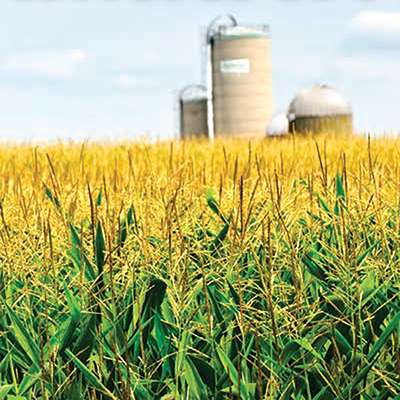
GMOContam_BlogThumbFelix is an organic farmer in Spain, the country that hosts 90 percent of genetically modified (GM) crops in Europe. He grows grains, alfalfa and vegetables. His organic maize was contaminated by a GM variety, and therefore he lost the organic certification for his 7.7 hectare farm. He lost €14,756 (US$20,585) as a result of the preventive measures he took to avoid contamination in addition to the direct loss of being forced to sell his harvest in the conventional markets. According to the Spanish law, he has no one to blame, so cannot claim for damages. 

Read “Organic Farmers Pay the Price for Contamination” in English or Spanish.

Tom is an organic farmer in the U.S., a country where 90 percent of soy and 93 percent of maize area is planted with GM varieties. He grows maize and is forced to take many measures to prevent contamination: planting buffer strips, delaying planting or performing extra tests, with median annual costs up to US$8,000 (€5,735). One year his maize was contaminated by a GM variety, and the buyer rejected his load, with a median loss in that season of US$4,500 (€3,226). He has no one to blame for the damage either.

The first story was reported by Greenpeace a few years ago. It just shows the tip of the iceberg when it comes to the reality of GM cultivation in Spain. The second could be the story of any of the organic farmers surveyed by Food & Water Watch and OFARM earlier this year, just released in Europe in (available in English and in Spanish).

The stories of organic and GM-free farmers in both countries are extremely similar. They’ve been forced to abandon organic cultivation of crops where there is a GM variety, incur additional labour costs and economic damages, faced financial insecurity and experienced strained relations between neighbours—without any legal protections. Clearly, what the U.S. Government, the European Commission and the industry call “coexistence” simply mean imposing GM crops. 

Nevertheless, there is one important difference: the EU only allows the cultivation of one GM maize variety so far. But the reality of European small-scale agriculture shows that the situations in those countries that allow GM cultivation (Spain, Portugal or the Czech Republic) are already too serious to be ignored. And this is something the European Commission should keep in mind when deciding whether or not to approve a new GM crop, a maize engineered by Pioneer to kill insects and resist herbicides.

We have mounting scientific evidence on the right way to create a food system to achieve sustainability and social justice goals. And the European Commission will have to decide whom do they want to stand for. Will they stand for Felix and the organic farmers, a growing sector that creates employment and puts new energies in rural areas? Or will they stand for Pioneer, Monsanto and Syngenta, who are lobbying hard to get their GM crops approved in Europe? The answer will be coming soon.

How Industry Steers the Conversation on Pollinator Health

Categories

Food

By Genna Reed

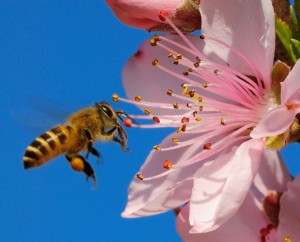
FoodandWaterEuropeBeeEarlier this week, I attended a hearing hosted by the House of Representatives Agriculture Subcommittee on Horticulture, Research, Biotechnology and Foreign Agriculture intended “to review current research and application of management strategies to control pests and diseases of pollinators.” Between the end of 2012 and the end of 2013, U.S. beekeepers lost an average of 45 percent of their colonies, which has threatened not only their livelihoods, but the very existence of one of the world’s most vital pollinators. The decline of bee populations across the country at levels higher than ever before seen is good reason for Congress to take notice, not only for the struggling bees, but also for the health of the broader environment, since bees are considered an indicator species of ecosystem health.

Colony Collapse Disorder is the term given to the disappearing-bee situation for which a single cause has not yet been defined. Members of the subcommittee saw the disorder as a problem caused by a wide variety of things, including varroa mites, disease, diet and nutrition, genetics, loss of habitat, beekeeping management practices and last but not least, “improper use of pesticides,” which “may also play a role.” The varroa mite is indeed a serious pest that should absolutely get some credit for bee losses, but it is also serving as the perfect scapegoat for Congress and agrichemical industry forces to take attention away from the harmful pesticide cocktails widely used in agriculture. As Jeff Pettis, Research Leader of the USDA’s Bee Research Lab in Beltsville, MD, testified, “…even if the varroa mite problem were solved today, this would not by itself solve all of the problems facing honey bees and beekeepers.” The weak language regarding pesticides’ impacts on bee health and the trivialization of the scientific evidence related to the adverse effects of pesticides on bees that was repeated throughout the hearing is a glaring example of how pesticide companies have been instrumental in framing the conversation surrounding bee health.

There is No “Right Way” to Frack

Categories

Food

By wenonahWenonah Hauter

Back in 2012, I reported on the Environmental Defense Fund (EDF) receiving $6 million from Bloomberg Philanthropies to advocate for fracking regulations. Therefore, yesterday’s New York Times op-ed by EDF President Fred Krupp and Michael Bloomberg, while jarring, wasn’t much of a surprise.

Claiming there’s a safe way to frack is like claiming there’s a safe way to smoke, or a safe way to shoot whiskey before climbing behind the wheel of a car. When you consider the entire lifecycle of shale development, the notion is even laughable. 

Dear London Zoo: Have you Really Thought Through This Offsetting Thing?

Categories

Common Resources

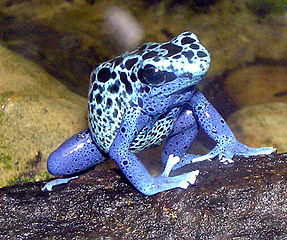
On the endangered species list, the poison dart frog would likely not support the idea of biodiversity offsetting.

By Eve Mitchell

There’s an odd notion doing the rounds that you can destroy an ecosystem and make a copy of it somewhere else if you fancy putting up a building or something. Sadly a good number of folks who should know better have bought it hook, line and sinker.

One of the fish that’s got hooked on this line is the London Zoological Society, the power behind the world-famous London Zoo based in Regent’s Park in London. This June the Zoo will sponsor and host an international conference on biodiversity offsetting that claims to be “the first global conference on approaches to avoid, minimise, restore, and offset biodiversity loss.” In theory, if you make a very long list of every single thing—living and not—in an ecosystem, and then assign a notional price to each item on the list, you can tear it all down and go shopping somewhere else to replace it.

On reflection, this is clearly nonsense. For starters, it’s a bit hard to decide what to put on your list. Ants? How many? How do you arrive at a hard count? How do you account for the ages of the ants in the population, or the roles they carry out, or the size of the colonies they live in what number of trees? How far away is their food from those colonies? The water? Is it a healthy population or not?

That’s just the ants; an offsetting list has to go through this for every single thing in the place you want to destroy. It doesn’t take long to understand why these notional lists end up being based on guesswork and modeling. It isn’t the reality of the place but on a rather romanticised version that fits the offsetting concept. Starting from the end and working backwards to force a fit isn’t a good start. That’s not me talking: a 2003 study of offsetting published in Ecological Management & Restoration found this kind of oversimplification “often ignores the variability that is so important to accurately describe, predict, and recreate current and future [eco]system attributes.”

What’s worse is that offsetting simply doesn’t work.

One 2012 study of 621 wetland sites published in PLoS Biolog showed that even a century after “restoration” biological structures were 26 percent fewer and biological functioning was 23 percent lower than in sites that had had been left alone. That cannot reasonably be called the “no net loss” the Zoo’s conference claims offsetting delivers.

Fraud is also a major problem, probably because there is no requirement for an international registry of offsetting schemes, so there is no oversight on what companies are claiming to have done, which results in double counting of biodiversity “credits” and other forms of corruption. When offsetting is taken overseas, indigenous communities get caught up in pretty promises that never come true, so construction companies can avoid complex planning requirements. This is not good.

So what is the Zoo thinking?

A look at the co-sponsors of the Zoo’s event explains a lot: we find a French construction conglomerate, an organisation set up to promote offsetting and “protect private funds” that reports to the French Parliament, and World Wildlife Fund for Nture (WWF), widely known in South American conservation circles as a group keen to help agribusinesses label industrial GM soya production “sustainable.” With friends like these does biodiversity need enemies?

Conservation means not destroying biodiversity. “No net loss” is a pay-to-destroy charter designed to ensure that concern for sensitive biodiversity or habitats does not interfere with industrial development gaining planning permission. The concept is rooted in austerity-driven economics, not a genuine attempt to conserve. It’s about profit. It’s greenwashing. Conservation means tough regulation and meaningful enforcement.

The wonder of the natural world is in its complexity, its subtlety and its ability to result in very different outcomes with very small alterations. Humans, wondrous as we also are, just aren’t capable of replicating this. The hubris of those who claim they can, and that they can do it with “no net loss,” needs to be put firmly down. We’d really like the London Zoological Society help us do just that. Pulling out of this conference would be a good start.

View the letter to Conservation Programmes Director Jonathon Baillie.

View the Food & Water Europe press release.

Take action: Tell the Zoo, “Conservation means NOT destroying biodiversity.”