Bacteriophages

Categories

Food

Most people have never heard of bacteriophages. But now that the U.S. government has given food companies permission to spray them on our food, consumers may want to learn all they can.

[pdflink file=”Bacteriophages.pdf”]

Most people have never heard of bacteriophages. But now that the U.S. government has given food companies permission to spray them on our food, consumers may want to learn all they can.

Bacteriophages (phages) are viruses that attack and kill a specific strain of bacteria. They do not attack plant and animal cells or other types of bacteria, and gravitate toward wherever bacteria live, including the human body, water and the environment.

History

In 1915, British bacteriologist Frederick Twort discovered these small agents that infect and kill bacteria. A few years later in 1917, Felix d’Herelle, a French Canadian microbiologist working at the Pasteur Institute in Paris, named the agents “bacteriophages.” 1 Scientists and doctors began using them to treat infectious diseases. But by the 1930s, doctors in the United States were turning to penicillin instead. However, phage therapy has been used in Russia and other parts of Eastern Europe for decades, and has proven effective in treating some diagnosed bacterial infections.2

Bacteriophages in Our Food?

In recent years, biotechnology companies began developing bacteriophage products to kill bacteria that cause food borne illness in humans. Unlike traditional phage therapy, in which these viruses were employed to treat a diagnosed infection, the biotechnology companies plan to use their new phage products in the public food supply. So far, the federal government has allowed the use of two products.

First, in September 2006, the Food and Drug Administration, under the category of‚ “food additives”, approved a bacteriophage mixture that would be sprayed on ready-to- eat meat and deli products to reduce the presence of Listeria monocytogenes bacteria. Listeria can cause serious illness and even death for people with weak immune systems. In meat processing plants, the bacteria often live in drains and other moist areas. The sealed plastic pouches used for many ready-to-eat meats provide an ideal environment for Listeria to grow. Rather than improving sanitation measures in the processing plants and increasing testing for Listeria, the federal government has taken a short-cut in its oversight role by approving this new‚ and, in the realm of food safety, relatively untested‚ technology to address concerns about Listeria.

Intralytix, Inc. contends that it’s cocktail” of six different Listeria-attacking phages will reduce the likelihood of the bacteria developing resistance to any specific phage. Most people have never heard of bacteriophages. But now that the U.S. government has given food companies permission to spray them on our food, consumers may want to learn all they can. Almost all strains of Staphylococcal infections in the United States are now resistant to penicillin, and to newer drugs as well. Then, in January 2007, the U.S. Department of Agriculture also approved a bacteriophage product that OmniLytics Company designed to be sprayed, misted or washed onto cattle hides to reduce the presence of E. coli bacteria. But this does not address the source of the problem, for the bacteria start out living in cattle intestines. They then pass through the digestive tract and out, into the manure. Inside today‚ industrial factory farms, the animals are packed together amidst the mucky mixture of manure and water, so it is no surprise that E. coli are splashed onto their hides. From there, the bacteria can contaminate the meat supply if the hide touches muscles and organs during slaughter. Rather than spraying an inadequately tested product, a better solution to E. coli and other bacterial contamination would be to eliminate factory farms and instead raise cattle on pasture.

In addition to the two products described above, Intralytix, Inc. and OmniLytics are developing other phage products to be used in food, water and agriculture. Based on the recent decisions, the government likely will approve them.

Concerns with Bacteriophages in the Food Supply

Limited Safety Testing

The FDA and USDA did not conduct thorough safety testing on the widespread introduction of bacteriophage products into the food supply. While medical practitioners have long employed them to fight bacterial infections, they have done so for a diagnosed condition to be treated within a finite period. Now, however, the pharmaceutical industry would expose consumers to these products via the food supply on a daily basis.

In the petition for government approval of bacteriophage preparation as a food additive, Intralytix, Inc. submitted only one unpublished study, conducted by their researchers, showing that the product reduced the presence of Listeria in meat. No independent, peer-reviewed feeding studies were conducted. These products should have undergone more thorough safety testing before receiving approval.

Resistance

Bacteria can and do, after repeated exposure to low levels of antibiotics routinely fed to livestock on large factory farms, develop resistance. When these bacteria reproduce, they spread the resistance trait. The American Medical Association, American Public Health Association, and the National Institutes of Health all describe antibiotic resistance as a growing public health concern.3 Almost all strains of Staphylococcal (Staph) infections in the United States are now resistant to penicillin, and to newer drugs as well.4

Based on conversations with microbiologists, Food & Water Watch is concerned that the widespread use of bacteriophages in the human food supply could result in bacteria becoming resistant to bacteriophage treatments. Intralytix, Inc. tried to address this concern by including six different phages specific to Listeria in their product. In its approval of the product, the FDA described the company‚ rationale for incorporating multiple phages in one formulation is to minimize the possibility of L. monocytogenes developing a resistance to the additive.” 5 However, this raises the question of whether bacteria eventually will develop resistance in spite of the multiple phages. And how will we know?

Labeling

Consumers have the right to know which meat products have been treated with bacteriophages and which have not. As it stands now, unfortunately, the only way of knowing whether foods contain them would be to look for the words “bacteriophage preparation” buried in the ingredient list. The government does not require the companies to clearly and prominently label these products, the more effective way to inform consumers.

The Food and Drug Administration and U.S. Department of Agriculture should require clear labeling‚ not the fine print‚ so that consumers can make informed choices about food.

Footnotes

1 Pennazio S. ‚The origin of phage virology.” Rivista di Biologia, 99(1):103-29, Jan-Apr 2006.
2 Khardori N. ‚Antibiotics , past, present, and future.” Medical Clinics of North America, 90(6):1049-76, Nov. 2006.
3Antibiotics and Antimicrobials.” American Medical Association. “The Problem of Antimicrobial Resistance.” National Institute of Allergy and Infectious Disease. April 2006 “Antibiotic Resistance Fact Sheet.” American Public Health Association.
4 Keep Antibiotics Working. ‚The Health Threat.” 5 71 Fed. Reg. 47,729, 47,730 (Friday, August 18, 2006).
5 71 Fed. Reg. 47,729, 47,730 (Friday, August 18, 2006).

Food Safety Consequences of Factory Farms

Categories

Food

NOTE: Get updated information on this topic on Food & Water Watch’s Factory Farm Map.

The environmental and economic effects of factory farms on rural communities are well known. These facilities cannot process the enormous amounts of waste produced by thousands of animals, so they pour and pile manure into large cesspools and spray it onto the land. This causes health problems for workers and for neighbors. Leaks and spills from manure pools, and the run-off from manure sprayed on fields can pollute nearby rivers, streams, and groundwater. And the replacement of independently owned, small family farms by large factory operations often drains the economic health from rural communities. Rather than buying grain, animal feed, and supplies from local farmers and businesses, these factory farms usually turn to the distant corporations with which they’re affiliated.

But even if you live in a city hundreds of miles from the nearest factory farm, there are still lots of reasons to be concerned about who is producing – and how – the meat and dairy products you and your family consume.

Animal Feed – You Are What You Eat… and What They Ate

Factory farm operators typically manage what animals eat in order to promote their growth and keep the overall costs of production low. However, what animals are fed directly affects the quality and safety of the meat and dairy products we consume.

Antibiotics

Factory farmers typically mix low doses of antibiotics (lower than the amount used to treat an actual disease or infection) into animals’ feed and water to promote their growth and to preempt outbreaks of disease in the overcrowded, unsanitary conditions. According to the Union of Concerned Scientists, 70 percent of all antimicrobials used in the United States are fed to livestock. 1 This accounts for 25 million pounds of antibiotics annually, more than 8 times the amount used to treat disease in humans.2

The problem is this creates a major public health issue. Bacteria exposed to continuous, low level antibiotics can become resistant. They then spawn new bacteria with the antibiotic resistance. For example, almost all strains of Staphylococcal (Staph) infections in the United States are resistant to penicillin and many are resistant to newer drugs as well.3 The American Medical Association, American Public Health Association, and the National Institutes of Health all describe antibiotic resistance as a growing public health concern.4 European countries that banned the use of antibiotics in animal production have seen a decrease in resistance.5

Mad Cow Disease

Animal feed has long been used as a vehicle for disposing of everything from road kill to “offal,” such as brains, spinal cords and intestines. Scientists believe that “mad cow disease,” or Bovine Spongiform Encephalopathy (BSE), is spread when cattle eat nervous system tissues, such as the brain and spinal cord, of other infected animals. People who eat such tissue can contract variant Creutzfeldt-Jakob disease (vCJD), which causes dementia and, ultimately, death. Keeping mad cow disease out of the food supply is particularly important because, unlike most other foodborne illnesses, consumers cannot protect themselves by cooking the meat or by any other type of disinfection. The United States has identified three cases of mad cow disease in cattle since December 2003.

In 1997, the Food and Drug Administration (FDA), the agency that regulates animal feed, instituted a “feed ban” to prevent the spread of the disease. Although this ban provides some protections for consumers, it still allows risky practices. For example, factory farm operators still feed “poultry litter” to cattle. Unfortunately, poultry litter, the waste found on the floors of poultry barns, may contain cattle protein because regulations allow for feeding cattle tissue to poultry. And cattle blood can be fed to calves in milk replacer – the formula that most calves receive instead of their mother’s milk. Finally, food processing and restaurant “plate waste,” which could contain cattle tissue, can still be fed to cattle.

In 2004, after the discovery of BSE in the United States, the FDA had the opportunity to ban these potential sources of the disease from cattle feed. But instead, officials proposed a weaker set of rules that restricted some tissues from older cattle. A safer policy for consumers would be to remove all tissues from all cattle from the animal feed system, regardless of their age, and also to ban plate waste, cattle blood and poultry litter.

In the fall of 2006, the U.S. Department of Agriculture (USDA) decided to scale back testing for mad cow disease. Officials cited what they claimed was the low level of detection for the disease in the United States. Now, only 40,000 cattle, one-tenth the number tested the year before, will be tested annually. Given the weakness of the rules that are supposed to prevent the spread of the disease, this limited testing program effectively leaves consumers unprotected.

E. Coli

Cattle and other ruminants (animals with hooves) are uniquely suited to eat grass. However, in factory farm feedlots, they eat mostly corn and soybeans for the last few months of their lives. These starchy grains increase their growth rate and make their meat more tender – a process called “finishing.” However, scientists point to human health risks associated with the grain-based diet of “modern” cattle.

A researcher from Cornell University found that cattle fed hay for the five days before slaughter had dramatically lower levels of acid-resistant E. coli bacteria in their feces than cattle fed corn or soybeans. E. coli live in cattle’s intestinal tract, so feces that escapes during slaughter can lead to the bacteria contaminating the meat.6

Vegetables can be also be contaminated by E. coli if manure is used to fertilize crops without composting it first, or if water used to irrigate or clean the crops contains animal waste. The 2006 case of E. coli-contaminated spinach offers a dramatic example of how animal waste can impact vegetables.

Fat

According to a study by the Union of Concerned Scientists, beef and milk produced from cattle raised entirely on pasture (where they ate only grass) have higher levels of beneficial fats, including omega-3 fatty acids, which may prevent heart disease and strengthen the immune system. The study also found that meat from grass-fed cattle was lower in total fat than meat from feedlot-raised cattle.7

Promoting Growth at Any Cost

Factory farms strive to increase the number of animals they raise every year. To do so, however, they use some practices that present health concerns for consumers.

Hormones

With the approval of the FDA and USDA, factory farms in the United States use hormones (and antibiotics, as discussed earlier) to promote growth and milk production in beef and dairy cattle, respectively. Regulations do prohibit the use of hormones in pigs and poultry. Unfortunately, this restriction doesn’t apply to antibiotic use in these animals.

An estimated two-thirds of all U.S. cattle raised for slaughter are injected with growth hormones.8 Six different hormones are used on beef cattle, three of which occur naturally, and three of which are synthetic.9 Beef hormones have been banned in the European Union since the 1980’s. The European Commission appointed a committee to study their safety for humans. Its 1999 report found that residues in meat from injected animals
could affect the hormonal balance of humans, causing reproductive issues and breast, prostate or colon cancer. The European Union has prohibited the import of all beef treated with hormones, which means it does not accept any U.S. beef.10

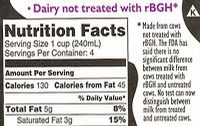
Recombinant bovine growth hormone (rBGH) is a genetically engineered, artificial growth hormone injected into dairy cattle to increase their milk production by anywhere from 8 to 17 percent.11 The FDA approved rBGH in 1993, based solely on an unpublished study submitted by Monsanto.12 Canada, Australia, Japan and the European Union all have prohibited the use of rBGH.

Approximately 22 percent of all dairy cows in the United States. are injected with the hormone, but 54 percent of large herds (500 animals or more), such as those found on factory farms, use rBGH.13 Its use has increased bacterial udder infections in cows by 25 percent, thereby increasing the need for antibiotics to treat the infections.14

In addition, the milk from cows injected with rBGH has higher levels of another hormone called Insulin Growth Factor-1 (IGF-1). Elevated levels of IGF-1 in humans have been linked to colon and breast cancer.15 Researchers believe there may be an association between the increase in twin births over the past 30 years and elevated levels of IGF-1 in humans.16

Unwholesome, Unsanitary and Inhumane Conditions

Raising animals on cramped, filthy and inhumane factory farms differs greatly from what most consumers envision as the traditional American farm.

Disease

Hundreds of thousands of birds are breathing, urinating and defecating in the close quarters of factory-style poultry farms. These conditions give viruses and bacteria limitless opportunities to mutate and spread. This is a very real concern given the presence of avian flu in many parts of the world. The poultry industry has tried to portray factory farms as a solution to the spread of avian flu. It claims that keeping the birds indoors somehow isolates them from the outside world and the disease that lurks there.

Contrary to these claims, scientists suspect that it was in poultry factory farms that avian flu mutated from a
relatively harmless virus found in wild birds for centuries to the deadly H5N1 strain of the virus that is killing birds and humans today.17 In England, the virulent H5N1 strain first broke out at the country’s largest turkey farm in early 2007. Theories about the source of the infection include rats or flies entering the facility from a nearby poultry processing plant that itself had received a shipment of infected poultry parts from Hungary.18 These large-scale facilities rely on truckloads of feed and supplies that arrive every day, providing a way for the disease to spread.

Contamination

Raising thousands of animals together in crowded conditions generates lots of manure and urine. For example, a dairy farm with 2,500 cows produces as much waste as a city of 411,000 people.19 Unlike a city, where human waste ends up at a sewage treatment plant, livestock waste is not treated, but rather washes out of the confinement buildings into large cesspools, or lagoons. In feedlots, open lots where thousands of cattle wait and fatten up before slaughter, the animals often stand in their own waste before it is washed away. The cattle often have some water-splashed manure remaining on their
hides when they go to slaughter. This presents the risk of contamination of the meat from viruses and bacteria.

Animal Welfare

Rather than grazing in green pastures, animals on factory farms exist in tight confinement with thousands of other animals. They have little chance to express their natural behaviors.

Pigs on factory farms are confined in small concrete pens, without bedding or soil or hay for rooting. The stress of being deprived of social interaction causes some pigs to bite the tails off of other pigs. Some factory farm operators respond by cutting off their tails.

Chickens stand in cages or indoors in large pens, packed so tightly together that each chicken gets a space about the size of a sheet of paper to itself. The chickens are not given space to graze and peck at food in the barnyard, so they resort to pecking each other. Many factory farmers cut off their beaks, a painful procedure that makes it difficult for chickens to eat.

The Trend Continues: From Factory Farm to Table

Factory farming is but one component of the industrial meat production system. Just as small farms have given way to factory farms, small meat plants are disappearing while large corporate operations have grown even bigger – and faster. While these trends increase production and profits for the industry, they also increase the likelihood of food contamination problems. Although the government provides inspectors to protect consumers, their authority is waning as the government gives greater responsibility to the industry to self-regulate.

Consumers Can Say No to Factory Farms

Vote with Your Dollars

Know where your meat comes from. Refer to the Eat Well Guide to find a farm, store or restaurant near you that offers sustainably-raised meat and dairy products.

Or buy your meat directly from a farmer at a farmers market. Talking with the farmers at a farmers market in person will give you the chance to ask them about the conditions on their farm. You can find farmers markets in your area, and learn what questions to ask a farmer.

Organic meat is also a good choice, since the organic label means that the product has met standards about how the meat was produced. Visit our website to check out our labeling fact sheet to find out more about which labels to look for. And check out our milk tip sheet to find out which milk labels to look for and our product guide for rBGH-free dairy products in your area.

Footnotes
1 Union of Concerned Scientists, “Hogging it!: Estimates of Antibiotic Abuse in Livestock”. UCS, 2001
2 Union of Concerned Scientists. “Food and Environment: Antibiotic Resistance.” UCS, October 2003.
3 Keep Antibiotics Working. “The Health Threat.”
4Antibiotics and Antimicrobials.” American Medical Association. “The Problem of Antimicrobial Resistance.” National Institute of Allergy
and Infectious Disease. April 2006 “Antibiotic Resistance Fact Sheet.” American Public Health Association.
5 McEwen , Scott A. and Fedorka-Cray, Paula J. “Antimicrobial Use and Resistance in Animals” Clinical Infectious Diseases 34(Suppl 3): S93–106, 2002.
6 Francisco Diez-Gonzalez, Todd R. Callaway, Menas G. Kizoulis, James B. Russell. “Grain Feeding and the Dissemination of Acid-Resistant Escherichia coli from Cattle” Science, 281 (5383):1666-1668, September 11, 1998.
7 “Greener Pastures: How grass-fed beef and milk contribute to healthy eating.” Union of Concerned Scientists, Cambridge, MA, 2006.
8 Raloff, Janet. “Hormones: Here’s the Beef: Environmental concerns reemerge over steroids given to livestock.” Science News 161, (1):10. January 5, 2002.
9 The Scientific Committee on Veterinary Measures Relating to Public Health. “Assessment of Potential Risks to Human Health from Hormone Residues in Bovine Meat and Meat Products.” European Commission, April 30, 1999.
10 The Scientific Committee on Veterinary Measures Relating to Public Health. “Assessment of Potential Risks to Human Health from Hormone Residues in Bovine Meat and Meat Products.” European Commission, April 30, 1999.
11 Bovine Somatotropin (bST)” Biotechnology Information Series (Bio-3) North Central Regional Extension Publication Iowa State University – University Extension, December 1993.
12 Cruzan, Susan M. FDA Press Release on rBST approval. Food and Drug Administration. November 5, 1993.
13 APHIS, “Bovine Somatotropin: Info Sheet” USDA, May 2003.
14 Doohoo I. et al, “Report of the Canadian Veterinary Medical Association Expert Panel on rBST,” (Executive Summary) Health Canada, November, 1998.
15 Epstein SS. “Unlabeled milk from cows treated with biosynthetic growth hormones: a case of regulatory abdication.” International Journal of Health Services, 26(1):173-85, 1996.
16 Steinman G. Can the chance of having twins be modified by diet? Lancet, 367(9521):1461-2, May 6, 2006.
17 “Fowl play: The poultry industry’s central role in the bird flu crisis” GRAIN, February 2006, p.2, website?
18 “Turkey carcasses from Hungary linked to UK bird flu outbreak” The Observer, 2/8/07, Jo Revill.
19 “Risk Management Evaluation for Concentrated Animal Feeding Operations,” US Environmental Protection Agency A National Risk Management Laboratory, May 2004, p. 7.

Say No to rBGH!

Categories

Food

What is rBGH?

Recombinant Bovine Growth Hormone (rBGH or rBST) is a genetically engineered hormone injected into cows to increase milk production by 8-17 percent.1,2 The Monsanto Corporation manufactures the product, which is sold under the trade name Posilac.

Background

In 1993, the FDA approved rBGH, even though many scientists and government leaders were critical of the hormone, the inadequate research on its risks, and the approval process. Twelve years after it was approved in the U.S., significant health concerns regarding rBGH remain. The European Union, as well as Japan, Canada, and Australia have banned rBGH. Codex Alimentarius, the U.N. body that sets food safety standards, has refused to approve the safety of rBGH three times.3

Health Effects

Recombinant bovine growth hormone causes harm to cows and may pose harm to humans.


Cancer Risk

Injections of rBGH increase another powerful hormone, called IGF-1, in the cow and the cow’s milk. Numerous studies indicate that IGF-1 survives digestion. Too much IGF-1 in humans is linked with increased rates of colon, breast, and prostate cancer.4 “Definitive studies demonstrating the lack of absorption of rBST or IGF-1 upon oral administration were neither conducted nor requested” Health Canada concluded. “Simply not enough is known about how IGF-1 functions to properly evaluate the potential health impacts.” 5

While it’s not clear that rBGH given to cows significantly increases IGF-1 in humans, why take the chance simply so dairies can produce more milk from fewer cows?

Mastitis and Antibiotic Resistance

Use of rBGH on dairy cows increases the rate of mastitis, a bacterial udder infection, by 25%6. Mastitis leads to increased use of antibiotics, including important ones used to treat humans, like penicillin.7 The overuse of antibiotics is already a serious problem in the livestock industry – giving rise to new strains of “superbugs” that are becoming more resistant to antibiotics and are strongly linked to hard-to-treat illnesses in people.8,9

In 1992, the U.S. General Accounting Office recommended that the FDA not approve rBGH until the mastisis problem was further studied. “Concern exists now about whether antibiotic levels in milk are already too high,” the GAO wrote. “[T]here has been no examination of whether rBGH use will increase antibiotic levels in milk or beef beyond that which currently exist and, if so, to what degree those levels are acceptable.” 10 RBGH also increases birth defects, pus in milk, and clinical lameness in cows.11

Possible Allergic Reactions

In one study, rats that were fed rBGH, including one given a relatively low dose, developed antibodies to rBGH. This effect, if validated, “would suggest the possibility of occasional hypersensitivity reactions in those consuming food products from rBST-treated cattle”.12 The FDA brushed aside these disturbing results and did not fully investigate these results.

A Tool for Factory Farms

In the United States, about 15% of the dairy herds use recombinant Bovine Growth Hormone; overall, approximately 22% of dairy cows in the U.S. are injected with the hormone.13 For the most part, this hormone is a tool for dairy factory farms to eke out even more milk per cow. The hormone is used in 54% of large herds (500 animals or more), 32% of medium herds, and only 8% of small herds.14

Consumer Backlash

Consumers are seeking dairy products produced without rBGH, and companies are responding. Most recently, the Tillamook County Creamery Association, a 150-dairy farmer cooperative, voted to ban rBGH in their cheese production due to consumer requests.15 Ben & Jerry’s ice cream brand is also rBGH-free. The company explains this decision by saying “We think its use is

a step in the wrong direction toward a synthetic, chemically-intensive, factory-produced food supply”. 16

Several years ago, Oakhurst Dairy in Maine was sued for advertising their products as rBGH-free; they were eventually required to state that the FDA has not found any significant difference between products with and without the hormone on their products.17 Nevertheless, almost all dairy products sold in Maine are rBGH-free, in response to consumer rejection of the product. And organic food, which cannot be produced with growth hormones, is a skyrocketing market, growing almost 20% annually over the last decade. Organic dairy products constituted $1.3 billion in sales in 2003.18

What You Can Do

Purchase dairy products that are labeled “rBGH-free,” “rBST-free,” or “organic.” Also, tell your supermarket, favorite dairy brand, and school district that you want dairy products that were not made with rBGH.

Footnotes

1 “Bovine Somatotropin (bST)” Biotechnology Information Series (Bio-3) North Central Regional Extension Publication Iowa State University – University Extension, December 1993.

2 Cruzan, Susan M. FDA Press Release on rBST approval. Food and Drug Administration. November 5, 1993.

3 North, Rick. “rBGH-Free Oregon Campaign Fact Sheet” Oregon Physicians for Social Responsibility. [Accessed March 20, 2006]

4 Health Care Without Harm “Health Care Without Harm Position Paper on rBGH” [Accessed March 22, 2006]

5 rBST internal review team“rBST (Nutrilac) ‘Gaps Analysis’ Report.” Health Protection Branch, Health Canada, April 21, 1998. p. 25

6 Doohoo I. et al, “Report of the Canadian Veterinary Medical Association Expert Panel on rBST,” (Executive Summary) Health Canada, November, 1998.

7 North, Rick ibid.

8 Health Care Without Harm, ibid.

9 Fey Paul, Thomas J. Safranek, Mark E. Rupp, Eileen F. Dunne, Efrain Ribot, Peter C. Iwen, Patricia A. Bradford, Frederick J. Angulo, and Steven H. Hinrichs. Ceftriaxone-resistant Salmonella infection acquired by a child from cattle. New Engl. J. Medicine. April 27, 2000.

10 GAO “Recombinant Bovine Growth Hormone: FDA Approval Should be Withheld Until the Mastisis Issue is Resolved.” U.S. General Accounting Office, GAO/PEMD-92-96, August 1992.

11 North, Rick, ibid.

12 Health Canada “Report of the Royal College of Physicians and Surgeons of Canada Expert Panel on Human Safety or rbST” Executive Summary. January, 1999.

13 APHIS, “Bovine Somatotropin: Info Sheet” USDA, May 2003.

14 APHIS, ibid.

15 McMullen, Jim. “Guest Editorial, Tillamook County Creamery Association.” The Cheese Reporter. May 20, 2005.

16 Ben & Jerry’s, “Thoughts on Recombinant Bovine Growth Hormone (rBGH)”, [Accessed March 13, 2006]

17 Canfield, Clark. “Oakhurst, Monsanto Resolve Lawsuit Over Milk Labeling.” Associated Press. December 24, 2003.

18 Miller, Malinda. “Organic Dairy Profile.” Agricultural Marketing Resource Center. May 2005.

Backgrounder: Avian Flu

Categories

Food

[pdflink file=”avianflu.pdf”]

Judging by the typical reactions of governments and health organizations around the world, one would think that the bird flu crisis has been caused primarily by small flocks of chickens kept in the backyards of families in developing nations.

Backyard and rooftop poultry farms have been restricted or outright banned in at least 15 countries. The prime minister of Egypt announced, “The time has come to get rid of the idea of breeding chickens on the roofs of houses.” 1 And a high-ranking official with the United Nations’ Food and Agricultural Organization (FAO) declared, “The fight against bird flu must be waged in the backyard of the world’s poor.” 2

Backyard flocks throughout Asia, and increasingly in Africa and the Middle East, are being “culled” – destroyed – at a dramatic rate, and in many cases their owners are being inadequately compensated or not at all.

These swift measures are not justified by the facts. The reality of the crisis is that just as much, or perhaps more, is unknown about the spread of Type A avian influenza than what is known.

Scientists have little idea precisely how the virus mutated from its naturally occurring, generally non-fatal form found in wild migratory birds, to an almost always fatal virus that has killed or led to the preemptive destruction of more than 200 million farm-raised chickens, geese, ducks and other birds since it emerged in southern China in 1996. The virus – known as H5N1 – has also infected about 200 people in nine countries, killing about half of them.
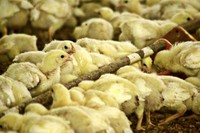
While many backyard flocks have indeed been infected, many huge factory-scale poultry farms have also been struck. And it is within these large operations – where up to hundreds of thousands of birds breathing, urinating and defecating in close quarters give viruses limitless opportunities to mutate – that scientists suspect the virus morphed from relative harmlessness to destructiveness. “The more the virus replicates, the more likelihood there is of genetic changes,” said Ray Arthur, Associate Director for Global Health at the US Centers for Disease Control’s National Center for Infectious Diseases.3

Yet, while international health organizations have called for a harsh crackdown on family-based farms, no such measures are being taken against industrial-scale operations.

In fact, the FAO’s prescription is to build more factory farms, the idea being that bottling up birds will prevent them from infecting – and being infected by – other factory farms, backyard flocks and migratory birds. This defies logic. Given that factory farms are essentially mutation factories, this practice should be discouraged, not encouraged. This defies logic. Given that factory farms are essentially mutation factories, this practice should be discouraged, not encouraged.

It also defies the FAO’s own diagnosis of the problem: “The dramatic growth in domestic poultry production is part of the explanation. Once high-density industrial poultry areas become affected, infection can explosively spread within the units, and the very high quantities of virus produced may be easily carried to other units, to humans, and into the environment. Hence, the current widespread infections of commercial poultry flocks in many countries of Asia is not a total surprise.” 4

Along with bird flu, the FAO says foot-and-mouth disease and swine fever may have been caused by “instabilities in the [animal] production environment.” These instabilities, the agency says, may require “production changes in the future.” 5

Fearing Fear Itself?

Mixed messages also abound within the public health community.

On one hand, governments and health organizations fear that bird flu could lead to another human influenza pandemic – or global epidemic. Recent findings indicate that Spanish flu, which killed up to 50 million people worldwide in 1918-1919 in the largest disease outbreak since the Black Death, may have originated as an avian virus. The Asian flu of 1957-1958 and Hong Kong flu of 1968-1969, which killed about 2 million and 1 million people, respectively, also are believed to have had links to avian flu viruses.

President Bush, trying to deflect criticism over the government’s inadequate response to Hurricane Katrina, has pledged an all-out fight against bird flu (and has reportedly read a book about the 1918-1919 pandemic). The government is spending billions of dollars to formulate and stockpile vaccines and antiviral medications, track and test migratory birds, and develop emergency response plans if bird flu reaches the US – which various officials predict could happen by spring 2007. And the Department of Homeland Security and other federal government agencies say they will detain anyone flying into the country who looks sick.6

Pounded daily by fear-inspiring messages in the media, one-third of Americans polled in spring 2006 said they fear someone in their family would contract bird flu.7

At the same time, two of the nation’s top infectious disease experts say this may all be an overreaction. Julie Gerberding, director of the US Centers for Disease Control, said, “There is no evidence it will be the next pandemic.” And Anthony Fauci, director of the National Institute of Allergy and Infectious Diseases, said, “The American people should not be worried.” 8

As the facts stand now, at least, these assessments appear sound. Most human cases have occurred in rural areas with small backyard flocks – when people directly handled or slaughtered infected birds, touched objects smeared with bodily fluids from infected birds, or swam in contaminated water. In its current form, H5N1 has rarely spread from one person to another, and has not been found to be transmitted beyond one person.one person.9 (Cells the virus can attack are deep
within the human respiratory tract, so coughing or sneezing won’t spread it.10)

And, though the virus theoretically can survive if meat is not heated to 160° F, no one is known to have been infected by eating undercooked poultry.

More Questions than Answers

H5N1 – known as “chicken Ebola” because it causes extensive internal bleeding – was first detected in 1959 among domestic chickens in Scotland.

For reasons that may never be known, the virus broke out in 1996 at a goose farm in China’s southeastern Guangdong province. The first human victims came to light a year later, when a virus traced to the Guangdong strain infected 18 people in Hong Kong, killing 6 of them. The cause was believed to be infected birds from “wet” markets, where poultry is either sold live or slaughtered on the spot. The city’s entire population of 1.5 million birds was destroyed within three days, potentially averting a broader human outbreak.

The virus reappeared in Asia in mid-2003 and has since been detected in farmed poultry or wild birds in about 50 countries in Asia, Europe, Africa and the Middle East, according to the World Health Organization (WHO). About 200 human cases – half fatal – have been reported in nine countries: Azerbaijan, Cambodia, China, Egypt, Indonesia, Iraq, Thailand, Turkey and Vietnam (which has had about 90).

The general theory is that at some unknown point in history, farmed birds became infected with the naturally occurring, rarely fatal strain by coming in contact with infected wild birds, or by swimming in water or walking through dirt containing bodily fluids from infected wild birds. Once it reached concentrated, industrialized operations, the virus is believed to have mutated into its deadly form.11 This super-virus is easily transmitted by direct contact among farmed birds, and by sharing contaminated cages, water, feed and other equipment and supplies. The virus can wipe out up to 100 percent of confined birds within two days.12
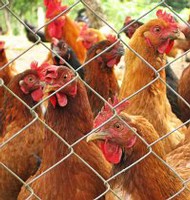
For reasons that remain poorly understood, the deadly strain has been passed back to wild birds. In the spring and summer of 2005, up to 6,000 wild geese, gulls and other migratory birds died of H5N1 at the Qinghai Lake nature reserve in central China. And it began appearing in ducks, swans, buzzards and other wild birds in Europe in February 2006. The virus struck farm-raised poultry in Europe in early 2006, resulting in the destruction of 11,000 turkeys in France in February, and 30,000 turkeys, geese and ducks in Germany in April. Still, scientists are baffled as to how the infection occurred.

One thing is known almost for certain: without a commercial poultry industry, the deadly bird flu would probably not exist. Avian viruses have “lived with aquatic birds for probably millions of years in perfect harmony,” says virologist Robert Webster of St. Jude Children’s Research Hospital in Memphis, better known as “The Flu Hunter.” “It’s only when they come into domestic poultry that they kill.” 13

How the virus moves among the three main populations of infected birds – factory-farmed poultry, backyard flocks and wild birds – remains open to wide speculation. Many outbreaks have occurred in backyard flocks, but it is unclear how these birds became infected. The WHO theorizes infected wild birds may be the cause, but the deadly strain was absent from wild birds until only recently.

In any event, southern China has been identified as the “epicenter” of the outbreak, as genetic mapping of the virus has found that trade in farmed poultry from this region has caused the virus to proliferate throughout Asia.14

The Role of Factory Farms

Governments, health organizations and the media have largely ignored the role factory farms have played in the crisis. Several huge outbreaks have been reported:

  • In Laos, 42 of 45 the outbreaks reported in spring 2004 occurred in commercial operations – and 38 were centered in the capital of Vientiane. The few small operations that did have outbreaks were located near commercial operations. The virus killed 50,000 birds, and another 100,000 were destroyed.15
  • In Egypt, the first outbreaks were reported at several factory farms in early 2006, resulting in the destruction of about 200,000 birds. Yet, Prime Minister Ahmed Nazif announced, “The time has come to get rid of the idea of breeding chickens on the roofs of houses.” The government ordered all backyard and rooftop flocks to be destroyed and banned live bird markets, where 80 percent of the country’s poultry is sold.16
  • In Nigeria, the virus spread from a farm with 40,000 birds to 30 other factory farms, killing 150,000 birds so far in 2006. 17
  • In Vietnam, 117,000 birds were destroyed at a factory farm in Ha Tay Province in February 2004.18
  • In Russia, 460,000 birds were destroyed at a factory farm in Kurgan province in 2005.19
  • The virus has also broken out in large poultry operations in Cambodia, India, Japan and the Ukraine.20

For all the theories being explored as to how the virus infects backyard and wild populations, very little discussion has taken place to explain the mass death in factory farms.

Yet, the FAO predicts a future that will include “more concentrated markets, with fewer, larger producers,” “poultry production zones [where] infrastructure can be concentrated,” “centralized slaughtering in large slaughterhouses,” and “fewer smaller producers.” 21

Another problem that has gone largely ignored is the destruction of wetlands, which, according to the United Nations Environment Programme, is “forcing many wild birds onto alternative sites like farm ponds and paddy fields, bringing them into direct contact with chickens, ducks, geese, and other domesticated fowl.”

UNEP studied this phenomenon at a conference in Nairobi, Kenya, in April 2006. The organization found that placing factory farms along migratory bird routes may increase the risk of transferring diseases between wild and farmed birds.

UNEP also said that “heroic efforts” focusing on isolation, quarantine, culls and medications are likely to be quick-fixes that offer limited, short-term results. And the organization said forcing communities, particularly in Southeast Asia, to segregate poultry from people “is at odds with generational cultural traditions and practices.”

In another critical observation that has failed to receive ample attention, UNEP expressed concern over genetic monocultures of farmed poultry, claiming they are less resistant to disease.22 This could help explain why H5N1 has wiped out entire populations of factory farms.

Instead of focusing – and indiscriminately cracking down – on backyard poultry farms, governments and health organizations should take a cue from the evidence pointing to factory farms as being the genesis of the deadly mutant virus.

They should also examine the role that the international trade in poultry and poultry products has played in spreading the virus. In a special edition on bird flu, the journal Science reported in April 2006: “It is clear that…the outbreaks and their geographical spread probably cannot be stopped without implementation of proper control measures in the global poultry industry.” 23

For now, governments and health organizations seem to be going after the easy targets – family farmers with little or no economic and political power to question mandates from above. And they are forced to take what they can get. When 300,000 chickens in 300 villages in the Indian state of Maharashta were destroyed in March 2006, farmers were given just US$0.88 per bird – far less than the actual value of a village bird, which produces eggs worth four times more than industrially produced eggs.24

Meanwhile, authorities are encouraging the very practices that may have caused the crisis in the first place. Bird flu is yet another symptom of a food-production system that is out of control.

Footnotes

1 “The top-down global response to bird flu.” GRAIN (Barcelona), April 2006.

2 Lam, Tran Dinh Thanh. “Bird flu strategy will hit poultry farmers.” Inter Press Service, Nov. 15, 2005.
3 Personal communication, April 2006.
4 “Animal Health Special Report: Avian Influenza – Questions and Answers.” Food and Agricultural Organization.
5 Ibid.
6 Fox, Maggie. “Groups question US plan to detain sick travelers.” Reuters, April 21, 2006.
7 Woodward, Calvin. “Poll shows fear of bird flu widespread.” Associated Press, April 21, 2006.
8 Gardner, Amanda. “US bird flu threat may be overstated.” HealthDay, April 21, 2006.
9 “Key facts about avian influenza (bird flu) and avian influenza A (H5N1) virus.” US Centers for Disease Control.
10 Wade, Nicholas. “Bird flu resistance in humans explained.” New York Times, April 14, 2006.
11 Webster, Robert G. et al. “H5N1 outbreaks and enzootic influenza.” US Centers for Disease Control, Emerging Infectious Diseases, 12(1):3-8, January 2006.
12 “Key facts about avian influenza (bird flu) and avian influenza A (H5N1) virus.” US Centers for Disease Control.
13 Harder, Ben. “When flu flies the coop.” Science News, 168(11):171, Sept. 10, 2005.
14 Chen, H. et al. “Establishment of multiple sublineages of H5N1 influenza virus in Asia: Implications for pandemic control.” Proceedings of the National Academic of Sciences, 103(8):2845-2850, Feb. 21, 2006.
15 “Laos: Poultry and Products: Avian Influenza, 2005.” GAIN Report, Global Agriculture Information Network, US Department of Agriculture, Report No. LA5001, March 16, 2005.
16 “The top-down global response to bird flu.” GRAIN (Barcelona), April 2006.

17 Fowl Play: The poultry’s industry’s central role in the bird flu crisis. GRAIN (Barcelona), February 2006.
18 Ibid.
19 Ibid.
20 Ibid.
21 McLeod, Anni et al. “Economic and social impacts of avian influenza.” Emergency Centre for Transboundary Animal Diseases Operations, Food and Agricultural Organization.
22 “Restoration of wetlands key to reducing future threats of avian flu.” United Nations Environment Programme, April 11, 2006.
23 Olsen, Björn et al. “Global patterns of influenza A virus in wild birds.” Science, 312:384-388, April 21, 2006.
24 “The top-down global response to bird flu.” GRAIN (Barcelona), April 2006.