


The war in Iran: Another global crisis justifying the urgent need for an energy transition
“History teaches, but has no pupils”, as Antonio Gramsci famously said. It seems that the EU and the world have not learned the lessons of the recent and less recent past.
The weaponization of energy is a long-standing reality of global politics. From the 1973 oil crisis to Russia’s manipulation of gas supplies to the EU, starting well before the full invasion of Ukraine in 2022, and more recently, the U.S. military intervention in Venezuela and mounting threats over Greenland’s strategic resources, oil and gas have repeatedly been used as tools of geopolitical pressure. The large-scale attack launched by the U.S. and Israel on Iran on February 28 and the subsequent Iranian counterattacks have not only created what is primarily a devastating humanitarian crisis, but also shaken the global energy market and shattered the illusion of a liberalized and globalized market.
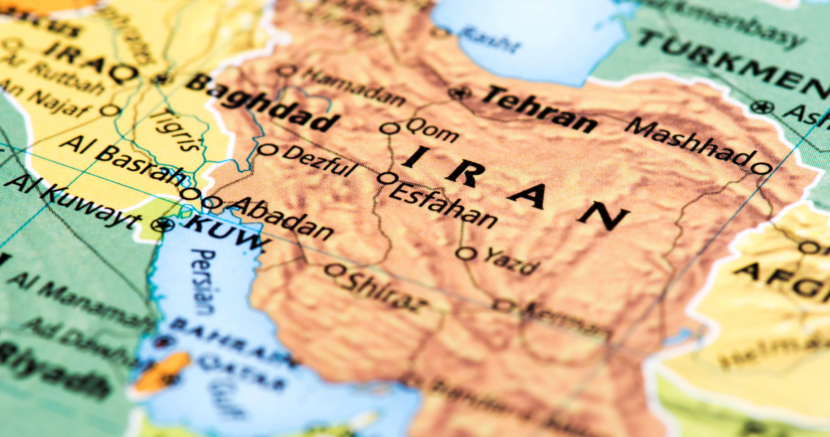
At the centre of this new shock lies the Strait of Hormuz, one of the world’s most critical energy chokepoints, through which about 20 percent of globally traded oil and liquified ‘natural’ gas (LNG) normally pass. Disruptions to this route reverberate instantly across global markets. Its closure has already led to the halting of both oil and LNG exports, sending immediate shockwaves through global markets. In Europe, despite importing less than 10 percent of its gas from the Gulf, fossil gas prices have skyrocketed, almost doubling since the start of the conflict.
In particular, soaring energy prices threaten to deepen the cost-of-living crisis, hitting the most vulnerable households first. Meanwhile, President Trump has said that the rise in oil prices is “a very small price to pay for security and peace.”
Winners and Losers in a Fragmented Energy Market
While Israel’s objectives in this war appear clear, to weaken and neutralize its regional adversaries, the motivation of the U.S. is less straightforward, as many analysts note that ultimate goals have shifted, dragging on far beyond the initial expectations of a quick strike. One thing, however, is already evident: The U.S. fossil fuel industry stands to gain.
With LNG exports to Qatar disrupted by instability in the Gulf, U.S. producers are well-positioned to fill part of the gap. According to the latest estimates, the U.S. LNG industry may achieve $20 billion in monthly windfall profits. Nearly 15 percent of U.S. LNG volumes remain uncontracted and can therefore be sold at higher prices on volatile spot markets.
This dynamic not only boosts short-term profits but also strengthens the political narrative used to justify new LNG export terminals and expanded fossil fuel infrastructure. All this while U.S. citizens are also facing significant increases in the cost of oil and gas, making it even more obvious, as if it were needed, that the only ones profiting are fossil fuel companies.
All this while Russia, hit by EU sanctions, sees its energy profits rise. Recent estimates indicate that Russia has collected $7 billion in fossil fuel revenues since U.S. and Israeli strikes led to the shutdown of gas and oil exports through the Strait of Hormuz. This not only allows Russia to further finance the war in Ukraine, but also gives Putin an opportunity to highlight what he portrays as the unreliability of LNG as a primary energy source, framing it as a precarious alternative to Russian pipeline gas.
Yet, paradoxically, the same crisis could accelerate renewable energy deployment. Countries without abundant fossil fuel resources, such as those in the EU, may have no choice but to invest faster in clean energy. But even here, the path is fraught. Access to renewable technologies may become more competitive and expensive as supply chains fragment and inflation rises. In countries rich in fossil fuels, like the U.S., investments are likely to continue favouring fossil energy, while resource-rich nations such as Argentina may double-down on fracked gas LNG production for export.
If this latest conflict does accelerate the push for renewables, it also risks sparking a fierce scramble for the technologies and materials needed to deploy it. In such a scenario, poorer nations are likely to be left at a disadvantage, struggling to access the clean technologies they need while wealthier countries secure the lion’s share. The result could be a renewable energy transition that replicates the fossil fuel model of unequal resource distribution, undermining fair and just development.
Beyond Gas: Ending Europe’s Fossil Fuel Dependency
For Europe, this geopolitical turmoil reinforces an uncomfortable truth: as long as the EU remains dependent on fossil gas, it will remain exposed to global crises.
The surge in fossil fuel prices following the US and Israeli strikes on Iran underscores, once again, the urgent need to phase out fossil gas.
The EU can no longer afford to tie its ‘energy security’ to volatile global markets, where every crisis ends up hitting the most vulnerable citizens first. At the same time, Europe continues to rely on LNG imports while externalizing impacts onto local communities living near extraction sites and LNG infrastructure. Furthermore, the longer the energy transition is delayed, the more costly it will ultimately be for everyone.
Ending this dependence will not come through the diversification of imports, as some continue to suggest, nor through the extraction of fossil fuels within Europe. It will only come through electrification.
The legislation passed during the previous mandate and the European Green Deal offered a promising starting point. The focus on critical raw materials, the first funding mechanisms for a fair and just transition, the regulations needed to progressively phase out fossil fuels where alternatives exist, and efforts to build a fairer and more resilient electricity system all pointed in the right direction.
However, today’s political and regulatory debate appears to be moving in the opposite direction. The EU is facing a wave of deregulation that is undermining several pillars of the EU Green Deal, largely driven by pressure from the fossil fuel industry. Yet this horrific war sends an unmistakable signal: Europe cannot keep looking to the past. Instead, it must accelerate the renewable transition, continue reducing gas demand, invest in homegrown renewable energy, and support community-led approaches such as energy communities.
***
END