


Tell the MEPs: cut hydrogen and gas pipelines from the EU priority energy infrastructure list
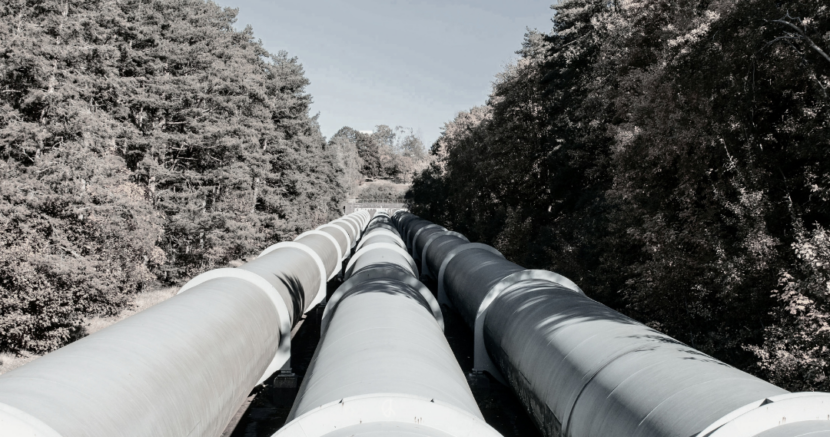
69 civil society organisations call Members of the European Parliament (MEPs) to vote against the Projects of Common Interest (PCI) and Projects of Mutual Interest (PMI) list. This list includes over 100 hydrogen-related projects, giving them fast-track permits and access to billions in public subsidies. Most of these projects will rely on hydrogen made from fossil gas, keeping Europe dependent on gas and diverting resources from the renewable energy transition. They also urge the Commission to immediately draw up a new list containing only electricity projects
Press release here
Open letter here
Full text:
Dear Members of the European Parliament,
We are writing to you ahead of the 26 March 2026 plenary of the European Parliament concerning the objection to the Delegated Regulation on the second Union list of Projects of Common (PCIs) and Mutual Interest (PMIs)
This vote is your only opportunity to express your opinion and decide on the allocation of fast-track permits and access to generous public subsidies to more than a hundred hydrogen infrastructure projects. We call on you to vote against the second PCI and PMI list in its current form, and to urge the Commission to immediately draw up a new list containing only electricity projects.
If the current PCI and PMI list is adopted, the EU will aggravate its dependency on imported fossil gas.
First of all, this PCI/PMI list includes two fossil gas pipeline projects that contradict the European Union’s climate and energy objectives. The “Melita” pipeline and the “EastMed” pipeline, so called “hydrogen ready”, are receiving money meant for the energy transition without credible renewable hydrogen in sight – risking creating a fossil lock-in or stranded assets, a mistake already made by the EU with its gas infrastructure system.
Secondly, the second PCI/PMI list includes more than 100 hydrogen and electrolyser projects, over 50 of which are pipelines that will most likely transport fossil-based hydrogen since no renewable hydrogen is available for them. While the Commission boasts that hydrogen PCI/PMI projects will catalyse decarbonisation, their necessity is little more than speculation and many of them will make no meaningful contribution to cutting emissions. Fossil-based hydrogen, whether with or without carbon capture, produces significant greenhouse gas emissions – sometimes more than by using fossil gas directly.
The total investment required for the proposed hydrogen projects exceeds 80 billion euros, not including the massive investments and substantial subsidies needed to build supply and generate demand for hydrogen. The two-fold increase in the number of hydrogen PCI and PMI projects from the first to the second list diverts capacity and funding away from the electrification of Europe and locks us into costly and unnecessary infrastructure.
The European Union doesn’t need a cross-continent hydrogen network. Hydrogen, even when made with renewable energy, is an energy-intensive, inefficient and expensive energy carrier and its use should be restricted to niche, hard-to-abate sectors. It will be hard enough for the EU to replace current fossil-based hydrogen use even without expanding it to other sectors. ACER in 2024 warned that current hydrogen network plans are built on “aspirations rather than concrete market needs”, increasing the risk of overinvestment and underused infrastructure – stranded assets – that citizens will ultimately pay for.
H2Med is an example of an unnecessary project with likely significant environmental impacts. It intends to transport hydrogen produced in the Iberian Peninsula to central Europe and includes an offshore section known as BarMar. The BarMar section would link Barcelona and Marseille, crossing the Mediterranean Sea at depths of up to 1,750 meters below sea level. However, this route runs through the Gulf of León, one of the areas with the highest levels of marine biodiversity in the Mediterranean.
The selection process for this second PCI/PMI list was riddled with procedural errors and based on flawed evidence.
ACER, in its recent 2025 opinion, questioned the credibility and robustness of the process. It underlined that many of the concerns raised in its 2023 opinion, when it concluded that it was unable to assess the consistent application of the TEN-E regulation criteria and the cost-benefit analysis across all projects, remain valid, particularly regarding the selection process, the identification of infrastructure needs, and the methodologies used to assess projects.
The European Scientific Advisory Board on Climate Change (ESABCC) concluded in 2024 that the ten-year network development plan (TYNDP) process, which preceded the second PCI and PMI list, failed to adequately reflect the transformational changes and rapid emission reductions required to meet the EU’s 2050 climate neutrality and resilience targets. To address these persistent weaknesses, the ESABCC urged that priority be systematically given to full decarbonisation, energy efficiency, and infrastructure resilience, with a clear shift toward rapid and widespread electrification and demand-side flexibility.
The EU does not have the capacity to produce enough renewable hydrogen, and importing enough is unrealistic
The fossil fuel lobby, led by ENTSO-G, is using green hydrogen as a Trojan horse to continue to rely on fossil-fuel based hydrogen combined with failed technologies like carbon capture and storage (blue hydrogen).
The European Union won’t have the capacity to produce enough renewable hydrogen for this network project for decades, if ever. RepowerEU set a first objective for producing 10 million tonnes of green hydrogen domestically by 2030, as well as importing the same again. This projection has been widely criticized since its publication, as it was not based on any scientific evidence or building on credible demand scenarios, leading the European Court of Auditors to call for a “reality check”. Recent research from trade association Hydrogen Europe shows that the EU is set to miss its 2030 green hydrogen production and import targets by more than 90%.
The idea that the EU can simply import its way out of the problem has been well refuted. In late 2025, more than 140 civil society organizations declared this ambition as unrealistic from a cost perspective, energy intensive, and fuelling a neo-colonial and extractivist model. Importing hydrogen over long distances – renewable or otherwise – is economically unviable now and in the future decades. It requires large public subsidies and massive investments in new infrastructure. As a result, importing renewable hydrogen may cost up to twice as much as previously anticipated.
The EU’s green hydrogen import strategy risks significant social and economic harm in Global South producing countries.
Export-oriented hydrogen projects compete for water with local populations’ needs, often without communities’ free, prior, and informed consent. Renewable energy infrastructure buildout for hydrogen production will most likely prioritize EU demand over local energy access, creating few decent jobs while disrupting agriculture and livelihoods. Financial risks, via loans and guarantees, may be shifted to already indebted governments.
The best example of this is the South H2 Corridor, a 3,300 km pipeline designed to transport hydrogen from North Africa to Germany via Italy and Austria, by repurposing existing gas infrastructure. Serious social and environmental risks may occur if the development of the South H2 Corridor proceeds: land grabbing projects from local communities, debt distress, increased water scarcity within the exporting region, local instability and resource diversion from public services.
For all these reasons, we ask you, members of the European Parliament, to vote against the second PCI and PMI list.
Respectfully,
The undersigned organisations
Initial signatories:
CEE Bankwatch Network
Corporate Europe Observatory
Food & Water Action Europe
ReCommon
Additional signatories:
2Celsius
Aarhus center in BiH
Advocates for the Future
Andy Gheorghiu Consulting
ATTAC Togo
Bankwatch Romania Association
Bond Beter Leefmilieu
Climate Action Network (CAN) Europe
Centre for Citizens Conserving Environment & Mgt (CECIC)
Centre for Transport and Energy
Centre tricontinental – CETRI
Clean Air Action Group
Coordinadora Ecoloxista Asturies
Corner House
Counter Balance
Debt Observatory in Globalisation (ODG)
Earth Ethics, Inc.
Ecologistas en Acción
Ecologistas Zamora
Ecologistes en Acció de Catalunya
Economic & Social Justice Trust
Estonian Green Movement
European Environmental Bureau
Fossilfri Fremtid, Denmark
Fracking Free Clare
Friends of the Earth Europe
Friends of the Earth Malta
Friends of the Earth Spain
Fuel Poverty Action
Gas No Es Solución
Grandmothers Act to Save the Planet (GASP)
Green Liberty
Greenpeace European Unit
Hawkmoth
Initiative Bonne Gouvernance des ressources naturelles au Kivu
JA! Justica Ambienatl
Just Finance International
Leave it in the Ground Initiative
Les Amis de la Terre – Belgique asbl
Les Amis de la Terre France
Linha Vermelha
Magamba Network/ Kick Polluters Out
Mesa de la Ría de Huelva
Mission Possible
Mothers Rise Up
National Society of Conservationists – Friends of the Earth Hungary
NOAH – Friends of the Earth Denmark
Oil Change International
Platform
Polish Green Network
PowerShift e.V.
Priatelia Zeme-CEPA
Rete Legalità per il Clima
Sisonke Climate Justice Project
Society for Women and Youth Affairs (SWAYA)
Stay Grounded
StopH2med.org
Stowarzyszenie Ekologiczne EKO-UNIA, Poland
Synergie des Jeunes pour le Développement et les Droits Humains
The Daphne Caruana Galizia Foundation
TRAFFED RD.CONGO
Umoja Kwa Haki Ya Tabianch Initiative LTD
United for Climate Justice
Urgewald
Workshop for All Beings
Za Zemiata – Friends of the Earth Bulgaria