

Opposition to Fossil Gas Imports Works!


Thanks to Irish groups’ perseverance, support for LNG terminals plummets

It has been a busy few weeks in the fight against LNG in Ireland. And the news is good.

Recent announcements by national political parties and the Advocate General of the European Court of Justice dealt blows to the ambitions of fossil fuel companies to build LNG import terminals in Ireland. Here’s a breakdown of recent developments, and what they mean for the activists who have been opposing LNG for years.

12 Years of Stalled LNG Projects

While Ireland has some indigenous fossil gas resources, it imports between 50-60% of its gas supply from the UK via an interconnector with Scotland. However, in recent years US companies have proposed building LNG terminals to enable the import of fossil gas in liquid form. It is likely that the main supply flow will come in the form of climate-hostile and environmentally destructive fracked gas.

US company New Fortress Energy is seeking to build the Shannon LNG terminal in the south-western county of Kerry, while US LNG developer Next Decade has a Memorandum of Understanding with the Port of Cork to install a floating regasification terminal in the city’s harbour.

The Cork project would import fracked LNG from Texas, where communities and indigenous tribes in the Port of Brownsville are fighting to stop the construction of an LNG export terminal there. Though the Cork project is still in its early stages, local Irish activists are determined that it will not become a reality.

However, the Shannon LNG terminal has had Irish government support since it was first granted planning permission in 2008. Since 2013, the terminal has been included by the European Union on its ‘Projects of Common Interest Lists’, which identify priority energy projects which can avail of special treatment (such as a fast-tracked Environmental Impact Assessment) and public funding. Despite this high-level political support, construction of the terminal has never started, as the project faced legal disputes over the cost of connection to the national gas grid.

The project passed between several owners before ending up in the hands of New Fortress Energy. In 2018, the original planning permission expired; for the project to continue, an extension to the planning permission was required.

Organised Opposition to LNG Grows

At the same time that the Shannon LNG planning permission expired, the campaign against LNG in Ireland started to come together, at a national and often international level. A broad coalition of grassroots groups and NGOs, including Food & Water Action Europe, joined forces to write a submission to the planning authority, outlining the reasons why extending the planning permission for Shannon LNG would be contrary to principles of climate action, biodiversity protection, and human rights. The submission included testimonies from communities impacted by fracking in the US, to illustrate the international implications of importing fracked LNG to Ireland.

Regardless, the planning authority granted Shannon LNG an extension of its planning permission. However, the submission gave non-profit Friends of the Irish Environment legal standing to take a judicial review case, challenging the decision of the planning authority. The responsible judge agreed that there were real questions over whether the extended planning permission complied with EU laws for the protection of wildlife, and he referred the case to the Court of Justice of the European Union.

Further Barriers to LNG in Ireland

While waiting for the EU court to reach a decision, activists continued to build public opposition on the ground. ‘No to fracked gas import terminals’ became one of the key demands of the growing Irish climate movement. Politicians began to listen to and share activists’ concerns, and by the time of the general election in February 2020, all but two of Ireland’s mainstream political parties (Fine Gael and Fianna Fáil) had pledged their opposition to Shannon LNG. The Green Party is now in talks with these same two parties to form a coalition government, and one of their demands for government formation is a national policy against LNG infrastructure.

In response to a range of questions posed by the Green Party, the Fianna Fáil and Fine Gael parties finally issued a joint policy statement on 28 April which said that building large-scale fossil fuel infrastructure such as LNG terminals does not make sense. While there are caveats to this declaration, and not all party members are in agreement, this announcement is an important milestone: for the first time ever, all mainstream Irish political parties are on the record as saying they do not support Shannon LNG.

Two days later, the plans for LNG development met yet another obstacle. Ruling on the judicial review that had been referred to the Court of Justice of the EU, Advocate General Juliane Kokott found that under EU law, the planning permission for Shannon LNG should not have been extended without an environmental impact assessment. This opinion is not binding, but it will help the Irish judge to reach a decision on the case in the coming months. Whatever the final decision of the courts, it will likely mean further delays and administrative burdens for the Shannon LNG terminal.

For now, activists in Ireland – supported by Food & Water Action Europe and US grassroots groups – are remaining vigilant, continuing to fight for an end to the build-out of new gas infrastructure like the Cork and Shannon LNG terminals. A public consultation on rules for priority EU energy infrastructure (the outdated TEN-E Regulation) has been opened in May 2020 and groups can input to call for an end to EU support for LNG and other fossil gas infrastructure until 8 June 2020.

Step by step, we are working together towards a fossil-gas free future. These events show just how much can be achieved by groups working together to oppose the fossil fuel system.
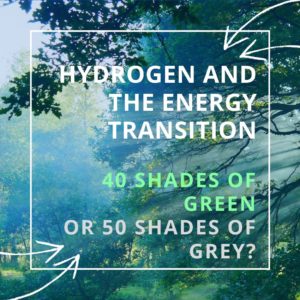
Hydrogen and the Energy Transition: 40 Shades of Green or 50 Shades of Grey

Categories

Food

In Europe and around the world, hydrogen is increasingly seen as an important part of the energy transition. Industry and political actors believe it can help decarbonise transport, heating and industry. But is hydrogen really the zero-carbon miracle solution that will play a pivotal role in Europe’s decarbonisation?
A zero-carbon energy carrier?

The first claim made about hydrogen is that it is zero- or low-carbon. And while it’s true that hydrogen does not produce CO2 when its burned, 96% of the hydrogen produced in the world today is made using fossil fuels, in processes that emit both carbon dioxide and methane.

Hydrogen that is made with coal or fossil gas is known as ‘grey” hydrogen, as it emits large amounts of CO2. There are efforts to make this hydrogen low-carbon by using carbon capture and storage/utilisation (CCS/U) technologies to produce so-called ‘blue’ hydrogen. CCS takes the carbon dioxide that is a by-product of hydrogen production from fossil fuels and stores it in underground reservoirs, whereas CCU takes the CO2 and uses it again – primarily in oil extraction and fertilisers.

The problem is that these technologies are unproven, and many pilot projects have struggled or failed. The flagship projects that do exist have very low capture rates (sometimes as low as 33%), and even a perfectly operating CCS/U installation would not be able to capture the full amount of CO2 emitted during hydrogen production. And CCS/U does nothing to limit the emissions of methane from the fossil gas used to produce hydrogen in the first place. Methane is so damaging to the climate that even a small amount of emissions can turn fossil gas into a fuel entirely incompatible with the Paris Agreement.

The only truly sustainable source of hydrogen is ‘green’ hydrogen, which is produced from renewable energy through a process called electrolysis.

Banking on green hydrogen?

With some actors recognising that grey and blue hydrogen are incompatible with the EU’s climate targets, they are increasingly putting their faith in green hydrogen. Supporters say that it can be used in heating, transport, industry and even electricity generation. This is technically true, but there will not be enough green hydrogen available to service all these sectors simultaneously.

Green hydrogen is expensive to produce, and could pose other issues. If there is no dedicated energy generation to feed electrolysers directly, these systems would rely on excess renewable energy during particularly windy or sunny periods, which are times when the electricity that is produced often exceeds demand for homes, businesses and transport. In using excess renewable electricity, green hydrogen production can play a role in compensating for the variability of renewables.

However, it also means that only limited amounts of green hydrogen can be produced. This will have to be allocated to the areas where it is needed most. For heating homes and powering cars, electricity is much more efficient than hydrogen. However, for industrial processes or long-distance shipping that cannot be easily electrified, green hydrogen can play a crucial role in decarbonisation. This would require careful planning to ensure that green hydrogen goes to the sectors that need it most and is not wasted in sectors that can be easily electrified, or where energy efficiency measures can dramatically reduce energy demand.

Importance of planning for the hydrogen future

Green hydrogen will be produced in very different places, and used in very different sectors, compared to where fossil gas is used today. That means that pipelines and LNG infrastructure cannot be used for both gases. While there might be some overlap between current gas and future hydrogen transport routes, the notion that fossil gas infrastructure built today is “multi-purpose” and can be used for green hydrogen in the future is misguided. But this deceptive argument is already being used by politicians and energy system operators to justify continued support for fossil gas.

Green hydrogen can play an important role in the energy transition, but not if it is used as camouflage for the continued use of fossil fuels.

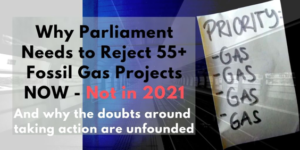
Parliament Must Reject 55+ Fossil Gas Projects NOW. Not in 2021

Categories

Food

Debunking the dubious arguments for not taking action

By Frida Kieninger and Ciara Barry

The projects are costly and climate-killingOn 12 February, the EU Parliament will vote on the PCI list, a priority list for big energy infrastructure, mostly electricity and gas projects. This list contains over 55 fossil gas projects worth 29 billion Euros. None of these projects are needed to ensure EU energy supply; these unnecessary gas projects would be eligible for millions of EU tax money and funding by the European Investment Bank, and will deepen the climate crisis.

So why is there still reluctance within the Parliament to reject this list?

A Just Transition is Possible for Ireland’s South West

Categories

Food

The Shannon LNG terminal is still promoted as a key employer for the South-West of Ireland. But the transition to clean, renewable energy offers a better path for workers and the climate.

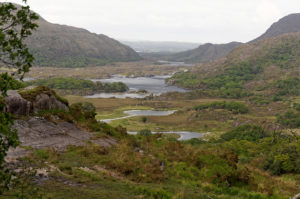
A beautiful view in Ireland.
Image credits: Wikimedia Commons

By Ciara Barry

The rural area of Ballylongford in County Kerry, Ireland, has become the centre of attention in a debate that pits advocates of the gas industry against those pushing for a renewable energy future.

Ballylongford is the proposed location for Shannon LNG, an import terminal which seeks to import liquefied fossil gas, likely sourced from fracking operations in the United States.

Although the project was granted planning permission in 2008, due to legal challenges and a campaign co-initiated by Food & Water Europe two years ago, not a brick has been laid in this controversial project.

European Green Deal: An Ineffective Plan to Address the Climate Crisis

Categories

Food

Proposal relies too heavily on gas and carbon markets

On 11 December, just a few days after taking office, the new EU Commission President Ursula von der Leyen presented the European Green Deal, an overview of measures that would lead the EU to a “carbon-neutral” economy by 2050.

Food & Water Europe has taken a close look at the many promises in the proposal, and the role that EU foresees in this deal for gas.

An adequate answer to climate strikers and millions taking the streets?

EU Commission President von der Leyen presented the European Green Deal (EGD) as a “man on the moon” moment to make the EU a global leader in the energy transition. It should be seen as an “answer” to the activists taking to the streets demanding climate action. There are several areas where the plan simply comes up short.

Cut Fossil Fuels of Our Politics

Categories

Food

Cut coal, gas and oil out of politics! /

To tackle the climate emergency, and ensure that climate policy is conducted entirely in the public interest, we must cut fossil fuel interests out of our politics, similar to existing restrictions on the tobacco industry.

We are joining Corporate Europe Observatory, Friends of the Earth Europe and Greenpeace EU and almost 200 other organisations worldwide to campaign for fossil free politics.