

Cargill Poses Threat to Consumer Health, the Environment and Human Rights, New Research Finds

Categories

Food

Food & Water Europe Fact Sheet Details Damaging Impact of Agribusiness Giant

(Brussels, Belgium) — A new fact sheet issued today by consumer group Food & Water Europe examines how Cargill, the agribusiness giant and one of the key players in the global food market, is posing harm to consumer health, workers and the environment and causing food instability around the world.  Cargill, a leading oilseed and grain processor and top U.S. meat packer, is the largest private company in the U.S., with 160,000 employees in 67 countries and operations in 21 European countries. Cargill seemingly escaped the economic downturn in 2008 by reporting sales of over 83 billion Euros and record profits of over 2.5 billion Euros, its sixth straight year of record-breaking earnings. However, recently, its net profit for the fourth fiscal quarter was down by 69 percent from the same period last year.  Maybe it is time for Cargill to rethink its operations, since it benefited from the race in commodities prices which started in 2002, particularly in the last two years when food prices swelled.

“Cargill has gained control over huge swaths of the world’s agricultural system, and its ability to influence food prices is pushing millions of people around the world to the brink of starvation,” said Food & Water Europe Executive Director Wenonah Hauter.

Key findings of the fact sheet include:

  • Cargill‚ record earnings in 2008 were driven by its ability to influence high grain and fertilizer prices that year, which, in turn, caused food instability around the world.
  • Cargill‚ operations pose a threat to the environment, and its operations in Brazil and Papua New Guinea have been liked to a number of destructive environmental practices, including clearing rainforests to expand its production of soya beans and palm oil.
  • Cargill is linked to questionable food technologies, including genetically modified crops and foods.
  • Cargill is linked to human rights violations, including forced child labour in its cotton operations in Tashkent, Uzbekistan and Central Asia and child slavery in its cocoa operations in Cote d’Ivoire.

Food and Water Europe is the program of Food and Water Watch, Inc (a non-profit consumer NGO based in Washington, DC), working to ensure clean water and safe food in Europe and around the world. We challenge the corporate control and abuse of our food and water resources by empowering people to take action and transforming the public consciousness about what we eat and drink.

For more information, download the factsheet.

Contact: Gabriella Zanzanaini, Food and Water Europe, Brussels
[email protected], +32488409662
EU Agricultural Council Fails Milk Farmers

Categories

Food

Statement of Food & Water Europe Executive Director Wenonah Hauter

“The 7 September Agricultural Council showed once again that the fate of small and medium-size dairy farmers in the European Union is of little concern to governments or the European Commission.

“While milk farmers across the EU sell their milk below production costs, and many face bankruptcy, European Agriculture Commissioner Mariann Fischer Boel prefers to save the 2008 mini reform of Common Agricultural Policy known as “health check,” indicating that governments are either incapable of standing up for their farmers or indifferent to their pleas.

“Dramatic protests by milk farmers seen across the EU for over a year now may not convince the European Commission and governments that decisions dating back to 2003 to phase out of milk quotas by 2015 were wrong, but they do show the anger and desperation of the farming community.  Milk quotas, already too high, will continue to increase by 1 percent every year because the Commission and agricultural ministers appear to prioritise a supply of cheap milk for big, unsustainable corporations over the survival of small and family farmers.

“In doing so, the European Union is following the disastrous footsteps of the United States, where family based dairies have been replaced with intensive operations that can house thousands of cows, who never see daylight and cannot move.

“The biggest tragedy of small and medium-sized dairy farmers in Europe and the United States is that they are not responsible for the global overproduction of milk, but they are hit by it much harder than large, corporate producers.  Consumers everywhere pay as much for milk as they did before the crisis since big food companies such as Kraft and Nestle preserve and increase their profits.

Dismantling an effective and relatively inexpensive supply management tool such as milk quotas is hurting farmers and worse still, export refunds contribute to dumping in the developing world, hurting families there too, who would normally produce milk to ensure their survival but are now driven out of business.

“Food and Water Europe, which supports family farming in Europe and across the globe, has long been aware that the approach taken by the European Union towards milk is wrong.  We have written to Commissioner Fischer Boel asking her to freeze the quota indefinitely while finding ways to protect small and medium-size dairy farmers and continuing the investigation into anti-competitive practices of distributors and retailers of milk before it is too late. It is clear what needs to happen to rectify past mistakes, so reluctance to do so exposes the Commission to accusations of driving small farmers out of business by neglect.”


Contact: Gabriella Zanzanaini, Food and Water Europe, Brussels
[email protected], +32488409662

rBGH: How Artificial Hormones Damage the Dairy Industry and Endanger Public Health

Categories

Food

…a growing body of scientific research suggests a link between drinking rBGH-treated milk and certain types of cancer in humans.

Recombinant bovine growth hormone (rBGH), also called recombinant bovine somatotropin (rBST), is a drug that is injected into cows to increase their milk production. Developed by the agricultural company Monsanto and approved for commercial use in the United States by the Food and Drug Administration (FDA) in 1993, by 2000 it had become the largest selling pharmaceutical product in the history of the dairy industry. RBGH has never been approved for commercial use in Canada or the European Union due to concerns about the drug‚ impact on animal health. The artificial hormone‚ known side effects include increased udder infections and reproductive problems in cows. Notably, a growing body of scientific research also suggests a link between
drinking rBGH-treated milk and certain types of cancer in humans.

Consumer pressure on dairy companies to abandon the use of this controversial drug has resulted in an increasing number of companies moving to rBGH-free milk and making sure that consumers know they’ve made the change by labeling their products as such. But across the country, legislators and state regulators are responding to industry pressure by trying to ban rBGH-free labels on dairy products. After years of successful campaigns that educated dairy consumers about the risks of rBGH, banned rBGH milk in some school districts, and pressured major national companies to go rBGH-free, we are at risk of losing the right to know how our milk was produced.

This report will begin with a background on the science, regulation and politics of rBGH, new risks identified by scientific research, the influence of Monsanto, and information on drug giant Eli Lilly, the new owner of rBGH. Well tell the stories of successful community, state, and national campaigns to kick the dairy industry off the rBGH wagon. And well finish up with suggestions for action that will help readers become advocates for improving the health and safety of the dairy supply.

read more…

Biotech Diplomacy

Categories

Food

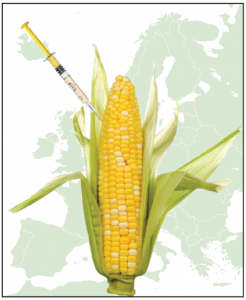
Injecting the Corn to Create GMOsWhen you think of an embassy, you might think of diplomats dining with world leaders and consulate staffers assisting travelers who have lost their passports. Lately, however, ambassadors representing the United States have been carrying out a less traditional sort of mission in the European Union: promoting the interests of biotechnology companies and the genetically modified products they are attempting to sell around the world.

DOWNLOAD PDF
VIEW ON SCRIBD

Cap-and-Trade for Water: A Bad Idea for People and the Planet

Categories

Food

Contact:

Kate Fried (202) 683-2500

Cap-and-Trade for Water: A Bad Idea for People
and the Planet

Statement from Wenonah Hauter, Food & Water Watch Executive Director, and Maude Barlow, Senior Advisor on Water to the President of the UN General Assembly

“Yesterday, the CEO of Climate Exchange PLC trotted out the incredibly bad idea to, essentially, apply the flawed model of carbon cap-and-trade markets to water. The head of the UK-based company that made millions of dollars last year from its business facilitating carbon trading wants to take this scheme that has failed to reduce emissions of climate changing carbon gas and apply it to water extraction rights from the Great Lakes, according to an interview titled, ‘Water cap and trade,’ posted yesterday on Global Dashboard: Notes from the Future.

“Trading the right to emit carbon in one location so that emissions will be reduced in another location has been tried in Europe and failed. Governments and industries there have found ways around the system in order to hand out emissions permits, according to the April 13, 2009 edition of U.S. News and World Report. It‚ left consumers paying more for energy , 25 percent more for electricity in Germany , while carbon emissions have increased. In short, it‚ meant money for the energy corporations and carbon traders, but nothing more than a lump of coal for consumers and the environment.

“Despite that, the head of Climate Exchange PLC supports the possibility of capping rights to extract water from the Great Lakes and then selling those rights to the highest bidder, be they in Asia, the Middle East or elsewhere in the United States.

“This amounts to taking water, which belongs to everyone and to no one, and trading it away. In short, it commodifies water.

“This notion of a sort of cap-and-trade system for water rights to decrease water use is even more far-fetched than buying and selling carbon emission permits to reduce pollution and slow down climate change. It‚ a form of bluewashing that industry has cooked up to look like environmental stewards. Nationally and internationally, all the businesses that use water, particularly giant food and beverage corporations, can never be water neutral because they cant use zero water. In other words, their voluminous water extraction in one place cant be offset somewhere else because other companies are using water in those other places.

“Research shows that withdrawing too much water from a single watershed can have myriad effects. According to a recent report by the U.S.-based Groundwater Protection Council, withdrawing too much ground water can dry up wells, springs and wetlands, and reduce stream flows and lake levels.

“Water is a human right, not a corporate commodity. The idea that it can or should be bought, sold or traded away to the highest bidder must be stopped.”

Democratic Forum Demands Public Water For All

Categories

Food

Contact:

Jeff Conant — 0090-531-393-5789

Democratic Forum Demands Public Water For All

Istanbul, Turkey–International water justice activists converged at the People‚ Water Forum today to affirm the human right to water and present diverse visions of existing public and community-led water management practices that protect water for people and nature, and can ensure water access for all regardless of their ability to pay.

Maude Barlow, Senior Advisor on Water to UN General Assembly President Miguel DEscoto, delivered a statement from him. DEscoto was clear: ‚Water is a public trust, a common heritage of people and nature, and a fundamental human rightWe must challenge the notion that water is a commodity to be bought and sold on the open market. Those who are committed to the privatization of waterare denying people a human right as basic as the air we breathe.”

A diverse group of water justice activists also presented their forward-looking visions. Mary Ann Manahan, of Focus on the Global South in the Philippines said ‚Access to water and sanitation is not only about efficiency and effective delivery but about justice, gender equity, human dignity and ultimately, democracy.”

Sebahat Tuncet, a member of Turkey‚ Parliament, issued a strong statement against the construction of large dams, condemning especially the Ilisu and Munzur dams and others under consideration for construction throughout the region.

Adriana Marquisio, a member of Public Services International and President of Uruguay‚ Public Water Union, urged that water be managed publicly and not for profit.  ‚But let us be clear,” she added, ‚that the meaning of public extends beyond state control. Public management must recognize alternative, community-led structures of governance.”

Philipp Terhorst of Transnational Institute, speaking for the European Water Network, criticized the recent EU Parliament‚ resolution that fails to recognize the human right to water.

Also speaking at the conference was Al-hassan Adam, Coordinator of the Africa Water Network, who condemned the repression of activists, which, he said, reflects the larger exclusion of the majority of people from basic human rights.

These speakers represent a wide spectrum of visionary leaders offering practical, equitable, and just solutions to the world‚ current water crisis, said organizers of the Peoples Water Forum.

###