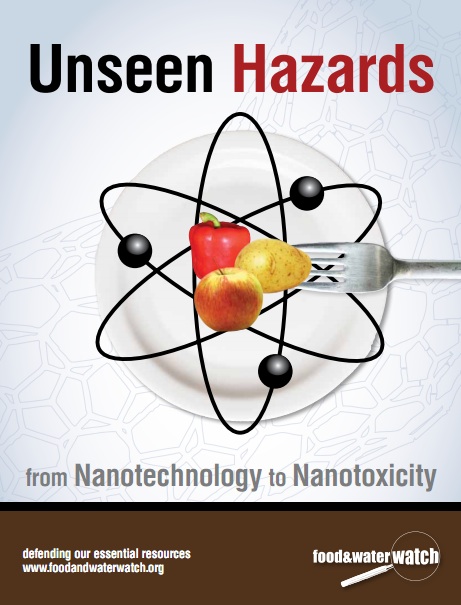
Unfortunately, the enormous potential of nanotechnology to quell the world’s problems may be offset by its potential to cause harm. There is legitimate concern that the nano-sized particles employed in this new technology will have seriously damaging effects on the health of humans and the environment. Dozens of studies from the emerging field of nanotoxicity have already demonstrated hazards associated with nanoparticles.
Blog Categories: Europe
–The European Environment Agency
Nanotechnology, engineering extremely small particles at the molecular level to create materials with new behaviors and chemical properties‚ is a powerful new scientific pursuit, one with the potential to produce the next electricity or combustion engine – the next thing to change everything.
Unfortunately, the enormous potential of nanotechnology to quell the world’s problems may be offset by its potential harm.
The very young field of nanotoxicity has already linked some nanoparticles to:
- Damage to DNA
- Disruption of cellular function and production of reactive oxygen species
- Asbestos-like pathogencity
- Neurologic problems (such as seizures)
- Organ damage, including significant lesions on the liver and kidneys
- Destruction of beneficial bacteria in wastewater treatment systems
- Stunted root growth in corn, soybeans, carrots, cucumber and cabbage
- Gill damage, respiratory problems and oxidative stress in fish
Even though these potential threats are widely acknowledged, regulations lag far behind the development and commercialization of products containing nanotechnologies.
The legacy of unregulated chemical and technological commercialization is, in some regards, one of man-made disasters. The track record of asbestos, DDT, PCBs and radiation – substances that were heralded as the technological breakthroughs that would change everything– should serve as a warning that we cannot continue to neglect the potential hazards associated with nanotechnology simply because it is the next big thing.
Food & Water Europe Fact Sheet Details Damaging Impact of Industrial Agriculture
As world leaders gather in Copenhagen to discuss climate change and strategies to prevent and alleviate effects on our planet, Food & Water Europe remains acutely aware of half-hearted solutions that such meetings typically bring. A new factsheet issued today by the consumer group focuses on the lack of willingness to address in a meaningful manner the impact of industrial agriculture on the climate.
It is time to question the prevailing model of agriculture, one that is based on monoculture and factory farming. Large-scale animal operations, whether using pigs or cattle, release lots of methane, which is known to be detrimental to the climate. Furthermore, they rely on soya-based animal feed, usually imported from overseas. Not only does industrial monoculture soya production contribute to climate change in terms of deforestation of the Amazonian region, it also uses tremendous amounts of energy for processing and transport to reach livestock in Europe and other parts of the world. Studies estimate that feedlot cattle require twice as much fossil fuel energy to raise as grass-fed cows. Producing one pound of beef in a factory farm results in the by-product of eight pounds (3.6 kilograms) of carbon dioxide in addition to other greenhouse gases and using a tremendous amount of water.
Food processing takes its toll on the environment as well. Globally, the food & drink sector use about 23 % of energy resources. This energy can be saved if local, sustainable food solution based on family farms are promoted. Locally rooted food production, respectful of biodiversity, animal welfare and fair income for farmers can cool down the earth
To learn more about the perils of industrial agriculture on our climate read the factsheet, Climate Change: It’s what for Dinner.
Food and Water Europe is the program of Food and Water Watch, Inc (a non-profit consumer NGO based in Washington, DC), working to ensure clean water and safe food in Europe and around the world. We challenge the corporate control and abuse of our food and water resources by empowering people to take action and transforming the public consciousness about what we eat and drink.
Contact: Gabriella Zanzanaini, Food and Water Europe, Brussels
[email protected], +32488409662
Food & Water Europe Report questions the unseen hazards of nanotechnology
Brussels – Industries claim that nanotechnology is both good for business and good for consumers quality of life, a seemingly obvious win-win situation. Yet the less advertised risks of nanotechnology applications require close scrutiny.
The application of nanotechnology began with semiconductors, but the presence of nanomaterials in your laptop and car is not the same as ingesting it from your chocolate bar.
In its new report on the hazards of nanotechnology, released to coincide with the proposal for a Framingnano governance platform at the European Commission, Food & Water Europe believes that basic human needs such as food and water should remain nanotechnology-free, as potential harms may be much greater than the alleged benefits.
Justifying the risk taken in the use of nanomaterials by saying that everything we use contains an element of risk anyway, is a weak argument. The analogy between the risk of driving a nanotechnology powered car and that of consuming a product that we apply to our skin or swallow is over simplistic, as the nature of the risks involved in these two cases differs significantly. Given today’s immense uncertainty with respect to absorbing a nanoparticle (through ingestion or application to hair and skin), the precautionary principle should be enforced through a moratorium on all consumer products whose safety has not been proven beyond doubt.
Food & Water Europe focuses on the risks of nanotechnology applications in areas such as occupational safety, environment and consumer products while pointing out the insufficiency of existing regulations both in the United States and the European Union alike. In the absence of meaningful regulations that would prioritize consumers safety over profit, Food & Water Europe supports the “no data no market” approach of the European Parliament’s environment committee, which includes market withdrawal of consumer products containing nanotechnology until reliable and independent safety assessments can be made.
Lawmakers need to scale back the widespread proliferation of consumer products containing nanoparticles until a robust regulatory program is in place. In the interim, it is essential that regulators require all consumer products containing nanotechnology to be labelled (even when the production process contains less than 1 tonne of nanomaterials) and that an inventory of such products will be available to consumers through the Health and Consumer Protection Directorate General (SANCO) of the European Commission.
The application of nanotechnology takes different forms along the manufacturing chain and each individual holder only remains liable for their stage of the production and not for whatever manipulations are carried out further down the line. Taking this into account, voluntary best practice codes are insufficient; a mandatory code of conduct needs to be enforced among all parties dealing with the application of nanotechnologies.
The European Commission may be increasing its funding for nanotechnology R&D, but should not put the focus on innovation and the commerciality of nanomaterials as was previously done. More attention needs to be given to the pressing matter of risk assessment and exposure hazards of nanoparticles. When products are already on the shelves, we cannot afford a “wait-and-see” approach.
Read Food & Water Europe’s report.
Food and Water Europe is the program of Food and Water Watch, Inc (a non-profit consumer NGO based in Washington, DC), working to ensure clean water and safe food in Europe and around the world. We challenge the corporate control and abuse of our food and water resources by empowering people to take action and transforming the public consciousness about what we eat and drink.
For more information, visit www.foodandwaterwatch.org.
Contact: Gabriella Zanzanaini, Food and Water Europe, Brussels
[email protected], +32488409662
Food & Water Europe Fact Sheet Details Damaging Impact of Industrial Agriculture
As world leaders gather in Copenhagen to discuss climate change and strategies to prevent and alleviate effects on our planet, Food & Water Europe remains acutely aware of half-hearted solutions that such meetings typically bring. A new factsheet issued today by the consumer group focuses on the lack of willingness to address in a meaningful manner the impact of industrial agriculture on the climate.
It is time to question the prevailing model of agriculture, one that is based on monoculture and factory farming. Large-scale animal operations, whether using pigs or cattle, release lots of methane, which is known to be detrimental to the climate. Furthermore, they rely on soya-based animal feed, usually imported from overseas. Not only does industrial monoculture soya production contribute to climate change in terms of deforestation of the Amazonian region, it also uses tremendous amounts of energy for processing and transport to reach livestock in Europe and other parts of the world. Studies estimate that feedlot cattle require twice as much fossil fuel energy to raise as grass-fed cows. Producing one pound of beef in a factory farm results in the by-product of eight pounds (3.6 kilograms) of carbon dioxide in addition to other greenhouse gases and using a tremendous amount of water.
Food processing takes its toll on the environment as well. Globally, the food & drink sector use about 23 % of energy resources. This energy can be saved if local, sustainable food solution based on family farms are promoted. Locally rooted food production, respectful of biodiversity, animal welfare and fair income for farmers can cool down the earth
To learn more about the perils of industrial agriculture on our climate read the factsheet, Climate Change: It’s what’s for Dinner.
Food and Water Europe is the program of Food and Water Watch, Inc (a non-profit consumer NGO based in Washington, DC), working to ensure clean water and safe food in Europe and around the world. We challenge the corporate control and abuse of our food and water resources by empowering people to take action and transforming the public consciousness about what we eat and drink.
Contact: Gabriella Zanzanaini, Food and Water Europe, Brussels
[email protected], +32488409662

We all know that driving a gas-guzzling SUV contributes to climate change,but did you know that what you put on your plate could too? Here’s how your food choices affect climate change and what you, as a consumer, can do about it.
DOWNLOAD PDF