EU Version: No Jobs Here: Why Industrial Fish Farming’s Promise to Boost Local Economies Falls Flat

Categories

FoodCommon Resources

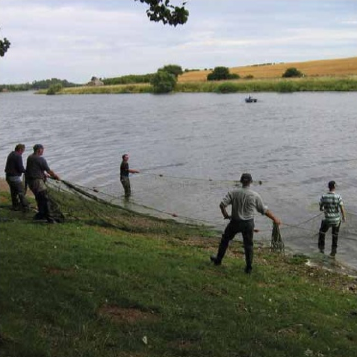
TraditionalFishing.jpgThe open water aquaculture and salmon industries tout fish farms as an opportunity to create jobs. Given current economic struggles worldwide, any potential for a new industry to increase job opportunities is hard to dismiss. Viable, gainful employment is badly needed. Unfortunately, Food & Water Watch found that the jobs created by fish farms are unstable, in some cases undesirable, and are very few in number related to the number of fish produced. In fact, the trend in the industry has been to cut jobs to increase “efficiency,” and to abandon communities if better sites arise elsewhere. Moreover open water fish farms can threaten previously-existing jobs in tourism, recreational fishing and commercial fishing.


DOWNLOAD PDF VIEW ON SCRIBD

European Parliament to Vote on Controversial Factory Fish Farm Practice

Categories

Food

Advocacy Group Releases Report; Factory Fish Farms Cause Documented Job Loss, Environmental Damage

Brussels, Belgium – On Thursday, a week before the European Parliament is set to debate a new report that will lay the foundation for a European-wide policy for sustainable aquaculture, Food & Water Europe released a report detailing the damage caused by a particularly controversial type of aquaculture supported by the agency. Known as open ocean aquaculture (or factory fish farming), the practice consists of the mass-production of fish using floating cages or net pens in open waters.

The report, Fishy Formula: Why the European Strategy Doesn’t Add up to Sustainable Aquaculture, is a harsh indictment of open ocean aquaculture (OOA); a practice that has caused documented economic damage and job loss in local communities where it has been implemented.

Employment in the farmed salmon sector in Scotland (a hotbed region for open ocean aquaculture) for example, fell 28 percent from 1998 to 2008, despite a 16 percent increase in production. According to the report, an additional five thousand sport angling and tourist related jobs were lost due to the expansion OOA.

“Factory fish farms promise much more than they deliver,” said Gabriella Zanzanaini, Director of European Affairs for Food & Water Europe. “In this economy, the last thing we need is more job loss. The European Parliament must recognize that these massive, industrial operations could devastate Europe’s economic and environmental health for years to come.”

The European aquaculture industry spans a variety of forms, including both OOA and land-based re-circulating operations that recycle the water initially put into the system. Ownership of these systems ranges from small-scale businesses in rural areas to massive publicly traded international corporations.

Nearly three-fourths of the EU’s total aquaculture production – namely farmed salmon, trout, seabass and seabream – originates from the more unsustainable, often corporate-owned OOA systems. According to the report, this figure has quadrupled since 1990 and risen 15-fold since 1985.

The report links the rise in OOA to a rise in local economic damage, citing communities that have experienced the loss of thousands of jobs as OOA operations have polluted coastal waters, undergone numerous corporate mergers, and replaced employees with new technology.

According to the report, OOA operations have polluted waters with disease, filth and (sometimes unapproved) chemicals/antibiotics that can leak from the cages.

A 2000 study revealed that Scotland’s 350 marine salmon farms, for example, produce more sewage waste (in the form of nitrogen and phosphorous) than the country’s entire human population.

Outside the European Union, nearby Norway has suffered similar damage. In 2009, Norway’s Pollution Control Authority called OOA operations “the largest source of anthropogenic emissions of nutrients” in Norway’s coastal areas. According to the agency, a mid-sized farm producing 3,120 metric tons of salmon each year is equivalent to a sewage spill from a city of approximately 50 thousand inhabitants.

“There are different types of aquaculture and factory fish farms are the least sustainable,” said Eve Mitchell, Food Policy Program Manager with Food & Water Europe. “We’re alarmed that the European Parliament is promoting open ocean aquaculture as a viable sustainable enterprise.”

Pollution is not the only threat introduced by OOA. Fish escapes, which can jeopardize wild fish due to competition for resources, introduction of disease, and interbreeding, have been reported in fish farms in Europe and around the world.

Last year in Argyll, Scotland, one hole in a net led to the escape of 60 thousand salmon. In 2008, Scotland’s salmon industry was threatened with outbreaks of infectious salmon anaemia – a deadly virus that can spread to wild populations and has crippled salmon industries elsewhere.

Chile, the world’s second-largest exporter of salmon and trout, saw its salmon exports reach a record high in 2008 before the virus spread quickly through the country’s crowded fish farms. The resulting devastation has led to the loss of at least 20 thousand jobs and a 40 percent drop in Chile’s 2010 salmon exports.

Contact: Gabriella Zanzanaini, Food and Water Europe: +32488409662, gzanzanaini(at)fweurope(dot)org.

Link to reports:

Fishy Formula: Why the European Strategy Doesn’t Add up to Sustainable Aquaculture

No Jobs Here: Why Industrial Fish Farming’s Promise to Boost Local Economies Falls Flat

###

Food & Water Europe is the European program of Food & Water Watch.
Fishy Formula: Why the European Strategy Doesn’t Add up to Sustainable Aquaculture

Categories

FoodCommon Resources

The factory fish farming industry is pushing to expand. As wild fish populations decline and consumers continue to look to seafood as a healthy food option, open water aquaculture –raising fish in captivity – offers what the industry hopes will the public will believe is sustainable and healthy means to meet seafood demand. But behind the industry’s claims lies a darker story marked by corporate exploitation, rampant polution, massive fish escapes, disease outbreaks, and dependence on dangerous chemicals.


DOWNLOAD PDF   VIEW ON SCRIBD

Gulf of Mexico Disaster a Cautionary Tale for Europe

Categories

Food

Food & Water Europe Calls on European Authorities to Tighten Inspection of Oil Production Facilities in Aftermath of Horizon Disaster

BRUSSELS—In response to BP’s lax safety record in the United States and cozy relationships between oil companies and regulators there, D.C.-based Food & Water Watch and its European program Food & Water Europe are warning European authorities they must strengthen their oversight and inspections of deepwater oil platforms operating in European waters.

“BP is known for cutting corners where safety is concerned and its deepwater operations in the United States are a cautionary tale for Europe,” said Wenonah Hauter, Executive Director of Food & Water Watch. EU officials should ensure that Member States are regulating deep-water operations adequately, beginning with BP facilities.” Due to the location of the five BP deepwater facilities operating in the North Atlantic and Atlantic currents, any BP disaster there would foul the entire North Sea.
Furthermore, the European Commission coordinated a meeting with the oil companies on 11 May behind closed doors, with insufficient information released publicly about its outcome. During the meeting, a questionnaire was distributed to all the oil companies in attendance, asking them about their capacity to respond to a disaster similar to the BP Horizon explosion in the Gulf of Mexico. It also asked those present to evaluate their safety measures in place.Current efforts by European officials have either been halted or are inadequate, says Food & Water Watch. MEP Boguslaw Sonik, Vice Chairman of the Environment Committee, and two other MEPs drafted a resolution calling for tighter inspection methods, stronger safety rules, and a strengthening of international rules for off-shore exploration and drilling. The motion did not pass.

“We fear this effort only mirrors the cozy and negligent regulation that the oil industry enjoys in the U.S.,” said Hauter. “The European Commission must not enable the industry to evaluate itself when it comes to safety. We also call on them to release the answers from the questionnaires and to reevaluate if the current directives are adequate.”

Food & Water Watch has been working in the U.S. to publicize the failed regulation of BP’s Atlantis production facility in the Gulf of Mexico.

Last month, the organization sued the U.S. Department of the Interior, seeking a temporary injunction to halt operations of BP’s massive Atlantis oil drilling facility until critical safety documents are produced.

“BP Texas City, BP Horizon, and BP Atlantis all have one thing in common: the absence of ‘as built’ drawings that correctly document the facility. This clear pattern of violations makes us question, and should raise alarms about, BP’s safety practices at all of its facilities,” said David Perry, the attorney representing Food & Water Watch in the suit. Perry also represented victims injured in the 2005 Texas City explosion and victims who intervened to oppose the U.S. government’s over-lenient plea bargain with BP over Texas City.

Food & Water Watch, along with former BP document controls contract employee Kenneth Abbott, maintains the Department of the Interior has allowed BP Atlantis to operate without documented, approved final engineering drawings considered critical to safe operation.

In August 2008, Abbott notified his superiors that Atlantis lacked proper and legally-required “as built” final engineering documents for critical subsea components. He later took his concerns to the BP Ombudsman’s office.

An internal BP email written in August 2008 characterized the situation as having the potential for “catastrophic Operator errors.” In February 2010, BP sent a letter to Congress saying that it only learned of the allegations recently and claimed they were unsubstantiated. Recently surfaced BP documents would later reveal, however, that BP had known about these problems for years.

“BP’s safety record speaks to the critical need for independent oversight,” said Hauter. “We hope European authorities are able to learn from the mistakes of the U.S. in regulating the oil industry.”

###

Food & Water Europe is the European program of Food & Water Watch, Inc (a non-profit consumer NGO based in Washington, DC) working to ensure the food, water and fish we consume is safe, accessible and sustainable. So we can all enjoy and trust in what we eat and drink, we help people take charge of where their food comes from, keep clean, affordable, public tap water flowing freely to our homes, protect the environmental quality of oceans, force government to do its job protecting citizens, and educate about the importance of keeping shared resources under public control.

Contacts:

Wenonah Hauter + 1 202 409 6117 [email protected]
Gabriella Zanzanaini +32 488409662 [email protected]
For more information, see our BP safety fact sheet and map of deepwater oil and gas operations in the North Sea and Atlantic Frontier and prevailing ocean currents.

BP Means Risky Business in North Atlantic

Categories

Food

Accident at a BP Platform in UK Waters Would Flood the North Sea

LONDON—In response to BP’s suspect safety record in the United States, Washington, D.C.-based Food & Water Watch and its European program Food & Water Europe is calling on the Department of Energy & Climate Change and the Health and Safety Executive in the United Kingdom to immediately investigate the five deepwater platforms operated by BP in the North Sea and North Atlantic.

“BP is a rogue company that has destroyed the marine environment and communities in the Gulf of Mexico through its disregard for safety,” said Wenonah Hauter, Executive Director of Food & Water Watch. “Anywhere there are BP deepwater facilities, they should be scrutinized. Due to the location of the five BP operations in UK waters and the Atlantic currents, any BP disaster here would foul the entire North Sea.”

Download the full map

Even before Deepwater Horizon exploded in the Gulf of Mexico earlier this year, BP had a troubled safety record in the United States:

  • BP’s Texas City refinery exploded in March 2005, killing 15 workers and injuring more than 170. The U.S. Chemical Safety Board attributed the explosion to BP’s failure to follow safety procedures. Texas City and other U.S.-based BP workplace fatalities accounted for more than one-fourth of U.S. refinery workplace fatalities between 1995 and 2005—10 times higher than fatalities at Exxon facilities;
  • Since 2006, BP has been subject to at least $142.8 million in fines and penalties for workplace safety violations in the U.S. alone—including $87.4 million for allegedly failing to implement workplace safety improvements under a settlement after the Texas City disaster, and $50 million in criminal fines related to that disaster;
  • In March 2006, 267,000 gallons of crude oil leaked from a corroded pipeline at BP’s Prudhoe Bay facility. And in July 2005, Hurricane Dennis struck BP’s Thunder Horse Deep Sea Platform in the Gulf of Mexico. Incorrectly installed ballast piping caused a 30-degree list that dipped the platform into the Gulf.

Last month, Food & Water Watch sued the U.S. Department of the Interior, seeking a temporary injunction to halt operations of BP’s massive Atlantis oil drilling facility until critical safety documents are produced.

“BP Texas City, BP Horizon, and BP Atlantis all have one thing in common: the absence of ‘as built’ drawings that correctly document the facility. This clear pattern of violations makes us question, and should raise alarms about, BP’s safety practices at all of its facilities,” said David Perry, the attorney representing Food & Water Watch in the suit. Perry also represented victims injured in the 2005 Texas City explosion and victims who intervened to oppose the U.S. government’s plea bargain with BP over Texas City as too lenient.

Food & Water Watch, along with former BP document controls contract employee Kenneth Abbott, maintains the Department of the Interior has allowed BP Atlantis to operate without documented, approved final engineering drawings considered critical to safe operation.

In August 2008, Abbott notified his superiors that Atlantis lacked proper and legally-required “as built” final engineering documents for critical subsea components. He later took his concerns to the BP Ombudsman’s office.

An internal BP email written in August 2008, characterized the situation as having the potential for “catastrophic Operator errors.” In February 2010, BP sent a letter to Congress saying that it only learned of the allegations recently and claimed they were unsubstantiated. Recently surfaced BP documents would later reveal, however, that BP had known about these problems for years.

“Are there others like Atlantis operating in the Gulf of Mexico and the North Sea? We won’t know until the U.S. and UK governments take action to assure independent investigations are conducted on each BP deepwater operation within their waters,” said Hauter. “BP’s safety record itself speaks to the critical need for independent oversight.”

Contact: Eve Mitchell, +44 (0)1381 610 740, emitchell (at) fweurope.org

For more information, see our BP safety fact sheet and map of deepwater oil and gas operations in the North Sea and Atlantic Frontier and prevailing ocean currents.

New “Responsible” Soya Label Meets Global Rejection

Categories

Food

Brussels and Montevideo – Today an initial 219 groups from 30 countries issued a public letter [1] to the members of the Roundtable of Responsible Soya [2] rejecting the new “responsible” label for industrial soya, due to be launched at the RTRS conference in Brazil on 9-10 June. They call the label “Green-Wash”, saying it will make matters worse, not better.

Calling on consumers and supermarkets to ignore the label and instead reduce our reliance on industrial soya, the letter lays out a number of flaws, including in criteria for the label, that are so serious they effectively make it meaningless. These problems include:

  • The RTRS itself lacks support, major players are resigning and key stakeholders are ignored;
  • The label would call genetically modified soya “responsible” without acknowledging either the severe impacts on the livelihoods and health of communities living around soya fields or the increasing agronomic problems GM soya causes, like “super-weeds” (GM soya accounts for around 60% of global soya production);
  • The label does not address deforestation of the Amazon, greenhouse gas emissions or the social conflicts caused by displacing people and agricultural activities elsewhere when soya moves in;
  • The RTRS is trying to turn destructive industrial soya into carbon credits for multinational companies like Monsanto.

Commenting on the label’s criteria, Eve Mitchell of FWE said, “It is abundantly clear that the RTRS is not about sustainability or responsibility – whatever they say in their press releases. It is about keeping the soya treadmill going for unaccountable multinational companies who need to pretend what they are doing is safe when everyone can see it is far from it.”

The letter sets out a number of agricultural reforms for “real solutions to a sustainable food production system”, like ending “shocking levels of overconsumption and waste in the industrialised world”, promoting land reform and research into agro-ecology, reducing Europe’s dependence on imported protein to feed our industrial meat and dairy production and ending the promotion of industrial agro-fuels as a “green” solution to climate change.

Commenting, Ms Mitchell said: “It is a sign of just how bad the RTRS is that so many groups from so many countries have rejected their flagship project. This label will not tell consumers how to eat more responsibly, but will instead try to trick them into putting more money into the pockets of big companies. Instead of buying into this deception, European supermarkets need to provide what their customers increasingly want: fresh, local food supporting the efforts of their own farmers to work to the highest standards.”

On the consequences of soya production, Alberto Villarreal for FWW in Uruguay said: “Rural families live in fear and hunger because soya steals their land and their way of life. It destroys whole ecosystems and communities. This is the International Year of Biodiversity, but the RTRS wants to keep this damage hidden and manipulate consumers who want to buy more responsibly. We would tell them: Don’t believe anything the RTRS says.”

Contacts:

Eve Mitchell for Food and Water Europe, Scottish Highlands (GMT +1) Tel: +44 (0)1381 610 740

Alberto Villarreal for Food and Water Watch Latin America, Montevideo (GMT -3) Tel: +598 98 466 398

[1] Full letter available at http://www.foodandwaterwatch.org/world/europe/agriculture/round-table-on-responsible-soy/

[2] For full RTRS membership see http://www.responsiblesoy.org/.

Food & Water Europe is the European program of Food and Water Watch, Inc (a non-profit consumer NGO based in Washington, DC), working to ensure the food, water and fish we consume is safe, accessible and sustainable. So we can all enjoy and trust in what we eat and drink, we help people take charge of where their food comes from, keep clean, affordable, public tap water flowing freely to our homes, protect the environmental quality of oceans, force government to do its job protecting citizens, and educate about the importance of keeping shared resources under public control.