


FSA’s Cop Out on Cloned Animal Oversight Outrages Consumer Watchdog

Categories

Food

Today, Food & Water Europe condemned statements from UK Food Standards Agency (FSA) Chair Lord Rooker about food from clones in Wednesday’s FSA Board meeting, where media reports quoted him saying, “You can’t regulate what you can’t count and what you can’t check on. That is an impossibility.”  1

Despite claims that clones are indistinguishable from other animals, studies have shown that roughly 95% of clones die in utero or shortly after birth due to a variety of health complications, and there is insufficient research on the safety of eating meat or drinking milk from cloned animals.

“Consumers’ instinct to reject food from clones is right — it is not properly tested for safety,” says Wenonah Hauter, Executive Director of Food & Water Europe. “The FSA admits that it can’t track the technology, so it’s throwing up its hands. That’s not safety oversight—that’s a cop out.”

The group is calling today for immediate moves to trace all imports of products related to breeding clones and their movements in order to prevent them from entering the food chain.

“In reality there is little to discuss. The EU Parliament voted for a full ban on food from both clones and their offspring in July,” said Eve Mitchell, food policy consultant for Food & Water Europe. “The Commission should bring forward that legislation as soon as possible and enact a moratorium until the ban is implemented.”

The comments from the group come on the heels of the application from the Scottish farmer at the center of this summer’s maelstrom over meat from clones entering the food chain illegally now for a license to sell “premium-priced bottled milk” from his clone offspring as early as next year. [2]

“This is an embarrassment for the FSA,” said Hauter. “It underscores yet again the FSA’s impotence in regulating the matter. The license should not be granted, but if it is, this milk must be labelled clearly as coming from clone offspring. Consumers have an absolute right to know where their food comes from.”

For more information, see our updated Cloned Animal Fact Sheet.

Food & Water Europe is a program of Food & Water Watch, Inc., a non-profit consumer NGO based in Washington, D.C., working to ensure clean water and safe food in Europe and around the world. We challenge the corporate control and abuse of our food and water resources by empowering people to take action and transforming the public consciousness about what we eat and drink.

Contact: Eve Mitchell, +44 (0)1381 610 740, emitchell(at)fweurope.org
Commission Support for Moratorium Nowhere to be Seen Despite BP Admissions

Categories

Food

Brussels – Food & Water Europe today renewed calls for a moratorium on deepwater oil drilling in Europe after BP admitted the oil industry is not ready to deal with a subsea explosion in deep water.

In his testimony at the UK House of Commons’ Energy and Climate Change Committee yesterday, BP’s CEO Tony Hayward admitted that the reason the industry had not prepared for such an event was that, “The risk was seen as being zero.”

Since no risk was presumed, no money has been invested into developing technology or detailed plans for capping a well should such an explosion occur. BP’s own internal documents stated that, “The oil spill consequences of a catastrophic failure of a deep sub-sea well head, either due to equipment failure or accidental damage, have never been considered in detail.” [1]

Now, the same excuse is being given for operations in the North Sea. Since the conditions are slightly different, oil companies are saying that the risk of the same thing happening are near impossible. “BP claims to have no High Pressure/ High Temperature (HP/HT) wells in deep water in the North Sea, but they are not the only operators, “ warns Gabriella Zanzanaini, Director of European Affairs for Food & Water Europe. Other oil companies are also beginning exploration west of the Shetland Islands, which do include HP/HT wells. “The Commission should take the fact that the entire industry is not yet capable of dealing with a subsea explosion seriously and push the Member States to enforce a moratorium on deepwater drilling now.”

“Saying that they have a good safety record is not enough,” says Wenonah Hauter, Executive Director of Food & Water Watch. “The simple fact is that they do not have the capping mechanisms in place and should not be allowed to drill without detailed emergency contingency plans.”

After meeting with oil companies in July, the European Commissioner for Energy stated that he fully believed a moratorium on all new drilling permits was necessary and that a coordinated European effort was essential. “We are still waiting to see progress from this public announcement,” said Zanzanaini. “We want follow-through on this to convince us it was a substantive attempt to ensure drilling safety and not just a way to silence the opposition.”

Contact: Gabriella Zanzanaini, +32488409662, gzanzanaini(at)fweurope.org

Regulatory Agencies’ Attempts to Sweep Oil Under the Rug Raise Questions

Categories

Food

Statement from Wenonah Hauter, Executive Director, Food & Water Watch

Washington, DC — “A recent report by the Deepwater Horizon Incident Joint Information Center (a collaboration between the federal government and BP) claiming that only 25 percent of spilled oil remains in the Gulf has been refuted by researchers with the Georgia Sea Grant and University of Georgia, who released a report yesterday concluding that in fact nearly 80 percent of the oil remains in the Gulf. The report confirms the fact that the federal government should have taken a more cautious and responsible approach to testing marine life before opening the Gulf for fishing.”

“The report affirms what many have thought: that the oil could not have realistically vanished like ‘sugar dissolves into water’ — a ludicrous statement the federal officials used to describe what happened to the millions of gallons spilled into the Gulf.”

“This independent analysis of the regulators’ claims raises some important questions about the Joint Information Center’s report. Is BP’s influence at play in presenting the findings in a more positive light? Was the report an attempt at crisis communications that simply backfired?”

“The FDA and National Oceanic and Atmospheric Administration (NOAA) are the two regulatory agencies charged with protecting consumer health after the spill. NOAA is one of the many federal agencies involved in BP’s Joint Information Center. Unfortunately, these agencies have been anything but forthcoming and transparent in notifying consumers and the Gulf fishing communities about safety concerns resulting from the spill.”

“Every day that the Gulf is closed to fishermen is a day BP must pay out additional claims to them. Is this why regulators opened the Gulf for commercial fishing, despite warnings from fishermen and documented cases of oil in marine life? Unfortunately, this hasty decision is currently jeopardizing not only consumers but the future reputation of the Gulf fishing industry.”

“Prematurely opening the Gulf is not the only incidence of poor decision making. Rather than employ careful microbiological testing of seafood, the federal agencies continue to predominantly use sniff tests to determine the presence of oil. And instead of immediately testing seafood for contamination by Corexit, the controversial dispersant banned in Europe but used widely in the Gulf by BP, they feed the media a vague date for future testing.”

“At this point, it appears that FDA and NOAA oversight is as lacking as the Minerals Management Service’s ’oversight’ that led to the initial Deepwater Horizon rig explosion.”

“Ultimately, it is this regulatory negligence that would be responsible for any widespread consumer illness resulting from the unprecedented effects of oil and dispersant on the Gulf and its marine life – effects that would go undetected due to poor testing regimes.”

“In order to restore the public’s trust, NOAA and the FDA must perform more comprehensive and timely tests and present us with reliable and unbiased findings rather than continue in their attempt to sweep millions of barrels of oil and controversial dispersants under the proverbial rug. The Gulf should not have been opened for fishing until this occurred.”

Contact: Lauren Wright, 202-683-4929; lwright (at) fwwatch (dot) org

Genetically Modified Salmon Jeopardize Environment, May Endanger Consumer Health

Categories

Food

Statement from Wenonah Hauter, Executive Director, Food & Water Watch

Washington, D.C. – “As rumors swirl that the Food and Drug Administration (FDA) may allow the sale of genetically modified (GM) salmon to consumers, flaws in the review process surrounding this controversial disruption to the natural food chain are coming into focus. The FDA, which has been tasked with overseeing the public’s health, could approve the divisive science experiment as early as this fall — a decision that consumers strongly oppose. If approved, the salmon would represent the first genetically modified animal sold as food to unsuspecting consumers (currently, there are no labeling requirements in place to assist consumers in identifying and avoiding GM foods).”

“Unfortunately, many in the aquaculture industry seek to genetically engineer fish to speed up production of their product. In this case, the company lobbying the FDA for approval, AquaBounty Technologies, wants to combine salmon genes that control growth hormone with a gene from another fish, the ocean pout. The ocean pout gene would keep the growth hormone in production, effectively creating mutant salmon that grow at twice the normal rate.”

“The FDA’s tests (historically used to determine if a non-GM food was safe) were created before GM products became a reality and are insufficient in determining the long-term, unforeseen consequences of the GM salmon in question. Put simply, these dated tests cannot determine the salmon’s full allergenicity and toxicity.”

“In addition to the FDA’s inability to test for the full range of consumer health threats introduced by GM foods, the agency’s tests do not include a review of the GM animals’ environmental impacts.”

“This is unacceptable, as a recent study commissioned by the European Union revealed that genetically modified fish ‘have a considerably greater effect on the natural environment than hatchery-reared non-transgenic species when they escape.’”

“AquaBounty has claimed that they will raise their fish in land-based facilities where ocean escapes are impossible, but what about the masses of corporations that will no doubt race to produce GM fish in the crowded open ocean facilities they already utilize for fish production? If the FDA approves GM fish, these fish will likely escape from their floating ocean pens (millions of salmon currently escape from them every year). Furthermore, even if a company promises to produce sterile fish incapable of interbreeding with the wild population, fast growing GM fish can easily outcompete wild fish for natural resources.”

“The documented environmental dangers and potential consumer health dangers of GM salmon prove that the public’s distrust of GM products, as reflected in a recent Consumer Reports poll, is not without warrant. The 2008 poll revealed that the majority of Americans are concerned about consuming products from GM animals and 95 percent agree that these products should, at the very least, be labeled.”

“If studies have revealed the dangers of GM foods and the public has verbalized their distaste, why would AquaBounty claim that the FDA is close to approving their product? The reality is that consumers can keep this potentially hazardous food off of their dinner plates by demanding that the FDA perform up-to-date, comprehensive reviews of any new GM product, starting with AquaBounty.”

Contact: Lauren Wright, 202-683-4929; lwright (at) fwwatch.org

European MEPs Back Resolution on Water as a Human Right

Categories

Food

Brussels – Social justice groups delivered a letter today to members of the European Parliament Heide Ruhle, Rosario Crocetta and a representative from MEP Jose Bove’s office, calling on the EU to support a historic resolution currently being considered at the United Nations General Assembly to have water and sanitation declared as human rights. All three MEPs have agreed to lead a campaign within the EU to have Parliament endorse a UN resolution on the rights to water and sanitation.

Others among a growing list of MEPs to endorse the call include Michael Cashman, Joe Higgins, Enrique Guerrero Salom, Linda McAvan, Arlene McCarthy, Keith Taylor and Bart Staes.

“This basic resolution is an important tool for achieving water justice for over a billion people without access to clean safe drinking water and over two billion without access to sanitation,” said Meera Karunananthan, National Water Campaigner at the Council of Canadians.

Advocates fear that the European Union, which will be voting as a block, may end up obstructing the measure.

“If the EU sees itself as a defender of human rights on the global stage, it is important that they support this initiative,” says Gabriella Zanzanaini, Director of European Affairs for Food & Water Europe.

“While stronger measures are needed internationally, this resolution is a necessary first step and a powerful symbol towards democratic and sustainable water management,” says Martin Pigeon, Water Justice Campaigner and Researcher for Corporate Europe Observatory.

The letter was signed by the following organizations:
11.11.11, Belgique, ACME (Association pour un contrat mondial de l’eau), the Blue Planet Project, Corporate Europe Observatory, the Council of Canadians, CEVI Centro di VolontariatoInternazionale, Food & Water Europe, France Libertes and Public Services International

Food & Water Europe Speaks at Green MEP Press Conference on Offshore Drilling Safety in EU

Categories

Food


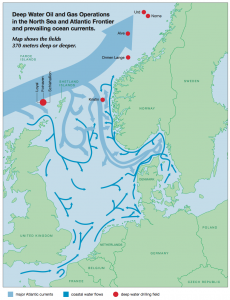
BRUSSELS—Today, Gabriella Zanzanaini, Director of European Affairs for Food & Water Europe, spoke at a press conference held by Green party Members of the European ParFoodandWaterEuropeOilOperationsliament (MEPs) about the safety of the 27 deepwater oil drilling facilities in the North Sea after the Gulf of Mexico disaster.

Download the full map of deepwater oil and gas operations in the North Sea

“Before the BP disaster, both oil companies and the U.S. Minerals Management Service said that there was a zero percent change of this ever happening, which led to complacency in terms of safety checks and development of safety technology,” said Zanzanaini. “The EU must not let this happen.”

According to Zanzanaini, the major oil companies in the U.S.—Exxon Mobil, ConocoPhillips, Shell and Chevron—earned $289 billion dollars in profits over the last three years, and spent $39 billion in the exploration of new wells—but spent only $20 million dollars a year on research and development devoted to safety.

“The EU must make sure that the development of safety technology is given as much priority as the development of drilling technology,” said Zanzanaini.

Over the past decade, the oil and gas industry spent $839 million lobbying U.S. officials—contributing to the cozy relationships between oil and gas industries and regulators there. Zanzanaini urged that the EU system should make sure independent bodies carry out inspections, separate from the body granting licenses. The EU should ensure that Member States implement this separation and raise the bar on the quality of inspections, not only the number. Finally, she urged the EU to refrain from allowing companies to operate on safety based on voluntary schemes—again, using the U.S. Minerals Management Service as a model not to follow.

Other speakers included Michele Rivasi, MEP (France), Bart Staes, MEP (Belgium), Bas Eickhout, MEP (Holland), and Sandy Luk, a lawyer with Client Earth.

Contact: Gabriella Zanzanaini, +32488409662, gzanzanaini (at) fweurope.org