Hallucinating hydrogen: Why the PCI/PMI process must be overhauled

Categories

Fossil FuelsDemocracyClimate

In December 2025, the European Commission published the second Projects of Common and Mutual Interest (PCI/PMI) aiming to grant priority status to a record number of cross-border hydrogen infrastructure projects. It includes 108 hydrogen related projects: 59 transmission pipelines, 21 electrolysers, 19 storage facilities and 9 reception terminals. Food & Water Action Europe and Bankwatch CEE analysed all hydrogen projects on the PCI/ list and compiled the alarming findings in this new report: “Hallucinating hydrogen: Why the PCI/PMI process must be overhauled”.

More than two-thirds of the hydrogen pipelines on the list – 42 out of 59 – are likely to transport fossil-fuel-based hydrogen for decades. And seven of them are rebranded gas projects. Few, if any, electrolyser projects are set to include additional renewable electricity capacity; most will rely on grid power, which risks cannibalising existing power generation. Although far from economically viable, hydrogen import terminals aim to receive mostly fossil-fuel-based ammonia. The use of hydrogen derived from fossil fuels will undermine the EU’s current plans to limit dependence on fossil fuel imports.

The scale of the planned hydrogen infrastructure far exceeds the current level of hydrogen economy development in the EU, and is out of touch with realistic forecasts for renewable hydrogen production and demand. This creates a serious risk of stranded assets if these projects are ever built. Even in the best case scenario, it would still mean wasting public funds on expensive feasibility studies and permitting procedures, which could amount to tens of millions of euros, based on recent Connecting Europe Facility (CEF) calls. 

Governance flaws in the TEN-E framework are one of the reasons for this outcome. ENTSOG retains control over infrastructure planning, scenario development and cost–benefit analyses, despite its clear conflicts of interest, which have been repeatedly flagged by the EU Agency for the Cooperation of Energy Regulators (ACER), the European Scientific Advisory Board on Climate Change (ESABCC) and civil society. The result is a self-reinforcing cycle in which gas incumbents define ‘system needs’, shape the methodology used to assess candidate projects, and then evaluate projects proposed by their own members. 

The Council and Parliament must reject the current Delegated Act on PCIs and PMIs, as it would support an oversized network running on fossil-based hydrogen. Alternatively, it risks creating costly stranded assets. 

Upcoming reforms to the TEN-E Regulation must curb the influence of the fossil-fuel industry, ensure democratic oversight, and end public funding for fossil-based hydrogen and related infrastructure. The EU’s hydrogen plans must focus on local and fully renewable production used only in sectors that cannot be directly electrified. Overall, the EU’s energy planning and financing must prioritise electrification and proven renewable technologies, such as interconnections, smart grids, and renewable integration, as the most efficient path to decarbonisation.

Check out the full report for more details!

DOWNLOAD PDF

 

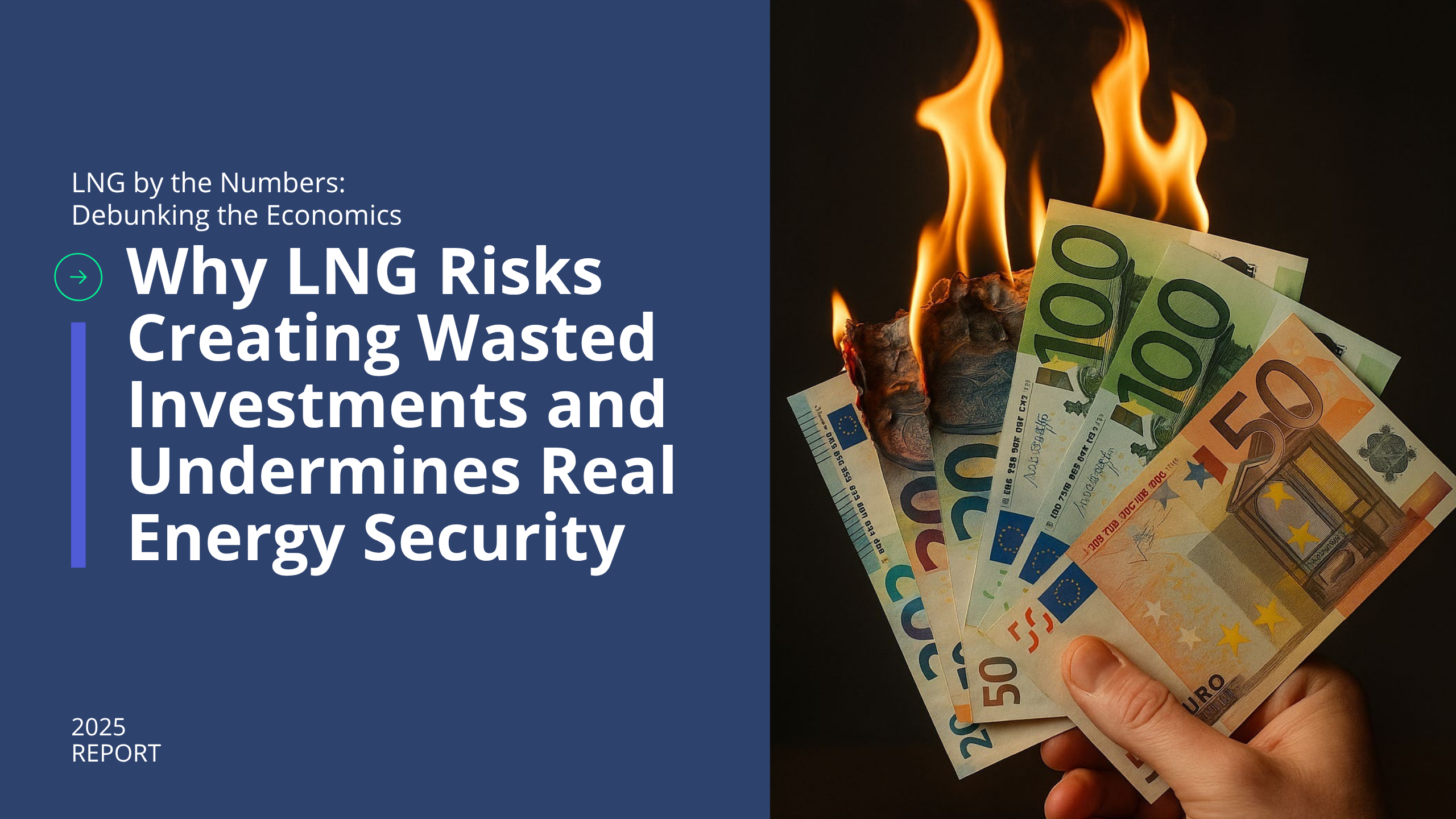
New Unbranded LNG Economic Visual Guide

Categories

LNGFossil Fuels

Food & Water Action Europe, together with 18 other groups, has endorsed an unbranded visual guide exposing the flawed economics of Liquefied Natural Gas (LNG).

The guide highlights why depending on LNG—a highly polluting and volatile fossil fuel—to power industry, heat homes, and cook meals is both an economic and environmental risk.

Following the EU’s efforts to reduce reliance on Russian gas, the region now faces a potential oversupply of LNG, increasing the risk of stranded assets and prolonged dependence on unstable foreign sources like U.S. LNG, which negatively impacts frontline communities and accelerates climate change.

The EU’s current plans to increase LNG imports—by supporting overseas export projects, particularly in the US, and committing to long-term contracts inspired by “Japanese model“—risks saddling consumers with higher energy costs and environmental damage.

Meanwhile, real solutions exist: It’s crucial to stop new LNG investments and accelerate the shift to clean, community-based solutions by investing in renewables, energy efficiency, and savings.

Check out the full report for more details!

DOWNLOAD PDF

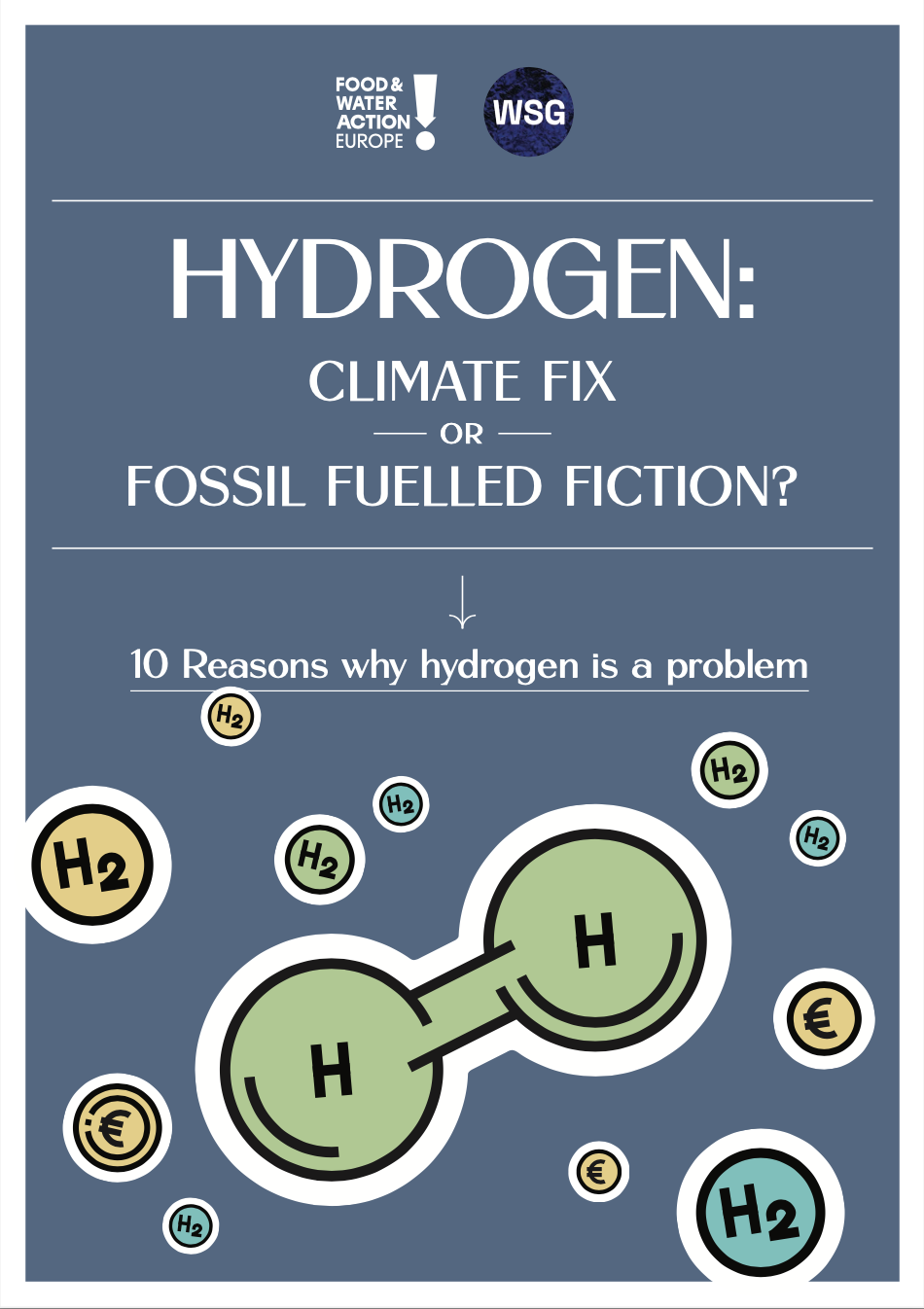
Hydrogen: Climate Fix Or Fossil Fuelled Fiction?

Categories

LNGJusticeFossil FuelsClimate

10 Reasons why hydrogen is a problem 

Read more here.

The aim of this briefing is to offer a clear and concise explanation of why hydrogen, regardless of how it is made, can create more problems than solutions for people and the planet. We have identified 10 key reasons that show why hydrogen poses serious climate, environmental and social justice risks.

The briefing highlights the problems with Europe’s move towards a hydrogen economy.

It shows how hydrogen, today largely made from fossil ‘natural’ gas, can be a safety hazard and a leaky climate issue.

While limited amounts of hydrogen might be needed in the future, the briefing shows how ‘green’ hydrogen could come with a troublesome track-record of land and resource-grabbing, unneeded infrastructure build-out, high energy bills and neocolonial practices that ultimately distract from urgently needed real solutions.

The briefing is a collection of easy-to-understand facts around hydrogen in the face of an oversized hydrogen boom fuelled by fossil fuel industry interests.

Want a sneak peek into the briefing? Here are the topics it adresses in 10 short chapters:

  • The Hydrogen Hype Hides a Greenwashing Scam
  • Hydrogen Infrastructure Could Become a Cash Cow for the Fossil Fuel Industry
  • Hydrogen Is Dangerous
  • Hydrogen Is a Climate Hazard
  • Hydrogen Has Negative Impacts on Natural Resources
  • Hydrogen Worsens the Neocolonial Dynamics of Our Current Energy System
  • Hydrogen Is an Uncertain Bet That Could Ultimately Benefit Polluters
  • Hydrogen Is Expensive
  • Hydrogen Is Linked to Dirty Fossil Fertilizers
  • Hydrogen Distracts From Real Solutions


Have your say on the future of Europe’s energy system

Categories

Food

We all know that Europe needs to stop building fossil fuel infrastructure yesterday to be able to keep the global temperature rise below 1.5 degrees.

The current law on priority EU energy infrastructure, the ‘TEN-E Regulation’, is very much at odds with the aim of building a future proof, clean energy system. It’s the law that made it possible for 55 fossil gas projects to receive highest EU priority as ‘Projects of Common Interest’ (PCIs). The good news: The law will be revised and the EU commission is seeking input from NGOs, citizens, scientists etc. on what a new energy infrastructure law should look like.

How can you submit to the consultation?

  1. Click on the button below – it will generate an email to the European Commission with a pre-written text.
  2. Fill out your name and other details at the bottom of the email text.
  3. If you have time, try to personalise your submission as much as possible. You could add a sentence or two at the start to say where you are writing from and why you particularly care about this issue. Feel free to edit the text of the email.

Link not working? Click here for an alternative way to make a submission.

Facts About LNG: Dismantling Misleading Rhetoric

Categories

Food

In its narrative around the significance of liquified natural gas (LNG) for the European Union, the Commission is repeatedly using a set of controversial arguments. Also many MEPs have adopted the Commission’s wording unquestioned. But what is really behind these concepts?

Learn more in Food & Water Europe’s Factsheet:
Facts About LNG: Dismantling Misleading Rhetoric.

VIEW ON SCRIBD DOWNLOAD PDF