

The Nexus and Why We Should Be Worried About the Green Economy

Categories

Food

By Gabriella Zanzanaini

Since coming back from the Bonn Conference on the water, food and energy nexus, where I met up with fellow civil society activists, I have been trying to figure out how we can stand against the corporate machine building up towards RIO+20.

The Bonn conference organized by the German government in November 2011 aims to influence Rio+20 (United Nations Conference on Sustainable Development) outcomes while using transformation to a Green Economy as a framework. The follow-up conference will be organized by the World Economic Forum in January 2012 and its policy recommendations will also go through a “test” at a Ministerial Round Table at the 6th World Water Forum in mid-March 2012.

What stood out at Bonn was how increasingly aware of its image the corporate machine is and how it has learned to package its message in a more palatable way, while trying to get civil society “participation” to legitimize its decisions. This new, softer rhetoric means that it is harder to see what truly lies behind seemingly well-intentioned speeches. Most of the outcomes of the conference were decided beforehand, but the dominant rhetoric repeatedly placed emphasis on poverty eradication and inclusive growth – how to make resource efficiency work for the “bottom billion” (flagged up by many of us at the conference as a term that should stop being used). Yet the essence of what the Green Economy actually is – turning the financial, environmental and climate crisis into an economical gain was largely absent.

In a Green Economy world, the financialization of nature will take place through new technologies, focusing on innovations funded by public money to profit private companies in the name of resource efficiency. Among the nexus solutions are the promotion of desalination based on renewable energy, genetic engineering/breeding for food security and large dams.

Don’t Gimme That Filet-O-Fish!

Categories

Food

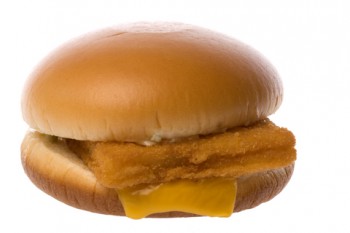
A few of us here blinked our eyes a few times when we saw the headline, “McDonald’s Filet-O-Fish to carry MSC eco-label.” Did McDonald’s just earn itself an eco-label in Europe? Maybe it was the reputation of the fast food giant that fueled our doubt. But another reason behind our skepticism is the questionable claims behind the Marine Stewardship Council (MSC) label.

McDonald’s Filet-O-Fish is made with New Zealand hoki — a fish that many believe should not have been certified by MSC. This particular fishery, in fact, has previously violated that country’s Fisheries Act. Because of the hoki’s troubled history, its certification by MSC has been controversial. MSC’s decision to certify the fishery that supplies McDonald’s’ with their hoki is a prime example of how eco-labels are not always what they seem.

MIT’s Fracking Report Backs its Donors: Gas Companies

Categories

Food

By Food & Water Watch Executive Director Wenonah Hauter

I almost gagged on my coffee when I finally got around to reading the corporate sponsored pro-fracking propaganda by MIT on natural gas, entitled, “The Future of Natural Gas.” Isn’t this academic institution embarrassed to sell its reputation to corporations?

I guess not, because right on its website, MIT advertises its enormous corporate funding for research and its proud affiliation with the oil and gas industry. Read its philosophy for yourself:

Italian Voters Turn Out Against Water Privatization

Categories

Food

By Rich Bindell

Italians voted earlier this week to overturn laws established by Premier Silvio Berlusconi’s government. Voters blocked efforts by the Italian government to privatize water, reestablish the nuclear energy program and grant Berlusconi immunity from prosecution. If you’ve perused some of the articles in places like The Washington Post, The New York Times or Bloomberg, you may have noticed that most of the attention was paid to Berlusconi and his political survival. But, to many of us, the most critical element of this story is that the people of Italy do not want their water privatized.

Should We Irradiate Away Harmful Bacteria in Our Food?

Categories

Food

When a food safety outbreak occurs, like the one that is unraveling currently in Europe, the topic of food irradiation makes headlines. According to the AP, food safety experts like Michael Osterholm think consumers should give irradiation a chance:

“‘We need to do whatever we can to give us a wider margin of safety,’ says Dr. Michael Osterholm, a University of Minnesota infectious disease specialist who frequently advises the government. ‘Food irradiation for a number of produce items would give us not just a marginal increase, but give us probably the Grand Canyon increase of safety.’”

The Next Big Thing In Industry: Water Profiteering

Categories

Food

Executive Director Wenonah Hauter got the inside scoop on what the water industry is up to at the 2011 Global Water Summit in Berlin.

Last week I was in Berlin at the Global Water Summit 2011, a meet up for corporations that want to profit from water as it becomes scarcer. Sponsored by all the bad actors in the water industry, from Veolia to General Electric, the conference URL was www.watermeetsmoney.com. Even the Koch Brothers’ empire was represented (Koch Industries helped pollute water with its fossil fuel operations, so why not profit also from cleaning up the mess?)

My colleague, Anil Naidoo from the Council of Canadians, and I were invited to the meeting to debate the libertarian economist David Zetland and William Muhairwe, managing director of Uganda’s national water company. Both Zetland and Muhairwe are big proponents of full-cost pricing and dismissive of the government’s role in providing water.

Some may wonder why Anil and I would go there to debate, especially when the audience was comprised of people employed in the water industry. The truth is that there is no better place to really figure out what they are up to. An hour debate was a small price to pay for free entrance to the $2,500.00 event that gave us real insight into the newest plans of the global water cartel.