Sweating the Small Stuff

Categories

Food

Nanotechnology Needs Research and Regulation

Nanotechnology is the process of manipulating matter at the molecular level – or nanoscale. Nanomaterials have at least one dimension that is 100 nanometers or less. A nanometer is one billionth of a meter – approximately 1/100,000 of a human hair.

This new technology has been touted as the next revolution in many industries, with more than 300 nanoproducts already on the market and sales of over $30 billion in 2005. This includes everything from sunscreen and stain resistant clothing to food, food packaging and dietary supplements. Investments in the global nanofood market alone are expected to reach $20 billion in 2010, with the world’s biggest companies, including Altria, Nestle, Kraft, Heinz and Unilever, involved in nanotechnology research and development.1

However, in the rush to incorporate nanoparticles into products already being marketed to the public, comparatively little money has been devoted to researching the health and environmental consequences of nanotechnology.

Smaller is Different

Nanoscale materials are very different than their larger counterparts, with distinct electronic, magnetic, chemical and mechanical properties. Nanoparticles have an increased surface area, which offers more space for interaction with other substances. This increased interaction with their surroundings means that substances at the nanoscale are more reactive and have higher toxicity than they do at their normal size. Picture a coffee maker. If you fill it with whole coffee beans, you get a very weak cup of coffee. But if you grind the beans first, you will increase the surface area of the coffee beans and get a dark, strong cup of coffee.2

Adding to the concern of increased toxicity, substances that are stable in larger forms (such as aluminum) can also become reactive or explosive in nanoparticle form, creating the potential for health effects that are not seen when the substance is in its larger form.

Because they are tiny, nanoparticles have the potential to bypass the blood-brain barrier, (the membrane that controls the passage of substances from the blood into the central nervous system). They also have the potential to pass the placental barrier. One 2004 study found that nanoparticles can easily travel from nasal passageways to the brain, and another found that gold nanoparticles can move across the placenta from mother to fetus.3 Once in the bloodstream, nanomaterials can circulate throughout the body and be taken up by organs and tissues. Given the higher toxicity of these particles, it is disturbing that the length of time they remain in the organs and what dose may cause harmful effects are unknown.4

Size and structural differences allow nanomaterials to migrate to different tissues and organs than their larger counterparts. There is also evidence that nanoparticles can be more completely absorbed by the body, increasing the substance’s “bioavailability” 5 (the amount of a substance that enters the bloodstream and is available to have an active effect). Nanoengineered materials also have the potential to increase the bioavailability of other chemicals, such as known toxins. One study found that micronized titanium dioxide in sunscreens increases the skin’s absorption of several pesticides.6

The degree of these impacts can vary greatly between individuals depending on physiological differences, such as thickness and condition of hair and skin, physical activity and duration of exposure.7

Regulatory Oversight

Yet, despite these uncertainties and possible dangers, nanotechnology goes unregulated.

The Food and Drug Administration, which is the agency responsible for regulating food additives and new chemical substances in food, states that “the existing battery of pharmacotoxicity tests is probably adequate for most nanotechnology products that we will regulate. Particle size is not the issue.” (emphasis added)8 Experts agree, however, that particle size is indeed the issue.

The European Commission Scientific Committee on Emerging and Newly Identified Health Risks reported that “experts are of the unanimous opinion that the adverse effects of nanoparticles cannot be predicted (or derived) from the known toxicity of material of macroscopic size, which obeys the laws of classical physics.” 9

Even industries that stand to benefit most from the development of nanotech materials recognize that particle size is the issue. DuPont’s director of materials science and engineering has said “it would be unwise to claim that just because there are tiny amounts, it’s harmless.” 10

Due to the potential impact of nanotechnology on the environment, in 2006 the Environmental Protection Agency began to regulate a class of consumer items made with odor-destroying nanoparticles of silver. The agency got involved after concern grew that nanosilver being washed down drains may be killing beneficial bacteria and aquatic organisms and may also pose risks to human health.11 This was the first move by the federal government to regulate nanotechnology. But most materials will not fall under EPA oversight.12 Most materials won’t be regulated at all, despite the fact that store shelves will be increasingly flooded with products made with this emerging technology.

Conclusion

Chemicals like PCBs and pesticides like DDT and dieldrin, which were once thought to be safe, were not truly understood until long after human health and environmental damage already occurred. To avoid similar disasters in the future, nanotechnology’s effects should be adequately studied before they are allowed onto the market. An adequate level of study would at least match the amount of testing and safety data the federal government requires for new food additives.

Recommendations

  • The scientific community has clearly established that the safety of nanomaterials cannot be assumed by studying their larger counterparts. The FDA should regulate nanotech products as the new chemical substances that they are, and require at least the same level of testing required for new food additives.
  • If they are approved, nanoproducts should be clearly labeled so consumers are aware that the products they are using contain these controversial ingredients.
  • Federal agencies such as the Food and Drug Administration should also be required to track any incidents, including adverse or allergic reactions, once nanotech products are on the market.


Footnotes

1 Kuzma, Jennifer and Peter VerHage. Nanotechnology in Agriculture and Food Production: Anticipated Applications. Woodrow Wilson International Center for Scholars. Project on Emerging Nanotechnologies, September 2006, p.9-10.

2 “Fine particles—Part 5: Incineration worsens landfill hazards.” Rachel’s Hazardous Waste News. Environmental Research Foundation (Annapolis, MD), January 3, 1990.

3 Gibbs, Larry and Mary Tang. “Nanotechnology: Safety review and risk management overview.” NNIN Nanotechnology Safety Workshop, December 2, 2004.

4 The Center for Food Safety. “Nanotechnology: It’s a small (and unregulated) world after all.” Food Safety Now! Autumn 2006.

5 Consumers Union. Written Testimony to the FDA on Nanoengineered Ingredients in Food, October 6, 2006.

6 Brand, Rhonda and James Pike, et al. “Sunscreens containing physical UV blockers can increase transdermal absorption of pesticides.” Toxicology and Industrial Health, 19(1): 9-16, 2003.

7 Consumers Union, op. cit.

8 Ibid.

9 Appropriateness of Existing Methodologies to Assess the Potential Risks Associated with Engineered and Adventious Products of Nanotechnologies. European Commission Health and Consumer Protection Directorate-General, Scientific Committee on Emerging and Newly Identified Risks, March 10, 2006.

10 Consumers Union, op. cit.

11 Weiss, Rick. “EPA to regulate nanoproducts sold as germ-killing.” The Washington Post, November 23, 2006.

12 The Associated Press. “Berkeley to regulate nanotechnology.” AP Online, December 12, 2006.

Learn More

Bacteriophages

Categories

Food

Most people have never heard of bacteriophages. But now that the U.S. government has given food companies permission to spray them on our food, consumers may want to learn all they can.

[pdflink file=”Bacteriophages.pdf”]

Most people have never heard of bacteriophages. But now that the U.S. government has given food companies permission to spray them on our food, consumers may want to learn all they can.

Bacteriophages (phages) are viruses that attack and kill a specific strain of bacteria. They do not attack plant and animal cells or other types of bacteria, and gravitate toward wherever bacteria live, including the human body, water and the environment.

History

In 1915, British bacteriologist Frederick Twort discovered these small agents that infect and kill bacteria. A few years later in 1917, Felix d’Herelle, a French Canadian microbiologist working at the Pasteur Institute in Paris, named the agents “bacteriophages.” 1 Scientists and doctors began using them to treat infectious diseases. But by the 1930s, doctors in the United States were turning to penicillin instead. However, phage therapy has been used in Russia and other parts of Eastern Europe for decades, and has proven effective in treating some diagnosed bacterial infections.2

Bacteriophages in Our Food?

In recent years, biotechnology companies began developing bacteriophage products to kill bacteria that cause food borne illness in humans. Unlike traditional phage therapy, in which these viruses were employed to treat a diagnosed infection, the biotechnology companies plan to use their new phage products in the public food supply. So far, the federal government has allowed the use of two products.

First, in September 2006, the Food and Drug Administration, under the category of‚ “food additives”, approved a bacteriophage mixture that would be sprayed on ready-to- eat meat and deli products to reduce the presence of Listeria monocytogenes bacteria. Listeria can cause serious illness and even death for people with weak immune systems. In meat processing plants, the bacteria often live in drains and other moist areas. The sealed plastic pouches used for many ready-to-eat meats provide an ideal environment for Listeria to grow. Rather than improving sanitation measures in the processing plants and increasing testing for Listeria, the federal government has taken a short-cut in its oversight role by approving this new‚ and, in the realm of food safety, relatively untested‚ technology to address concerns about Listeria.

Intralytix, Inc. contends that it’s cocktail” of six different Listeria-attacking phages will reduce the likelihood of the bacteria developing resistance to any specific phage. Most people have never heard of bacteriophages. But now that the U.S. government has given food companies permission to spray them on our food, consumers may want to learn all they can. Almost all strains of Staphylococcal infections in the United States are now resistant to penicillin, and to newer drugs as well. Then, in January 2007, the U.S. Department of Agriculture also approved a bacteriophage product that OmniLytics Company designed to be sprayed, misted or washed onto cattle hides to reduce the presence of E. coli bacteria. But this does not address the source of the problem, for the bacteria start out living in cattle intestines. They then pass through the digestive tract and out, into the manure. Inside today‚ industrial factory farms, the animals are packed together amidst the mucky mixture of manure and water, so it is no surprise that E. coli are splashed onto their hides. From there, the bacteria can contaminate the meat supply if the hide touches muscles and organs during slaughter. Rather than spraying an inadequately tested product, a better solution to E. coli and other bacterial contamination would be to eliminate factory farms and instead raise cattle on pasture.

In addition to the two products described above, Intralytix, Inc. and OmniLytics are developing other phage products to be used in food, water and agriculture. Based on the recent decisions, the government likely will approve them.

Concerns with Bacteriophages in the Food Supply

Limited Safety Testing

The FDA and USDA did not conduct thorough safety testing on the widespread introduction of bacteriophage products into the food supply. While medical practitioners have long employed them to fight bacterial infections, they have done so for a diagnosed condition to be treated within a finite period. Now, however, the pharmaceutical industry would expose consumers to these products via the food supply on a daily basis.

In the petition for government approval of bacteriophage preparation as a food additive, Intralytix, Inc. submitted only one unpublished study, conducted by their researchers, showing that the product reduced the presence of Listeria in meat. No independent, peer-reviewed feeding studies were conducted. These products should have undergone more thorough safety testing before receiving approval.

Resistance

Bacteria can and do, after repeated exposure to low levels of antibiotics routinely fed to livestock on large factory farms, develop resistance. When these bacteria reproduce, they spread the resistance trait. The American Medical Association, American Public Health Association, and the National Institutes of Health all describe antibiotic resistance as a growing public health concern.3 Almost all strains of Staphylococcal (Staph) infections in the United States are now resistant to penicillin, and to newer drugs as well.4

Based on conversations with microbiologists, Food & Water Watch is concerned that the widespread use of bacteriophages in the human food supply could result in bacteria becoming resistant to bacteriophage treatments. Intralytix, Inc. tried to address this concern by including six different phages specific to Listeria in their product. In its approval of the product, the FDA described the company‚ rationale for incorporating multiple phages in one formulation is to minimize the possibility of L. monocytogenes developing a resistance to the additive.” 5 However, this raises the question of whether bacteria eventually will develop resistance in spite of the multiple phages. And how will we know?

Labeling

Consumers have the right to know which meat products have been treated with bacteriophages and which have not. As it stands now, unfortunately, the only way of knowing whether foods contain them would be to look for the words “bacteriophage preparation” buried in the ingredient list. The government does not require the companies to clearly and prominently label these products, the more effective way to inform consumers.

The Food and Drug Administration and U.S. Department of Agriculture should require clear labeling‚ not the fine print‚ so that consumers can make informed choices about food.

Footnotes

1 Pennazio S. ‚The origin of phage virology.” Rivista di Biologia, 99(1):103-29, Jan-Apr 2006.
2 Khardori N. ‚Antibiotics , past, present, and future.” Medical Clinics of North America, 90(6):1049-76, Nov. 2006.
3Antibiotics and Antimicrobials.” American Medical Association. “The Problem of Antimicrobial Resistance.” National Institute of Allergy and Infectious Disease. April 2006 “Antibiotic Resistance Fact Sheet.” American Public Health Association.
4 Keep Antibiotics Working. ‚The Health Threat.” 5 71 Fed. Reg. 47,729, 47,730 (Friday, August 18, 2006).
5 71 Fed. Reg. 47,729, 47,730 (Friday, August 18, 2006).

Food Safety Consequences of Factory Farms

Categories

Food

NOTE: Get updated information on this topic on Food & Water Watch’s Factory Farm Map.

The environmental and economic effects of factory farms on rural communities are well known. These facilities cannot process the enormous amounts of waste produced by thousands of animals, so they pour and pile manure into large cesspools and spray it onto the land. This causes health problems for workers and for neighbors. Leaks and spills from manure pools, and the run-off from manure sprayed on fields can pollute nearby rivers, streams, and groundwater. And the replacement of independently owned, small family farms by large factory operations often drains the economic health from rural communities. Rather than buying grain, animal feed, and supplies from local farmers and businesses, these factory farms usually turn to the distant corporations with which they’re affiliated.

But even if you live in a city hundreds of miles from the nearest factory farm, there are still lots of reasons to be concerned about who is producing – and how – the meat and dairy products you and your family consume.

Animal Feed – You Are What You Eat… and What They Ate

Factory farm operators typically manage what animals eat in order to promote their growth and keep the overall costs of production low. However, what animals are fed directly affects the quality and safety of the meat and dairy products we consume.

Antibiotics

Factory farmers typically mix low doses of antibiotics (lower than the amount used to treat an actual disease or infection) into animals’ feed and water to promote their growth and to preempt outbreaks of disease in the overcrowded, unsanitary conditions. According to the Union of Concerned Scientists, 70 percent of all antimicrobials used in the United States are fed to livestock. 1 This accounts for 25 million pounds of antibiotics annually, more than 8 times the amount used to treat disease in humans.2

The problem is this creates a major public health issue. Bacteria exposed to continuous, low level antibiotics can become resistant. They then spawn new bacteria with the antibiotic resistance. For example, almost all strains of Staphylococcal (Staph) infections in the United States are resistant to penicillin and many are resistant to newer drugs as well.3 The American Medical Association, American Public Health Association, and the National Institutes of Health all describe antibiotic resistance as a growing public health concern.4 European countries that banned the use of antibiotics in animal production have seen a decrease in resistance.5

Mad Cow Disease

Animal feed has long been used as a vehicle for disposing of everything from road kill to “offal,” such as brains, spinal cords and intestines. Scientists believe that “mad cow disease,” or Bovine Spongiform Encephalopathy (BSE), is spread when cattle eat nervous system tissues, such as the brain and spinal cord, of other infected animals. People who eat such tissue can contract variant Creutzfeldt-Jakob disease (vCJD), which causes dementia and, ultimately, death. Keeping mad cow disease out of the food supply is particularly important because, unlike most other foodborne illnesses, consumers cannot protect themselves by cooking the meat or by any other type of disinfection. The United States has identified three cases of mad cow disease in cattle since December 2003.

In 1997, the Food and Drug Administration (FDA), the agency that regulates animal feed, instituted a “feed ban” to prevent the spread of the disease. Although this ban provides some protections for consumers, it still allows risky practices. For example, factory farm operators still feed “poultry litter” to cattle. Unfortunately, poultry litter, the waste found on the floors of poultry barns, may contain cattle protein because regulations allow for feeding cattle tissue to poultry. And cattle blood can be fed to calves in milk replacer – the formula that most calves receive instead of their mother’s milk. Finally, food processing and restaurant “plate waste,” which could contain cattle tissue, can still be fed to cattle.

In 2004, after the discovery of BSE in the United States, the FDA had the opportunity to ban these potential sources of the disease from cattle feed. But instead, officials proposed a weaker set of rules that restricted some tissues from older cattle. A safer policy for consumers would be to remove all tissues from all cattle from the animal feed system, regardless of their age, and also to ban plate waste, cattle blood and poultry litter.

In the fall of 2006, the U.S. Department of Agriculture (USDA) decided to scale back testing for mad cow disease. Officials cited what they claimed was the low level of detection for the disease in the United States. Now, only 40,000 cattle, one-tenth the number tested the year before, will be tested annually. Given the weakness of the rules that are supposed to prevent the spread of the disease, this limited testing program effectively leaves consumers unprotected.

E. Coli

Cattle and other ruminants (animals with hooves) are uniquely suited to eat grass. However, in factory farm feedlots, they eat mostly corn and soybeans for the last few months of their lives. These starchy grains increase their growth rate and make their meat more tender – a process called “finishing.” However, scientists point to human health risks associated with the grain-based diet of “modern” cattle.
A researcher from Cornell University found that cattle fed hay for the five days before slaughter had dramatically lower levels of acid-resistant E. coli bacteria in their feces than cattle fed corn or soybeans. E. coli live in cattle’s intestinal tract, so feces that escapes during slaughter can lead to the bacteria contaminating the meat.6

Vegetables can be also be contaminated by E. coli if manure is used to fertilize crops without composting it first, or if water used to irrigate or clean the crops contains animal waste. The 2006 case of E. coli-contaminated spinach offers a dramatic example of how animal waste can impact vegetables.

Fat

According to a study by the Union of Concerned Scientists, beef and milk produced from cattle raised entirely on pasture (where they ate only grass) have higher levels of beneficial fats, including omega-3 fatty acids, which may prevent heart disease and strengthen the immune system. The study also found that meat from grass-fed cattle was lower in total fat than meat from feedlot-raised cattle.7

Promoting Growth at Any Cost

Factory farms strive to increase the number of animals they raise every year. To do so, however, they use some practices that present health concerns for consumers.

Hormones

With the approval of the FDA and USDA, factory farms in the United States use hormones (and antibiotics, as discussed earlier) to promote growth and milk production in beef and dairy cattle, respectively. Regulations do prohibit the use of hormones in pigs and poultry. Unfortunately, this restriction doesn’t apply to antibiotic use in these animals.

An estimated two-thirds of all U.S. cattle raised for slaughter are injected with growth hormones.8 Six different hormones are used on beef cattle, three of which occur naturally, and three of which are synthetic.9 Beef hormones have been banned in the European Union since the 1980’s. The European Commission appointed a committee to study their safety for humans. Its 1999 report found that residues in meat from injected animals
could affect the hormonal balance of humans, causing reproductive issues and breast, prostate or colon cancer. The European Union has prohibited the import of all beef treated with hormones, which means it does not accept any U.S. beef.10

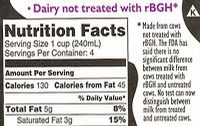
Recombinant bovine growth hormone (rBGH) is a genetically engineered, artificial growth hormone injected into dairy cattle to increase their milk production by anywhere from 8 to 17 percent.11 The FDA approved rBGH in 1993, based solely on an unpublished study submitted by Monsanto.12 Canada, Australia, Japan and the European Union all have prohibited the use of rBGH.

Approximately 22 percent of all dairy cows in the United States. are injected with the hormone, but 54 percent of large herds (500 animals or more), such as those found on factory farms, use rBGH.13 Its use has increased bacterial udder infections in cows by 25 percent, thereby increasing the need for antibiotics to treat the infections.14

In addition, the milk from cows injected with rBGH has higher levels of another hormone called Insulin Growth Factor-1 (IGF-1). Elevated levels of IGF-1 in humans have been linked to colon and breast cancer.15 Researchers believe there may be an association between the increase in twin births over the past 30 years and elevated levels of IGF-1 in humans.16

Unwholesome, Unsanitary and Inhumane Conditions

Raising animals on cramped, filthy and inhumane factory farms differs greatly from what most consumers envision as the traditional American farm.

Disease

Hundreds of thousands of birds are breathing, urinating and defecating in the close quarters of factory-style poultry farms. These conditions give viruses and bacteria limitless opportunities to mutate and spread. This is a very real concern given the presence of avian flu in many parts of the world. The poultry industry has tried to portray factory farms as a solution to the spread of avian flu. It claims that keeping the birds indoors somehow isolates them from the outside world and the disease that lurks there.

Contrary to these claims, scientists suspect that it was in poultry factory farms that avian flu mutated from a
relatively harmless virus found in wild birds for centuries to the deadly H5N1 strain of the virus that is killing birds and humans today.17 In England, the virulent H5N1 strain first broke out at the country’s largest turkey farm in early 2007. Theories about the source of the infection include rats or flies entering the facility from a nearby poultry processing plant that itself had received a shipment of infected poultry parts from Hungary.18 These large-scale facilities rely on truckloads of feed and supplies that arrive every day, providing a way for the disease to spread.

Contamination

Raising thousands of animals together in crowded conditions generates lots of manure and urine. For example, a dairy farm with 2,500 cows produces as much waste as a city of 411,000 people.19 Unlike a city, where human waste ends up at a sewage treatment plant, livestock waste is not treated, but rather washes out of the confinement buildings into large cesspools, or lagoons. In feedlots, open lots where thousands of cattle wait and fatten up before slaughter, the animals often stand in their own waste before it is washed away. The cattle often have some water-splashed manure remaining on their
hides when they go to slaughter. This presents the risk of contamination of the meat from viruses and bacteria.

Animal Welfare

Rather than grazing in green pastures, animals on factory farms exist in tight confinement with thousands of other animals. They have little chance to express their natural behaviors.

Pigs on factory farms are confined in small concrete pens, without bedding or soil or hay for rooting. The stress of being deprived of social interaction causes some pigs to bite the tails off of other pigs. Some factory farm operators respond by cutting off their tails.

Chickens stand in cages or indoors in large pens, packed so tightly together that each chicken gets a space about the size of a sheet of paper to itself. The chickens are not given space to graze and peck at food in the barnyard, so they resort to pecking each other. Many factory farmers cut off their beaks, a painful procedure that makes it difficult for chickens to eat.

The Trend Continues: From Factory Farm to Table

Factory farming is but one component of the industrial meat production system. Just as small farms have given way to factory farms, small meat plants are disappearing while large corporate operations have grown even bigger – and faster. While these trends increase production and profits for the industry, they also increase the likelihood of food contamination problems. Although the government provides inspectors to protect consumers, their authority is waning as the government gives greater responsibility to the industry to self-regulate.

Consumers Can Say No to Factory Farms

Vote with Your Dollars

Know where your meat comes from. Refer to the Eat Well Guide to find a farm, store or restaurant near you that offers sustainably-raised meat and dairy products.

Or buy your meat directly from a farmer at a farmers market. Talking with the farmers at a farmers market in person will give you the chance to ask them about the conditions on their farm. You can find farmers markets in your area, and learn what questions to ask a farmer.

Organic meat is also a good choice, since the organic label means that the product has met standards about how the meat was produced. Visit our website to check out our labeling fact sheet to find out more about which labels to look for. And check out our milk tip sheet to find out which milk labels to look for and our product guide for rBGH-free dairy products in your area.

Footnotes
1 Union of Concerned Scientists, “Hogging it!: Estimates of Antibiotic Abuse in Livestock”. UCS, 2001
2 Union of Concerned Scientists. “Food and Environment: Antibiotic Resistance.” UCS, October 2003.
3 Keep Antibiotics Working. “The Health Threat.”
4Antibiotics and Antimicrobials.” American Medical Association. “The Problem of Antimicrobial Resistance.” National Institute of Allergy
and Infectious Disease. April 2006 “Antibiotic Resistance Fact Sheet.” American Public Health Association.
5 McEwen , Scott A. and Fedorka-Cray, Paula J. “Antimicrobial Use and Resistance in Animals” Clinical Infectious Diseases 34(Suppl 3): S93–106, 2002.
6 Francisco Diez-Gonzalez, Todd R. Callaway, Menas G. Kizoulis, James B. Russell. “Grain Feeding and the Dissemination of Acid-Resistant Escherichia coli from Cattle” Science, 281 (5383):1666-1668, September 11, 1998.
7 “Greener Pastures: How grass-fed beef and milk contribute to healthy eating.” Union of Concerned Scientists, Cambridge, MA, 2006.
8 Raloff, Janet. “Hormones: Here’s the Beef: Environmental concerns reemerge over steroids given to livestock.” Science News 161, (1):10. January 5, 2002.
9 The Scientific Committee on Veterinary Measures Relating to Public Health. “Assessment of Potential Risks to Human Health from Hormone Residues in Bovine Meat and Meat Products.” European Commission, April 30, 1999.
10 The Scientific Committee on Veterinary Measures Relating to Public Health. “Assessment of Potential Risks to Human Health from Hormone Residues in Bovine Meat and Meat Products.” European Commission, April 30, 1999.
11 Bovine Somatotropin (bST)” Biotechnology Information Series (Bio-3) North Central Regional Extension Publication Iowa State University – University Extension, December 1993.
12 Cruzan, Susan M. FDA Press Release on rBST approval. Food and Drug Administration. November 5, 1993.
13 APHIS, “Bovine Somatotropin: Info Sheet” USDA, May 2003.
14 Doohoo I. et al, “Report of the Canadian Veterinary Medical Association Expert Panel on rBST,” (Executive Summary) Health Canada, November, 1998.
15 Epstein SS. “Unlabeled milk from cows treated with biosynthetic growth hormones: a case of regulatory abdication.” International Journal of Health Services, 26(1):173-85, 1996.
16 Steinman G. Can the chance of having twins be modified by diet? Lancet, 367(9521):1461-2, May 6, 2006.
17 “Fowl play: The poultry industry’s central role in the bird flu crisis” GRAIN, February 2006, p.2, website?
18 “Turkey carcasses from Hungary linked to UK bird flu outbreak” The Observer, 2/8/07, Jo Revill.
19 “Risk Management Evaluation for Concentrated Animal Feeding Operations,” US Environmental Protection Agency A National Risk Management Laboratory, May 2004, p. 7.


Say No to rBGH!

Categories

Food

What is rBGH?

Recombinant Bovine Growth Hormone (rBGH or rBST) is a genetically engineered hormone injected into cows to increase milk production by 8-17 percent.1,2 The Monsanto Corporation manufactures the product, which is sold under the trade name Posilac.

Background

In 1993, the FDA approved rBGH, even though many scientists and government leaders were critical of the hormone, the inadequate research on its risks, and the approval process. Twelve years after it was approved in the U.S., significant health concerns regarding rBGH remain. The European Union, as well as Japan, Canada, and Australia have banned rBGH. Codex Alimentarius, the U.N. body that sets food safety standards, has refused to approve the safety of rBGH three times.3

Health Effects

Recombinant bovine growth hormone causes harm to cows and may pose harm to humans.


Cancer Risk

Injections of rBGH increase another powerful hormone, called IGF-1, in the cow and the cow’s milk. Numerous studies indicate that IGF-1 survives digestion. Too much IGF-1 in humans is linked with increased rates of colon, breast, and prostate cancer.4 “Definitive studies demonstrating the lack of absorption of rBST or IGF-1 upon oral administration were neither conducted nor requested” Health Canada concluded. “Simply not enough is known about how IGF-1 functions to properly evaluate the potential health impacts.” 5

While it’s not clear that rBGH given to cows significantly increases IGF-1 in humans, why take the chance simply so dairies can produce more milk from fewer cows?

Mastitis and Antibiotic Resistance

Use of rBGH on dairy cows increases the rate of mastitis, a bacterial udder infection, by 25%6. Mastitis leads to increased use of antibiotics, including important ones used to treat humans, like penicillin.7 The overuse of antibiotics is already a serious problem in the livestock industry – giving rise to new strains of “superbugs” that are becoming more resistant to antibiotics and are strongly linked to hard-to-treat illnesses in people.8,9

In 1992, the U.S. General Accounting Office recommended that the FDA not approve rBGH until the mastisis problem was further studied. “Concern exists now about whether antibiotic levels in milk are already too high,” the GAO wrote. “[T]here has been no examination of whether rBGH use will increase antibiotic levels in milk or beef beyond that which currently exist and, if so, to what degree those levels are acceptable.” 10 RBGH also increases birth defects, pus in milk, and clinical lameness in cows.11

Possible Allergic Reactions

In one study, rats that were fed rBGH, including one given a relatively low dose, developed antibodies to rBGH. This effect, if validated, “would suggest the possibility of occasional hypersensitivity reactions in those consuming food products from rBST-treated cattle”.12 The FDA brushed aside these disturbing results and did not fully investigate these results.

A Tool for Factory Farms

In the United States, about 15% of the dairy herds use recombinant Bovine Growth Hormone; overall, approximately 22% of dairy cows in the U.S. are injected with the hormone.13 For the most part, this hormone is a tool for dairy factory farms to eke out even more milk per cow. The hormone is used in 54% of large herds (500 animals or more), 32% of medium herds, and only 8% of small herds.14

Consumer Backlash

Consumers are seeking dairy products produced without rBGH, and companies are responding. Most recently, the Tillamook County Creamery Association, a 150-dairy farmer cooperative, voted to ban rBGH in their cheese production due to consumer requests.15 Ben & Jerry’s ice cream brand is also rBGH-free. The company explains this decision by saying “We think its use is

a step in the wrong direction toward a synthetic, chemically-intensive, factory-produced food supply”. 16

Several years ago, Oakhurst Dairy in Maine was sued for advertising their products as rBGH-free; they were eventually required to state that the FDA has not found any significant difference between products with and without the hormone on their products.17 Nevertheless, almost all dairy products sold in Maine are rBGH-free, in response to consumer rejection of the product. And organic food, which cannot be produced with growth hormones, is a skyrocketing market, growing almost 20% annually over the last decade. Organic dairy products constituted $1.3 billion in sales in 2003.18

What You Can Do

Purchase dairy products that are labeled “rBGH-free,” “rBST-free,” or “organic.” Also, tell your supermarket, favorite dairy brand, and school district that you want dairy products that were not made with rBGH.

Footnotes

1 “Bovine Somatotropin (bST)” Biotechnology Information Series (Bio-3) North Central Regional Extension Publication Iowa State University – University Extension, December 1993.

2 Cruzan, Susan M. FDA Press Release on rBST approval. Food and Drug Administration. November 5, 1993.

3 North, Rick. “rBGH-Free Oregon Campaign Fact Sheet” Oregon Physicians for Social Responsibility. [Accessed March 20, 2006]

4 Health Care Without Harm “Health Care Without Harm Position Paper on rBGH” [Accessed March 22, 2006]

5 rBST internal review team“rBST (Nutrilac) ‘Gaps Analysis’ Report.” Health Protection Branch, Health Canada, April 21, 1998. p. 25

6 Doohoo I. et al, “Report of the Canadian Veterinary Medical Association Expert Panel on rBST,” (Executive Summary) Health Canada, November, 1998.

7 North, Rick ibid.

8 Health Care Without Harm, ibid.

9 Fey Paul, Thomas J. Safranek, Mark E. Rupp, Eileen F. Dunne, Efrain Ribot, Peter C. Iwen, Patricia A. Bradford, Frederick J. Angulo, and Steven H. Hinrichs. Ceftriaxone-resistant Salmonella infection acquired by a child from cattle. New Engl. J. Medicine. April 27, 2000.

10 GAO “Recombinant Bovine Growth Hormone: FDA Approval Should be Withheld Until the Mastisis Issue is Resolved.” U.S. General Accounting Office, GAO/PEMD-92-96, August 1992.

11 North, Rick, ibid.

12 Health Canada “Report of the Royal College of Physicians and Surgeons of Canada Expert Panel on Human Safety or rbST” Executive Summary. January, 1999.

13 APHIS, “Bovine Somatotropin: Info Sheet” USDA, May 2003.

14 APHIS, ibid.

15 McMullen, Jim. “Guest Editorial, Tillamook County Creamery Association.” The Cheese Reporter. May 20, 2005.

16 Ben & Jerry’s, “Thoughts on Recombinant Bovine Growth Hormone (rBGH)”, [Accessed March 13, 2006]

17 Canfield, Clark. “Oakhurst, Monsanto Resolve Lawsuit Over Milk Labeling.” Associated Press. December 24, 2003.

18 Miller, Malinda. “Organic Dairy Profile.” Agricultural Marketing Resource Center. May 2005.

Cows Ask Starbucks to Hold the Hormones

Categories

Food

CONTACT
Jen Mueller: 202-797-6553
jmueller [at] fwwatch.org

Half-a-Dozen Dairy Cows Ask Starbucks To Hold the Hormones

Food & Water Watch Asks Customers to Call Starbucks and

Request Artificial Hormone Free Milk

Washington, DC, Half-a-dozen‚ dairy cows “converged on a Starbucks near the National Mall in Washington DC today to ask the biggest coffee retailer in the world to hold the hormones. Lacking thumbs and fingers for dialing telephones, the‚ cows” encouraged pedestrians and Starbucks patrons to participate in a national call-in day to request the company use only milk produced without the artificial growth hormone, rBGH.

Food & Water Watch activists dressed as cows to draw attention to their effort to get Starbucks to switch to artificial hormone free milk. Among the groups concerns are that injecting cows with artificial growth hormone harms cows and may harm people. Cows treated with this hormone get more infections, which leads to more antibiotic use. Overuse of antibiotics in animal production creates antibiotic resistant bacteria, a serious threat to treating people. Additionally, there is a potential link between rBGH and higher risk of breast, prostate, and colon cancer.

Starbucks promotes itself as a socially responsible company but has refused to join the growing trend of dairies and food companies switching to milk that is free of artificial growth hormones” said Food & Water Watch Executive Director Wenonah Hauter.

An enormous purchaser of milk, Starbucks has been considering offering better milk to its customers since 2001. Starbucks could use its purchasing power to work with dairies to get rid of artificial hormones, just like companies across the country have already done, asserted Food and Water Watch.

I am concerned about what my kids eat. When they come to Starbucks with me, I want them to have milk that is free from artificial hormones that could interfere with their development,” said Joiwind Ronen, a concerned mom in a cow suit.

Numerous companies are requiring their milk suppliers to be rBGH-free, including Ben & Jerry‚ ice cream and Tillamook County Creamery Association cheese. Additionally, certified organic milk cannot be produced with rBGH.

The European Union, Japan, Canada, Australia, and New Zealand do not allow the use of rBGH.

Consumers can find guides to rBGH-free dairy produces sold in their state at http://www.foodandwaterwatch.org/food/dairy/rbgh-free-guide. Consumers can find instructions for calling Starbucks and more information at .

Global Action Week Against Food Irradiation

Categories

Food

CONTACT:
Jen Mueller (202) 797-6553
jmueller [at] fwwatch.org

Global Week of Action Against Food Irradiation

Statement of Food & Water Watch Executive Director Wenonah Hauter

Each November since 2003, activists around the world have worked together to organize a Global Week of Action Against Food Irradiation. Events ranging from educational forums to protest rallies have been held in the United States, Italy, France, the Philippines, Australia, and Brazil, highlighting the dangers posed by irradiated foods and by the facilities where they are irradiated. This year’s activities will be similarly diverse, marked by events focused on irradiated fruit in Australia and New Zealand, and public education about irradiated food in Europe.

U.S. consumers have been wary of irradiated food, for good reason. The technology doesn’t just kill bacteria; it depletes vitamins and creates new chemicals in foods that affect taste and smell. Studies have shown that irradiation destroys vitamin A, beta-carotene, and vitamin C in potatoes, orange juice and other foods.

Today, Food & Water Watch released a new report on the Status of Food Irradiation Around the World. While the technology is not popular in the United States, plans to build irradiators overseas could mean more irradiated imports for U.S. consumers.

Irradiation is a Band-aid, not a cure. It‚ an expensive technology that does not address contamination at the processing plant and may damage the food. Consumers around the world deserve better.